
Bitcoin Long-Term Holders Sell Covered Calls: Price Impact Analysis
Discover why Bitcoin long-term holders sell covered calls and how this strategy impacts BTC price momentum. Expert analysis on market trends.

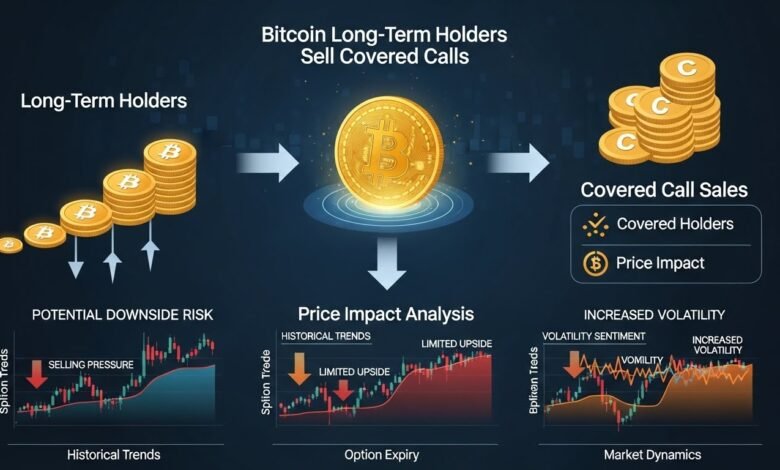
Bitcoin long-term holders sell covered call options in unprecedented volumes, creating a potential ceiling on Bitcoin’s price trajectory. This strategic shift among seasoned investors signals a critical turning point in market sentiment, as holders who traditionally maintain strong conviction in Bitcoin’s long-term prospects are now implementing sophisticated options strategies to generate additional yield. Understanding why Bitcoin long-term holders sell covered calls and the implications of this trend is essential for anyone invested in or following the cryptocurrency markets.
Recent data from blockchain analytics platforms reveals that long-term Bitcoin holders—those who have held their coins for more than 155 days—are increasingly deploying covered call strategies. This options trading approach allows holders to generate premium income while maintaining their Bitcoin positions, albeit with capped upside potential. As Bitcoin long-term holders sell these derivative contracts, they effectively create resistance levels that could prevent the cryptocurrency from breaking through key psychological price barriers in the near term.
Understanding the Covered Call Strategy in Bitcoin Markets
A covered call is an options strategy where an investor who owns an underlying asset sells call options on that same asset. When Bitcoin long-term holders sell covered calls, they receive an immediate premium payment in exchange for agreeing to sell their Bitcoin at a predetermined strike price if the cryptocurrency reaches that level before the option expires.
This strategy has become increasingly popular among institutional investors and high-net-worth individuals who view Bitcoin as a long-term store of value but want to generate additional income from their holdings. The mechanics are straightforward: a holder owns one Bitcoin and sells a call option contract giving someone else the right to buy that Bitcoin at, say, $110,000. If Bitcoin’s price remains below $110,000 when the option expires, the seller keeps both their Bitcoin and the premium received. If Bitcoin rises above $110,000, they must sell their Bitcoin at that price, missing out on further gains but still profiting from the premium and price appreciation up to the strike price.
Why Bitcoin Long-Term Holders Are Adopting This Strategy
Several factors explain why Bitcoin long-term holders sell covered calls in the current market environment. First, after Bitcoin’s significant rally from its 2022 lows, many long-term holders are sitting on substantial unrealized gains. With Bitcoin trading in a consolidation pattern following its surge past $100,000, these investors see an opportunity to monetize volatility without liquidating their core positions.
Second, the maturation of cryptocurrency derivatives markets has made it easier and more cost-effective for retail and institutional investors to implement sophisticated options strategies. Platforms like Deribit, CME, and various crypto-native exchanges now offer deep liquidity in Bitcoin options, reducing execution costs and slippage.
Third, current market conditions present an ideal environment for covered call strategies. Bitcoin long-term holders sell calls when they anticipate sideways or modestly bullish price action rather than explosive upward momentum. Recent technical indicators and on-chain metrics suggest Bitcoin may enter a consolidation phase, making this the perfect time to collect premiums while waiting for the next major leg up.
Market Impact: How Covered Calls Create Price Resistance
The widespread adoption of covered call strategies among long-term holders has tangible effects on Bitcoin’s price dynamics. When Bitcoin long-term holders sell substantial volumes of call options at specific strike prices, these levels effectively become resistance zones where selling pressure intensifies.
Options market makers who buy these calls from long-term holders must hedge their positions by selling Bitcoin futures or spot holdings as the price approaches strike levels. This hedging activity creates additional selling pressure precisely when Bitcoin attempts to break through these key price points. The phenomenon, known as “gamma resistance,” can temporarily cap price appreciation even when underlying demand remains strong.
Analyzing Current Strike Price Concentrations
Data from options analytics platforms reveals significant open interest concentrations at several key strike prices above Bitcoin’s current trading range. The highest concentrations appear at $110,000, $115,000, and $120,000—levels that correspond with psychological barriers and previous local highs. As Bitcoin long-term holders sell calls at these strikes, they collectively create formidable resistance that could slow Bitcoin’s ascent.
Market analysts note that these resistance levels aren’t permanent. As options approach expiration without being exercised, the associated hedging positions unwind, potentially removing selling pressure. However, if long-term holders continue rolling their covered call positions forward by selling new contracts after old ones expire, the capping effect could persist for extended periods.
Expert Analysis: What Prominent Analysts Say
Leading cryptocurrency analysts have weighed in on the trend of long-term holders implementing covered call strategies. According to prominent on-chain analyst Willy Woo, when Bitcoin long-term holders sell covered calls en masse, it typically signals a shift from aggressive accumulation to a more neutral, income-focused stance. This doesn’t necessarily indicate bearish sentiment but rather suggests these holders expect consolidation rather than immediate parabolic moves.
Glassnode, a respected blockchain analytics firm, published research showing that long-term holder supply has stabilized after months of steady accumulation. The transition to covered call strategies represents a natural evolution as these holders seek to maximize returns on their positions during ranging market conditions. Their analysis suggests that while Bitcoin long-term holders sell calls, they maintain their underlying spot positions, indicating continued long-term conviction despite short-term yield optimization.
Institutional Perspectives on Bitcoin Options Strategies
Institutional investors, who now represent a significant portion of Bitcoin’s long-term holder base, have been particularly active in the covered call space. Firms managing Bitcoin treasuries or offering cryptocurrency exposure to clients increasingly view options premiums as a way to enhance returns and reduce effective cost basis.
Michael Saylor’s Strategy (formerly MicroStrategy), while publicly committed to a pure accumulation strategy, has sparked discussions within institutional circles about optimal treasury management. Though Strategy itself hasn’t disclosed using covered calls, other corporate Bitcoin holders have begun exploring how Bitcoin long-term holders sell options to generate additional shareholder value without reducing their core Bitcoin exposure.
Technical Implications for Bitcoin Price Trajectory
From a technical analysis perspective, the covered call activity among long-term holders adds another layer of complexity to Bitcoin’s price chart. Traditional support and resistance levels must now be considered alongside options-related zones where hedging activity concentrates.
Chart patterns that would typically suggest bullish breakouts may face headwinds as Bitcoin long-term holders sell calls at key technical levels. For instance, if Bitcoin forms an ascending triangle with resistance at $112,000—a level coinciding with heavy call option open interest—the breakout may prove more difficult than technical patterns alone would suggest.
Volume Profile and Options Market Integration
Modern technical analysis increasingly incorporates options market data to enhance traditional chart reading. Volume profile analysts now overlay options open interest data to identify zones where derivatives positioning may influence spot price behavior. When Bitcoin long-term holders sell substantial call volumes at specific strikes, these levels appear as “gamma walls” on integrated charts used by sophisticated traders.
This integration of options market intelligence with traditional technical analysis provides a more comprehensive view of potential price action. Traders who understand where long-term holders have sold calls can position themselves accordingly, either by taking profits ahead of resistance zones or by implementing their own strategies to profit from anticipated price capping.
Comparing Current Conditions to Previous Market Cycles
Historical analysis reveals that periods when Bitcoin long-term holders sell covered calls often coincide with market consolidation phases following significant rallies. During the 2017 bull run, options markets were relatively undeveloped, but similar behaviors emerged through other mechanisms as early Bitcoin adopters took partial profits while maintaining core positions.
The 2021 cycle provides a more relevant comparison, as options markets had matured sufficiently to observe meaningful covered call activity. Data from that period shows increased call selling by long-term holders during the April-July 2021 consolidation between Bitcoin’s two peaks at $64,000 and $69,000. This activity contributed to the ranging market that persisted for several months despite strong fundamental narratives.
Key Differences in the Current Market Environment
Today’s market differs from previous cycles in several important ways. First, options market liquidity has improved dramatically, allowing even mid-sized holders to implement covered call strategies efficiently. Second, the presence of spot Bitcoin ETFs has created new dynamics around institutional participation and portfolio management strategies.
Third, the regulatory environment has evolved, with clearer frameworks emerging for cryptocurrency derivatives in major jurisdictions. This regulatory clarity has encouraged more conservative, sophisticated strategies among institutional holders. As Bitcoin long-term holders sell covered calls in this environment, they do so with greater confidence in market infrastructure and contract enforceability.
Risk Considerations for Long-Term Holders Using Covered Calls
While covered call strategies offer attractive income potential, they carry specific risks that long-term Bitcoin holders must carefully consider. The primary risk is opportunity cost—if Bitcoin experiences a sudden parabolic move, holders who have sold calls may be forced to sell their Bitcoin at strike prices far below market value, missing substantial gains.
This risk manifests particularly during “blow-off top” scenarios where Bitcoin rapidly appreciates 50% or more in a matter of weeks. Holders who thought they were selling calls at attractive premiums above current prices may find themselves regretting those decisions as Bitcoin long-term holders sell their coins to satisfy option obligations at prices that quickly become outdated.
Managing Covered Call Risks Through Strategic Strike Selection
Experienced options traders mitigate these risks through careful strike price selection and position sizing. Rather than selling calls at strikes just 10-15% above current prices, sophisticated holders may choose higher strikes that provide meaningful upside participation while still generating worthwhile premium income.
Another risk management technique involves selling only a portion of one’s holdings. Instead of writing calls against their entire Bitcoin position, prudent holders might cover only 30-50% of their stack. This approach allows them to generate income while maintaining full exposure to potential parabolic moves with their remaining holdings. When Bitcoin long-term holders sell calls on partial positions, they balance income generation with upside preservation.
Broader Market Sentiment and Holder Behavior Patterns
The trend of long-term holders implementing covered call strategies reflects broader shifts in cryptocurrency market maturity. As Bitcoin transitions from a speculative growth asset to a potential store of value and portfolio diversifier, holder behavior patterns evolve accordingly. The willingness of Bitcoin long-term holders sell options demonstrates sophistication and a more nuanced approach to position management.
On-chain metrics provide additional context for interpreting this behavior. The Long-Term Holder SOPR (Spent Output Profit Ratio) indicates whether these holders are taking profits when moving coins. Current data shows modest profit-taking but not the massive distribution seen at previous cycle tops. This suggests that when Bitcoin long-term holders sell covered calls, they’re supplementing holdings rather than exiting positions.
The Role of Unrealized Profit Margins
Long-term holders sitting on significant unrealized profits face different psychological pressures than those near breakeven or underwater. Current market conditions show many long-term holders with 200-500% unrealized gains, creating natural motivation to lock in some value while maintaining exposure. Covered calls offer an elegant solution to this dilemma, allowing holders to monetize volatility and generate income without triggering taxable events through spot sales.
The magnitude of unrealized profits influences strike price selection and premium willingness. Holders with larger cushions may accept lower premiums for higher strike prices, reflecting their comfort with long-term positions. Conversely, holders with more modest profits might choose lower strikes and higher premiums, prioritizing immediate income over maximum upside preservation. Understanding these dynamics helps explain why Bitcoin long-term holders sell calls across a wide range of strike prices and expiration dates.
Future Outlook: What This Means for Bitcoin’s Next Move
Looking ahead, the prevalence of covered call activity among long-term holders suggests several possible scenarios for Bitcoin’s near-term price action. If the cryptocurrency remains rangebound, these holders will continue profiting from premium collection, potentially reinforcing the consolidation pattern as they roll positions forward each expiration cycle.
Alternatively, a catalyst that drives strong buying demand could eventually overwhelm the selling pressure created by options hedging. If Bitcoin breaks decisively above major strike concentration levels, forced covering by options market makers could accelerate upward momentum, creating the conditions for a rapid repricing. In this scenario, the initial resistance created when Bitcoin long-term holders sell calls would give way to a short squeeze in the options market.
Indicators to Watch for Trend Changes
Several on-chain and options market indicators can signal whether the covered call trend is strengthening or weakening. First, monitoring changes in options open interest at key strikes reveals whether long-term holders are increasing or decreasing their covered call activity. Rising open interest suggests continued income focus, while declining open interest might indicate holders are letting positions expire uncovered or are closing them early.
Second, tracking the ratio of call to put open interest provides insight into overall market positioning. When Bitcoin long-term holders sell calls in increasing volumes, this typically drives call open interest higher relative to puts, potentially indicating a more neutral-to-slightly-bearish short-term outlook among sophisticated investors.
Third, implied volatility trends in the options market offer clues about premium attractiveness. If implied volatility declines significantly, the premiums available from selling calls diminish, potentially reducing incentives for long-term holders to implement these strategies. Conversely, elevated implied volatility makes covered calls more lucrative, likely encouraging continued activity.
Practical Implications for Bitcoin Investors
For investors trying to navigate these market dynamics, understanding the impact of covered call activity provides valuable context for position management decisions. Retail investors may find that Bitcoin long-term holders sell calls create temporary ceiling effects that present both challenges and opportunities.
The challenge lies in timing entries and exits when options-related resistance may cap rallies. Buying Bitcoin just before it approaches major strike concentrations could lead to frustrating sideways movement as hedging pressure emerges. However, this same dynamic creates opportunities for traders willing to sell into resistance or implement their own options strategies to capitalize on rangebound expectations.
Strategies for Different Investor Profiles
Long-term accumulation-focused investors need not concern themselves excessively with short-term options market dynamics. If your investment thesis centers on Bitcoin’s multi-year appreciation potential, temporary price caps created when Bitcoin long-term holders sell calls represent noise rather than signal. These investors might even welcome consolidation periods as opportunities to accumulate at relatively stable prices.
Active traders, however, should integrate options market intelligence into their technical analysis. Identifying levels where long-term holders have sold substantial call volumes helps anticipate resistance zones and plan position sizing accordingly. Some traders even mirror these strategies by selling short-term calls against their own positions during approaches to known resistance levels.
Institutional portfolio managers face unique considerations. For treasuries holding Bitcoin, the decision whether to implement covered call strategies involves weighing income generation against policy objectives and shareholder expectations. Some institutions view Bitcoin purely as a long-term asset and reject any strategy that caps upside, while others embrace income generation as prudent risk management. Understanding why Bitcoin long-term holders sell calls helps these decision-makers evaluate whether similar strategies align with their investment mandates.
The Evolving Landscape of Bitcoin Derivatives
The growing sophistication of Bitcoin options markets reflects the cryptocurrency’s journey toward mainstream financial asset status. Just as equity investors routinely use covered calls on stock positions, Bitcoin holders increasingly view their cryptocurrency through a similar portfolio management lens. This evolution brings both opportunities and complexities to the market.
As more Bitcoin long-term holders sell covered calls, the feedback loops between spot and derivatives markets strengthen. Price discovery increasingly incorporates options positioning, creating a more interconnected but also potentially more complex market structure. Understanding these linkages becomes essential for anyone seeking to navigate Bitcoin markets effectively.
The institutional infrastructure supporting these strategies continues improving. Custodial solutions now accommodate complex multi-leg options strategies while maintaining security standards required by institutional investors. Prime brokerage services for cryptocurrency have emerged, offering margin lending, securities lending, and derivatives execution under single relationships. These developments lower barriers to sophisticated strategy implementation, likely accelerating trends like covered call adoption among long-term holders.
Conclusion: Navigating Bitcoin Markets in the Age of Sophisticated Options Strategies
The trend of Bitcoin long-term holders sell covered calls represents a maturation of cryptocurrency markets and investor behavior. Rather than viewing Bitcoin purely through a buy-and-hold lens, sophisticated investors now deploy multi-dimensional strategies that generate income while maintaining core exposure. This evolution brings nuances to market analysis, requiring investors to understand both fundamental Bitcoin drivers and the technical impacts of derivatives positioning.
For those navigating these markets, the key takeaway centers on context and adaptability. Recognize that when Bitcoin long-term holders sell covered calls in significant volumes, near-term price action may face headwinds even if long-term fundamentals remain strong. Use this knowledge to inform timing decisions, position sizing, and risk management approaches. Whether you’re a long-term accumulator, active trader, or institutional portfolio manager, understanding the interplay between spot holdings and options strategies enhances your ability to make informed decisions in Bitcoin markets.
As Bitcoin continues its journey toward mainstream adoption and potentially serving as a global reserve asset, expect options market sophistication to keep growing. The strategies that Bitcoin long-term holders sell today may become standard portfolio management techniques tomorrow. Stay informed about these developments, adapt your strategies accordingly, and remember that market evolution creates opportunities for those who understand the changing landscape. Monitor on-chain metrics, track options market data, and consider how your own investment approach might incorporate or respond to these sophisticated strategies as Bitcoin markets continue maturing.
See more;Bitcoin Price Rises 2%; Whale Moves 5,152 BTC – Volatility Ahead