
Bitcoin Miner Soluna Expands Behind-the-Meter Capacity in Texas
Bitcoin miner Soluna expands behind-the-meter capacity in Texas through a strategic Blockware pact, unlocking renewable-powered crypto mining growth.

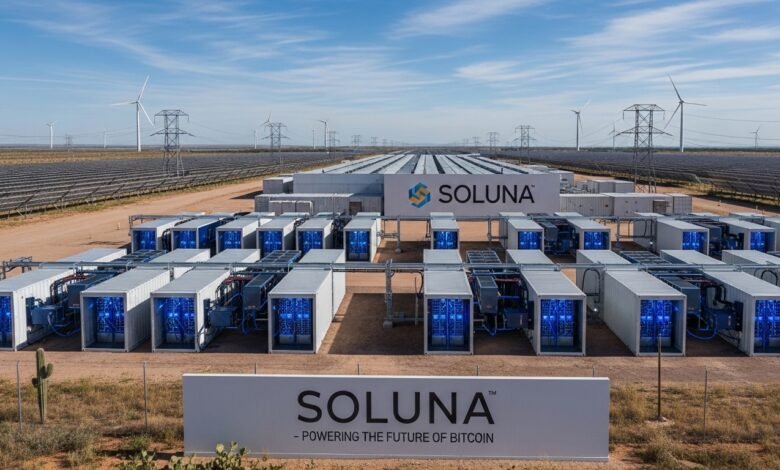
The intersection of renewable energy and cryptocurrency mining is producing some of the most exciting infrastructure deals in the digital asset space right now, and the latest agreement is turning heads across the industry. Bitcoin miner Soluna expands behind-the-meter capacity in Texas through a newly forged partnership with Blockware Solutions, signaling a bold commitment to scaling sustainable, cost-efficient mining operations deep in the heart of one of America’s most energy-rich states. This deal is not simply a routine capacity expansion — it represents a carefully calculated strategy to harness underutilized or “stranded” energy assets, reduce operational costs, and position Soluna as a long-term leader in behind-the-meter Bitcoin mining infrastructure.
Texas has long been a magnet for crypto miners thanks to its deregulated energy grid, abundant wind and solar resources, and miner-friendly regulatory environment. Soluna’s latest move amplifies its presence in this landscape at a critical time, as the broader industry navigates post-halving economics and intensifying competition for profitable hash rate. Understanding exactly what this partnership entails — and why it matters — requires a closer look at the mechanics of behind-the-meter power, the strategic value of the Blockware relationship, and what Soluna’s growth trajectory reveals about the future of green Bitcoin mining.
What Is Behind-the-Meter Power and Why Does It Matter for Bitcoin Mining?
Before diving into the specifics of the Soluna-Blockware deal, it is worth establishing a clear understanding of behind-the-meter (BTM) power and why it has become one of the most coveted advantages in the competitive world of Bitcoin mining.
Behind-the-meter power refers to electricity generated and consumed on the customer’s side of the utility meter — meaning the energy does not pass through the traditional grid infrastructure and is therefore not subject to standard transmission and distribution charges. For energy-intensive operations like Bitcoin mining, where electricity costs can account for 60–80% of total operating expenses, accessing behind-the-meter power is a transformative competitive advantage. Miners who secure BTM arrangements can dramatically lower their cost per kilowatt-hour, making each mined Bitcoin significantly more profitable, particularly in the current environment of compressed mining margins following the April 2024 halving event.
In Texas, behind-the-meter opportunities are abundant because the state generates enormous quantities of stranded renewable energy — electricity produced by wind and solar farms that cannot always be efficiently transmitted to population centers due to grid congestion. Rather than curtail this energy and waste it entirely, energy producers increasingly welcome arrangements with large-scale power consumers like Bitcoin miners who can absorb excess generation on-site. This creates a mutually beneficial dynamic: energy producers monetize otherwise wasted output, and miners gain access to ultra-low-cost, often carbon-free electricity.
Soluna Computing has built its entire business model around this concept. The company specializes in developing and operating sustainable Bitcoin mining data centers co-located with renewable energy assets, specifically targeting projects where stranded or curtailed power would otherwise go unused. Its expansion via the Blockware pact is a direct extension of this philosophy at larger scale.
Soluna Behind-the-Meter Capacity Texas: Breaking Down the Blockware Partnership
The heart of this story is the specific agreement between Soluna and Blockware Solutions, one of the most respected names in Bitcoin mining infrastructure and mining pool operations. While precise financial terms of the deal have not been fully disclosed publicly, the partnership centers on deploying additional mining capacity at Texas-based facilities where Soluna has secured or is in the process of securing behind-the-meter power arrangements.
Blockware’s Role in the Expansion
Blockware Solutions brings deep expertise in mining hardware procurement, site deployment, and hash rate optimization to the table. The company operates one of the leading Bitcoin mining pools and has extensive experience helping institutional and enterprise-scale miners stand up operations efficiently. By partnering with Blockware, Soluna gains access not only to operational know-how but also potentially to hardware at competitive pricing and a distribution network that can help maximize the productive uptime of newly deployed capacity.
This type of strategic alliance is increasingly common in the Bitcoin mining industry, where vertical integration and trusted partnerships can mean the difference between a profitable operation and one that struggles to compete. For Soluna, aligning with Blockware provides a credibility boost and operational support structure that accelerates its Texas expansion timeline.
Why Texas Remains the Premier Destination for Bitcoin Mining
Texas continues to attract more Bitcoin mining investment than virtually any other U.S. state, and for good reason. The Electric Reliability Council of Texas (ERCOT), which manages roughly 90% of the state’s electric grid, has developed sophisticated mechanisms for large flexible load customers — including crypto miners — to participate in demand response programs. These programs allow miners to curtail their energy consumption during periods of peak grid stress in exchange for financial compensation, adding yet another revenue stream on top of mining proceeds.
The combination of abundant renewable energy resources, flexible grid participation programs, a business-friendly regulatory climate, and relatively affordable land makes Texas the logical focal point for any serious mining operator looking to scale behind-the-meter capacity. Soluna’s decision to deepen its Texas footprint via the Blockware partnership is therefore not surprising — it is the rational next step for a company that has consistently prioritized low-cost, green energy access as its core competitive differentiator.
Soluna’s Broader Strategy: Green Mining at Industrial Scale
To appreciate the full significance of the Blockware deal, it helps to understand Soluna’s broader corporate vision and the trajectory it has been on over the past several years. Soluna Computing — formerly known as Soluna Holdings — has consistently articulated a mission that goes beyond simple Bitcoin production. The company positions itself as a developer of green data centers that provide beneficial demand for renewable energy projects, helping to make those projects economically viable while simultaneously running cost-efficient mining operations.
Project-Based Development Model
Soluna operates through a project-based development model, meaning it identifies specific renewable energy assets — typically wind or solar farms — and builds mining data centers directly co-located with those assets to consume power on a behind-the-meter basis. Each project is structured to align the incentives of the energy asset owner and Soluna as the power consumer, creating long-term, stable arrangements that are far more durable than simple spot market power purchases.
This model has several important advantages. First, it insulates Soluna’s operations from grid electricity price volatility, which can wreak havoc on miners who rely on standard utility contracts. Second, it creates environmental credibility, allowing Soluna to credibly claim that its Bitcoin mining operations are powered primarily by clean, renewable energy. Third, it opens doors to potential carbon credit markets and ESG-aligned capital sources that are increasingly important in today’s investment landscape.
Expanding the Project Portfolio in Texas
The Blockware pact appears to fit squarely within this project-based framework. By leveraging Blockware’s operational expertise and potentially its hardware relationships, Soluna can accelerate the deployment of additional mining capacity at Texas renewable energy sites, moving from development to production faster than it might be able to do on its own. This is particularly valuable in the current environment, where mining economics reward operators who can bring efficient capacity online quickly and keep it running at high uptime rates.
Industry analysts watching Soluna’s project pipeline note that Texas offers the company a substantial runway for continued expansion. The state’s grid continues to add wind and solar capacity at a rapid pace, generating new behind-the-meter opportunities regularly. As long as Soluna can maintain the capital and operational resources to pursue these opportunities — and partnerships like the one with Blockware suggest it can — the company’s Texas portfolio is likely to grow considerably in the coming years.
The Economics of Behind-the-Meter Bitcoin Mining in a Post-Halving World
The timing of the Soluna-Blockware announcement is worth examining through the lens of Bitcoin’s economic cycle. The April 2024 halving cut the block reward from 6.25 BTC to 3.125 BTC, effectively doubling the cost basis for miners with a fixed cost structure overnight. In this environment, energy cost efficiency is no longer simply a competitive advantage — it is an existential necessity for mining operations that want to survive and thrive over the next several years.
Miners operating on standard grid power at average U.S. industrial electricity rates find themselves under significant margin pressure, particularly when Bitcoin’s price experiences downward volatility. By contrast, miners who have secured behind-the-meter power at rates well below the grid average — sometimes as low as $0.02–$0.04 per kilowatt-hour compared to national averages of $0.07–$0.09 — retain profitability across a much wider range of Bitcoin price scenarios.
Soluna’s behind-the-meter strategy in Texas directly addresses this post-halving economic reality. By keeping its effective power costs at or near the lowest achievable levels, the company maintains positive mining margins even when Bitcoin prices dip and when network difficulty rises as more efficient hardware enters the global hash rate pool. The Blockware partnership, by potentially accelerating capacity deployment and optimizing hardware selection, further strengthens this economic position.
Environmental Credentials and the ESG Narrative in Bitcoin Mining
One of the most persistent criticisms leveled at Bitcoin mining is its environmental footprint. Critics point to the industry’s significant electricity consumption as a net negative for global decarbonization efforts. Soluna’s approach directly challenges this narrative by demonstrating that Bitcoin mining can serve as a productive economic use case for renewable energy that might otherwise be curtailed or wasted.
When a Bitcoin mining operation consumes stranded wind or solar energy that would not have been used regardless, it does not add to global carbon emissions — it simply monetizes clean energy that would have been lost. In fact, by providing reliable, flexible demand for renewable energy projects, miners like Soluna can help improve the financial viability of those projects, potentially accelerating the broader energy transition by making renewable development more economically attractive.
The Blockware partnership, set in the context of Texas’s booming renewable energy sector, reinforces Soluna’s environmental story. As institutional investors and corporate stakeholders increasingly apply ESG scrutiny to their portfolio companies and business partners, Soluna’s green mining credentials represent a genuine differentiator that goes beyond mere marketing language.
Industry Implications: What the Soluna-Blockware Deal Signals for Crypto Mining
The Soluna-Blockware partnership is not happening in a vacuum. It reflects and reinforces several important trends reshaping the Bitcoin mining industry at large.
The Professionalization of Mining Infrastructure
The days of individual hobbyist miners and loosely organized garage operations are largely behind us. Today’s competitive mining landscape is dominated by institutional-scale operators with sophisticated energy procurement strategies, professional hardware management, and structured corporate partnerships. The Soluna-Blockware deal is a textbook example of this professionalization, combining a specialized green energy mining developer with an established mining infrastructure and pool operator.
Strategic Energy Access as the New Mining Moat
If there is one lesson the post-halving environment has driven home for mining operators, it is that energy access is the ultimate competitive moat. Hardware can be purchased; software can be optimized; but truly low-cost, reliable energy — especially behind-the-meter renewable energy — is scarce and requires years of relationship-building, project development expertise, and capital deployment to secure. Soluna’s Texas pipeline represents exactly this kind of durable competitive advantage, and the Blockware pact strengthens its ability to capitalize on it.
Texas as a Long-Term Bitcoin Mining Hub
Despite occasional political and grid reliability debates, Texas appears firmly established as the dominant Bitcoin mining jurisdiction in the United States and arguably in the world. The combination of grid flexibility, renewable abundance, and regulatory pragmatism creates a uniquely favorable environment that other states struggle to replicate. Deals like the Soluna-Blockware pact reinforce Texas’s position at the center of the North American mining map.
What Comes Next for Soluna Computing?
Looking ahead, the Blockware partnership is likely just one piece of a larger strategic puzzle that Soluna is assembling. The company has signaled its intention to continue expanding its project portfolio, pursuing additional behind-the-meter opportunities not only in Texas but potentially in other renewable-rich regions. It has also expressed interest in diversifying its data center revenues beyond Bitcoin mining alone, exploring opportunities in high-performance computing (HPC) and AI workloads — a trend that several other mining operators have also embraced as they seek to leverage their existing data center infrastructure for additional revenue streams.
The integration of AI and HPC workloads with renewable-powered, behind-the-meter data centers could prove to be a powerful business model evolution. As demand for AI computing infrastructure grows explosively, operators who already have purpose-built data centers with cost-advantaged power could find themselves in a uniquely valuable position to serve this market while continuing to mine Bitcoin during periods of favorable economics.
Conclusion
By combining renewable energy access, operational expertise, and strategic partnerships, Soluna is building a mining business designed to remain competitive and profitable through Bitcoin’s inherently cyclical economic landscape.
For investors, industry observers, and energy sector participants, this deal illustrates the growing convergence of clean energy development and digital asset infrastructure — a convergence that, done right, creates genuine value for both sectors. Texas, with its unmatched renewable resources and grid flexibility, will remain at the center of this story for years to come.
If you are following developments in sustainable Bitcoin mining, the Soluna-Blockware pact in Texas is a must-watch case study. To stay updated on the latest in Bitcoin mining infrastructure and energy strategy, subscribe to leading industry publications and follow Soluna Computing’s official communications directly.
See more; Altcoin News Today: Significant Gainers Include RESOLV, ALCX, QNT