
BTC USD Crash: Can the Saylor Sigil Save Bitcoin?
BTC USD has plunged despite bullish Bitcoin news. Learn what caused the crash and whether Michael Saylor’s next “Saylor Sigil” can revive the price.

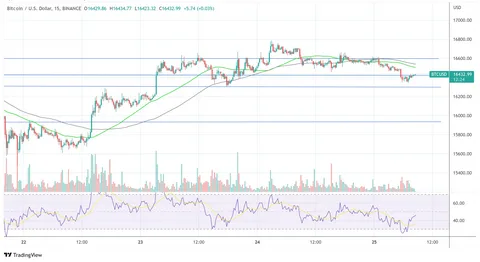
The BTC USD pair has just lived through one of its ugliest months in years. After printing an all-time high above $126,000 in October 2025, Bitcoin has slid into a brutal correction, briefly trading in the low $80,000 range and hovering around $86,000–$90,000 in late November. Analysts describe this as the worst monthly performance for BTC since 2022, with losses north of 20% and hundreds of billions wiped from crypto market capitalization.
What makes this crash especially unnerving is that Bitcoin news has not offered the usual lifelines. Spot Bitcoin ETF flows, once the bull market’s rocket fuel, turned sharply negative as U.S. products saw billions in outflows, and macro sentiment flipped from “Moonvember” optimism to outright fear.
Against this backdrop, one question keeps surfacing on crypto Twitter and trading desks: if the market no longer reacts to bullish headlines, could a symbolic move from Michael Saylor—a so-called “Saylor Sigil”—be the spark that saves BTC USD from deeper losses? Saylor, through MicroStrategy’s Bitcoin strategy, has become a kind of mythic figure whose big accumulation announcements often coincide with shifts in sentiment. His recent vow not to “back down” on Bitcoin has only amplified the narrative.
In this in-depth Bitcoin price analysis, we will unpack why BTC USD plummeted, why recent Bitcoin news failed to stir the price, what people mean by the Saylor Sigil, and whether any single buyer—even Saylor—can realistically reverse the current trend.
BTC USD Plummets Off a Cliff: What Just Happened?

Over the last six weeks, BTC USD has flipped from euphoria to panic. Bitcoin’s surge above $120,000 in October looked like the beginning of yet another parabolic run. Instead, it marked the top. Since then, BTC has fallen more than 30%, erasing over a trillion dollars from global digital asset values and dragging most altcoins down with it.
Data from multiple exchanges show Bitcoin sliding through key support zones: first losing $110,000, then $100,000, and finally cracking below $90,000, with intraday lows near $82,000–$84,000. On some days, liquidations surged above $600 million, confirming that over-leveraged longs were forced out in a cascade of margin calls.
At the same time, BTC USD trading volume spiked during down moves, a classic sign of panic selling. U.S. hours in particular accounted for nearly all of Bitcoin’s November losses, a shift that confirms how deeply institutional and ETF flows now shape the BTC USD chart.
In short, this was not just a routine dip. It was a broad crypto market crash triggered by a complex mix of macro stress, derivatives unwinding, and investor exhaustion.
Macro Storm Meets the Bitcoin Cycle
To understand why BTC USD dropped so violently, you have to look beyond the chart. November 2025 has been dominated by macro headlines and liquidity shocks rather than crypto-native issues.
A record U.S. government shutdown lasting more than forty days created a “data vacuum” where traders were flying blind on key economic indicators. When it finally ended, a flood of delayed data hit the market all at once, forcing a rapid repricing of risk assets—from tech stocks to Bitcoin.
At the same time, investors began to question how many more rate cuts the Federal Reserve could realistically deliver in 2026. Hopes of an aggressive easing cycle faded, and traders shifted to a risk-off stance. Because BTC USD now behaves like a high-beta tech proxy, that change in mood hit Bitcoin even harder than stocks.
Correlations with AI and semiconductor stocks, particularly giants like Nvidia, magnified every swing. When AI names sold off on earnings jitters or growth concerns, algorithmic strategies that treat Bitcoin and tech as a single “risk bucket” started offloading BTC as well.
Underneath all of this, Bitcoin’s own four-year halving cycle is still in play. Historically, mid-cycle corrections of 30–40% have been common even in strong bull markets. But what makes this one feel different is how tightly BTC USD is now tied to TradFi flows, ETF rebalancing, and Wall Street risk models.
The Role of Derivatives and U.S. Trading Hours
Derivatives data shows that much of the November pain in BTC USD was fueled by futures and perpetual swaps. As price broke below $100,000 and then $90,000, bearish positioning surged. Funding rates turned deeply negative, and open interest spiked—until a wave of liquidations flushed out both longs and overly aggressive shorts.
CoinDesk’s market analysis points out that almost all of Bitcoin’s November downside has been concentrated in U.S. hours. That is a radical shift from earlier cycles, where Asia often led both rallies and crashes. Today, the Bitcoin USD pair trades more like a U.S. tech stock index, responding directly to American macro headlines and ETF flows rather than purely crypto-native catalysts.
This is crucial when assessing whether something like a Saylor Sigil can “save” the market. When the primary driver of the trend is institutional de-risking during New York hours, one high-profile buyer has less influence than he did in prior eras.
Why Bitcoin News Failed to Lift BTC USD
If you scroll through recent headlines, the paradox becomes obvious. On paper, there have been several bullish stories for Bitcoin:
Regained ground after dipping near $82,000, modest rebounds toward $88,000, and analyst talk of a possible short squeeze if BTC can reclaim the $90,000 region.
Brief rallies above $90,000 around U.S. holidays, with altcoins like Ethereum, Solana, XRP, and Dogecoin also perking up.
In a previous cycle, such Bitcoin news might have sparked a full-blown BTC USD breakout. Instead, every bounce has been sold into, and each optimistic headline has been overshadowed within days by renewed ETF outflows and macro fears.
This breakdown in responsiveness shows that the market narrative is temporarily broken. When traders no longer trust rallies, good news gets discounted. That is exactly the environment in which people start reaching for “hero” narratives like the Saylor Sigil—the idea that one climactic Michael Saylor move can restore faith and reverse the downtrend.
Sentiment: From Moonvember to Maximum Fear
Heading into November, many analysts dubbed the month “Moonvember,” expecting seasonal strength and ETF inflows to push BTC USD toward $150,000–$165,000. Several research pieces pointed to historical patterns where November delivered outsized gains.
Reality turned out very different. As prices rolled over, fear surged. Deutsche Bank pointed to stalling adoption, with the share of people using Bitcoin dropping from about 17% to 15% in recent surveys. They warned that the so-called “Tinkerbell effect”—the idea that Bitcoin’s value is heavily dependent on collective belief—was weakening.
Meanwhile, the Crypto Fear & Greed Index sank toward extremes associated with previous capitulation events, and experts warned that this meltdown may be harder to recover from than past crashes because institutional investors are now a much larger share of the market.
Put simply, sentiment has shifted from “buy every dip” to “sell every rally.” In such an environment, even strong Bitcoin price prediction models and bullish on-chain metrics struggle to change behavior.
Technical Signals: Death Cross and Broken Support
On the BTC USD daily chart, the technical picture is equally grim. Analysts highlight a looming or recently confirmed Death Cross, where the 50-day moving average crosses below the 200-day moving average. Historically, this pattern has often appeared near local bottoms for Bitcoin, but it still sends a powerful psychological signal that the trend is bearish.
Important support zones around $100,000 and $90,000 have flipped into resistance. Some technical research now points to downside targets in the $75,000–$83,000 range, with worst-case scenarios talking about dips into the high $60,000s if macro conditions deteriorate further.
From a pure Bitcoin technical analysis standpoint, the path of least resistance in the short term still tilts downward unless the price can reclaim those former support levels and hold them with strong volume.
Enter the “Saylor Sigil”: What Does It Really Mean?
The term “Saylor Sigil” is not an official indicator you will find on TradingView. It is a community meme that fuses mythology, branding, and market psychology around Michael Saylor, the executive chairman of MicroStrategy and the most vocal corporate Bitcoin bull.
Over the last several years, Saylor has repeatedly made headlines by converting MicroStrategy’s balance sheet into Bitcoin, issuing debt to buy more BTC, and aggressively promoting the asset as “digital energy” and “digital gold.” Each time he announced a major purchase or posted a symbolic statement on social media, the market often treated it as a kind of bullish sigil—a sign that the high priest of corporate Bitcoin still had faith.
In late November, as BTC USD drifted around $88,000 after dipping below $82,000, Saylor again reiterated that he “won’t back down,” reinforcing his reputation as an unshakable hodler.
For some traders, this kind of messaging is the Saylor Sigil: a ritual declaration that the Bitcoin thesis is alive, even when the chart looks terrifying.
In more practical terms, the market usually expects a Saylor Sigil to be backed up by action—typically another large MicroStrategy Bitcoin purchase filed with regulators and blasted across financial media.
Can Another MicroStrategy Buy Order Save Bitcoin?
The big question is whether a fresh MicroStrategy BTC purchase could actually turn around the BTC USD downtrend. Historically, Saylor’s buys have coincided with major inflection points, or at least provided psychological support during corrections.
However, the market structure in 2025 is very different from 2020 or 2021. Back then, a purchase of a few hundred million dollars in Bitcoin by MicroStrategy could materially impact order books. Today, Bitcoin’s market cap—despite the crash—sits in the multi-trillion-dollar range, and daily spot plus derivatives volume runs into tens of billions.
A big Saylor buy might still matter, but mostly as sentiment fuel rather than raw liquidity. It could:
Reassure long-term believers that the corporate Bitcoin strategy remains intact.
Provide a narrative counterweight to ETF outflows and macro fear.
Trigger a modest short squeeze if positioned right around a key technical level.
So, the Saylor Sigil can help shift mood at the margin. But expecting it to magically “save” BTC USD is more wishful thinking than solid strategy.
Will the Saylor Sigil Really Save Bitcoin This Time?
The honest answer is that Bitcoin’s fate right now is bigger than Michael Saylor. The November crash is being driven primarily by structural forces: institutional flows, macro risk aversion, and a reassessment of valuations after an extremely fast run-up to $126,000.
That said, narratives matter in crypto. If Saylor or another major corporate or sovereign buyer revealed a new multi-billion-dollar allocation at the same time that:
then the Saylor Sigil could become the story traders latch onto as they rotate back into risk. Markets often pick a single image or name—“Elon and Tesla,” “BlackRock ETF approval,” “Saylor’s big buy”—to symbolize a much broader shift that was already underway.
In other words, the Saylor Sigil is unlikely to be the cause of a recovery, but it could be the banner under which a recovery marches.
Short-Term BTC USD Outlook: Volatile and Binary
Short-term BTC USD forecasts remain divided. Some analysts warn that the crash has not yet fully played out and that Bitcoin could explore the $70,000s if support around $80,000–$83,000 fails. Others argue that derivatives data already shows capitulation and that the ingredients for a powerful short squeeze toward and above $90,000 are in place.
This creates a binary feel: a clean reclaim of $90,000 with improving flows could shift sentiment quickly, while a decisive breakdown below the recent lows might usher in another leg down.
Long-Term Bitcoin Case: Broken or Just Bruised?

For long-term believers, the most important question is not “Will the Saylor Sigil save BTC this month?” but “Has anything truly changed in Bitcoin’s long-term thesis?”
The same elements that made Bitcoin hit six-figure prices in 2025 are still here. What has changed, at least for now, is the willingness of institutions and retail traders to keep bidding it up in the face of macro headwinds.
This is why many analysts frame the current crash as a “deep mid-cycle correction” rather than a permanent top. They argue that BTC USD is in a painful but ultimately healthy reset, shaking out excess leverage and forcing a more realistic long-term Bitcoin price prediction path rather than straight-line moon math.
If that view is correct, the Saylor Sigil is more like a supporting character in a multiyear story where macro liquidity, adoption trends, and Bitcoin’s halving cycle are still the main plot.
How Traders and Investors Can Navigate the BTC USD Crash
In markets like this, the temptation to look for saviors is understandable. But whether or not the Saylor Sigil appears, traders and investors still have to manage risk and expectations.
Short-term traders focused on the BTC USD pair can treat current levels as high-volatility trading ranges, using strict stop-losses and sizing positions conservatively. Chasing leverage after a 30–35% drawdown is usually a recipe for becoming the next liquidation statistic.
Long-term allocators who still believe in the Bitcoin thesis may treat such crashes as opportunities to average in slowly rather than trying to catch the exact bottom. History shows that Bitcoin’s biggest long-term winners usually came from those who respected volatility but stuck to a plan, not from those who tried to trade every swing.
Most importantly, no investor should base their entire strategy on what one person—however influential—does. Michael Saylor can signal conviction, but he cannot guarantee outcomes. The Bitcoin market is now too large, too institutional, and too intertwined with global macro conditions for any single “sigil” to control.
Nothing in this article is financial advice; it is a framework to help you think about the current BTC USD environment and the role that headlines and heroes actually play.
Conclusion
The dramatic plunge in BTC USD off its recent highs has shaken confidence and triggered a wave of soul-searching in the crypto community. November’s sell-off has been driven less by pure crypto panic and more by a blend of macro uncertainty, ETF outflows, and institutional deleveraging—conditions under which even the most bullish Bitcoin news struggles to move the needle.
In that environment, the Saylor Sigil—the idea that a bold move or symbolic statement from Michael Saylor can rescue the market—functions more as a psychological anchor than a literal solution. A new MicroStrategy accumulation, or another high-profile endorsement, might help turn the narrative when the underlying conditions are already improving. But it will not, by itself, reverse a structurally driven downtrend.
For now, the path ahead for BTC USD is likely to remain volatile, with real risk of further downside alongside the potential for violent relief rallies and short squeezes. Whether you are a trader seeking opportunity or a long-term believer riding out the storm, the key is to ground your decisions in risk management and time horizon—not in the hope that a single hero will draw a magic sigil on the chart and send Bitcoin back to the moon.
FAQs
Q. What caused the recent BTC USD crash?
The recent BTC USD crash was triggered by a combination of factors: a sharp shift to risk-off sentiment after a record U.S. government shutdown, weaker expectations for aggressive rate cuts, rising correlation with falling tech and AI stocks, and heavy ETF outflows and derivatives liquidations. Together, these forces pushed Bitcoin from highs above $120,000 down into the $80,000s, erasing a large chunk of 2025’s gains
Q. What exactly is the “Saylor Sigil”?
The Saylor Sigil is a community nickname rather than an official indicator. It loosely refers to Michael Saylor’s highly visible shows of conviction—such as big MicroStrategy Bitcoin purchases or bold public statements that he “won’t back down.” Traders treat these moves as symbolic signs that a powerful long-term bull still believes in the Bitcoin price, and sometimes they coincide with turning points in sentiment.
Q. Can Michael Saylor really save BTC USD from falling further?
Saylor can influence sentiment, but he cannot single-handedly “save” BTC USD. The market is now dominated by large institutional flows, ETF products, and macro-driven trading algorithms. A new Saylor Sigil in the form of a big purchase might spark a short-term bounce or reinforce long-term confidence, but it is unlikely to completely override ETF outflows, derivative positioning, and broader risk-off dynamics.
Q. Is the Bitcoin bull market over after this crash?
Analysts are divided, but many see the current decline as a severe mid-cycle correction rather than the end of the bull market. Past cycles have included multiple drawdowns of 30–40% even as the long-term trend remained up. The presence of ETFs, institutional holders, and broader adoption complicates the picture, but several research pieces still frame this as a deep reset rather than a permanent top for BTC USD—provided key support zones hold and macro conditions do not deteriorate dramatically.
Q. What should investors watch next for Bitcoin?
Investors should watch a few key elements: price behavior around the $80,000–$90,000 region, funding rates and open interest in derivatives markets, and the direction of Bitcoin ETF flows, especially during U.S. trading hours. On a higher level, macro signals around interest rates, economic growth, and risk appetite in global markets will continue to drive BTC USD. Any future Saylor Sigil will be more meaningful if it appears alongside improving macro data and stabilizing institutional flows.