NFT Market Climbs as Buyers Rise 22% and Bitcoin Takes the Lead
NFT market climbs with a 22% surge in buyers as Bitcoin leads the recovery. Discover the trends driving digital collectibles forward in 2026.

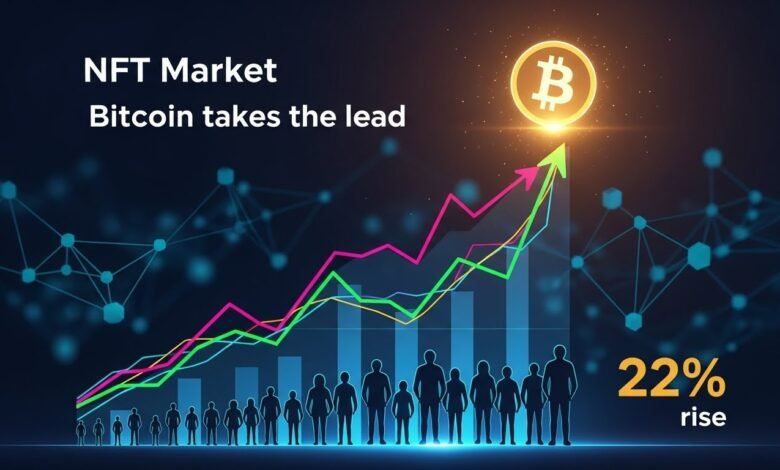
NFT market climbs to new heights with unprecedented momentum. Recent data reveals that buyers have surged by an impressive twenty-two percent, signaling renewed confidence in blockchain-based assets. This resurgence comes at a pivotal moment when Bitcoin has emerged as the dominant force, fundamentally reshaping how collectors and investors approach non-fungible tokens. The convergence of cryptocurrency strength and growing mainstream adoption has created a perfect storm for digital art, gaming assets, and virtual real estate to flourish once again. As we navigate through early 2026, understanding the factors behind this growth becomes essential for anyone looking to participate in the evolving digital economy.
The relationship between cryptocurrency performance and NFT market growth has never been more apparent, with Bitcoin’s price stability providing the foundation for increased trading activity and collector confidence across multiple blockchain networks.
Current NFT Market Recovery
The resurgence we’re witnessing in digital collectibles represents more than just a temporary spike in trading volume. The NFT market climbs we’re observing stem from fundamental shifts in how both institutional and retail participants view blockchain-based assets. Unlike the speculative frenzy of previous years, today’s growth is characterized by sustainable practices, genuine utility, and long-term value creation.
Market analysts have identified several key indicators that differentiate this recovery from past cycles. The twenty-two percent increase in active buyers represents real people making informed decisions rather than algorithmic trading or wash trading activities that plagued earlier periods. This organic growth suggests that collectors are returning to the space with more sophisticated understanding and clearer investment theses.
Furthermore, the infrastructure supporting digital collectibles has matured considerably. Marketplaces now offer better user experiences, enhanced security features, and improved discovery mechanisms that make finding valuable assets easier than ever before. Layer-two scaling solutions have dramatically reduced transaction costs, removing one of the primary barriers that previously discouraged smaller collectors from participating actively.
The demographic profile of NFT market participants has also evolved significantly. While early adopters were predominantly cryptocurrency enthusiasts and tech-savvy millennials, the current wave includes art collectors, gaming enthusiasts, brand loyalists, and institutional investors seeking alternative asset exposure. This diversification creates a more stable foundation for sustained growth.
Bitcoin’s Dominant Role in NFT Market Expansion
Bitcoin’s position as the leading cryptocurrency has profound implications for the entire digital collectibles ecosystem. As Bitcoin leads NFT growth, we’re seeing a fundamental shift in how collectors approach purchasing decisions and portfolio construction. The world’s first cryptocurrency has transcended its original purpose as digital cash to become the benchmark for all blockchain-based value storage.
The correlation between Bitcoin price movements and NFT trading volume has strengthened considerably over recent months. When Bitcoin demonstrates stability and upward momentum, collectors feel more confident deploying capital into digital assets that may require longer holding periods. This psychological effect cannot be understated, as it influences everything from individual purchase decisions to institutional allocation strategies.
Bitcoin-native NFT protocols have experienced explosive growth, with Ordinals and related technologies bringing digital collectibles directly onto the Bitcoin blockchain. This development has attracted a new subset of collectors who prefer Bitcoin’s security model and long-term track record over alternative blockchain networks. The ability to inscribe data directly onto satoshis has created entirely new categories of collectibles that carry the provenance and permanence associated with the Bitcoin network.
The institutional adoption of Bitcoin has created spillover effects throughout the digital asset market. As major corporations add Bitcoin to their balance sheets and financial institutions develop Bitcoin-related products, the legitimacy of blockchain technology as a whole increases. This mainstream acceptance makes it easier for companies to experiment with NFT strategies for customer engagement, loyalty programs, and digital identity solutions.
Mining dynamics and network security improvements in Bitcoin have also contributed to broader blockchain confidence. When the most valuable cryptocurrency network demonstrates resilience against attacks and continues processing transactions reliably, it reinforces trust in distributed ledger technology generally. This trust is essential for collectors making significant investments in digital items whose value depends entirely on blockchain permanence.
Key Factors Driving the 22% Surge in NFT Buyers
Improved user experience across major marketplaces has removed many friction points that previously deterred mainstream adoption. Creating wallets, funding accounts, and executing transactions have all become streamlined processes that require minimal technical knowledge. Many platforms now offer fiat on-ramps that allow users to purchase digital collectibles with credit cards, eliminating the need to first acquire cryptocurrency through exchanges.
The gaming industry’s embrace of blockchain technology has introduced millions of players to NFT ownership through in-game assets that retain value outside game environments. Play-to-earn mechanics have demonstrated that digital items can represent genuine economic value, not just cosmetic upgrades. This utility-driven approach resonates with gamers who already understand virtual economies and are comfortable with the concept of owning digital property.
Brand partnerships and celebrity collaborations have brought unprecedented attention to the NFT space. Major entertainment franchises, sports leagues, fashion houses, and musicians have launched digital collectibles that appeal to existing fan bases. These initiatives often serve as entry points for people who might never have considered cryptocurrency investments but are motivated by their affinity for specific brands or personalities.
Regulatory clarity in key jurisdictions has reduced uncertainty around the legal status of digital collectibles. While frameworks continue evolving, the establishment of basic guidelines around taxation, securities classification, and consumer protection has made both individuals and institutions more comfortable participating. This clarity is especially important for brands considering NFT strategies, as it helps them navigate compliance requirements.
Educational resources have proliferated across social media, streaming platforms, and traditional media outlets. High-quality content explaining blockchain technology, wallet security, and collectibles evaluation has empowered newcomers to make informed decisions. This knowledge dissemination helps build a more sophisticated collector base less susceptible to scams and speculative excess.
Blockchain Networks Competing for NFT Market Share
Ethereum remains the established leader for high-value art and premium collectibles, with its first-mover advantage and robust smart contract capabilities continuing to attract blue-chip projects. The network’s transition to proof-of-stake has addressed environmental concerns that previously deterred some collectors and creators. Layer-two solutions built atop Ethereum have dramatically reduced transaction costs while maintaining security guarantees, making the network accessible to collectors with smaller budgets.
Solana has carved out a significant niche in the NFT ecosystem by offering extremely low transaction fees and near-instant finality. The network attracts projects focused on high-frequency trading, gaming assets that require rapid transfers, and creators who want to offer their work at accessible price points. Despite experiencing technical challenges and network outages in previous years, Solana has demonstrated resilience and continues improving its infrastructure.
Polygon has emerged as a preferred choice for brands entering the digital collectibles space, offering Ethereum compatibility with substantially lower costs and faster transactions. Major companies launching NFT initiatives often choose Polygon for pilot programs because it allows them to leverage Ethereum’s developer ecosystem while avoiding prohibitive gas fees. This positioning has made Polygon the infrastructure backbone for many mainstream NFT applications.
Newer entrants like Base and Arbitrum are attracting projects that prioritize scalability and want to benefit from Ethereum’s security without its cost structure. These layer-two networks offer compelling value propositions for specific use cases, from social tokens to membership passes. Their growth reflects the NFT market’s maturation as different projects optimize for various trade-offs between decentralization, speed, and cost.
Cross-chain interoperability solutions are becoming increasingly important as collectors accumulate assets across multiple networks. Bridge protocols and multi-chain wallets allow users to manage diverse portfolios without maintaining separate interfaces for each blockchain. This infrastructure development reduces friction and may eventually make the underlying blockchain less relevant to end users.
Digital Art and Collectibles Leading the Charge
The NFT art market has evolved from its experimental origins into a sophisticated ecosystem with established galleries, curatorial practices, and secondary market dynamics. Digital artists who pioneered blockchain-based distribution are now joined by traditional artists exploring new mediums and collectors seeking to diversify beyond physical works.
Generative art has experienced a particular renaissance, with algorithmic creation producing unique pieces that challenge conventional notions of authorship and creativity. Platforms dedicated to generative work have cultivated communities of collectors who appreciate the mathematical elegance and visual diversity these projects offer. The ability to verify on-chain which pieces were created by original algorithms versus derivatives has become an important aspect of value assessment.
Photography has found a natural home in the NFT space, with photographers using blockchain provenance to combat unauthorized reproduction and establish edition sizes for digital prints. This application addresses longstanding challenges in photography markets where unlimited reproduction has historically complicated pricing and collecting. Several photographers have achieved greater financial success through NFT sales than through traditional gallery representation.
Profile picture projects continue dominating trading volume despite predictions of their decline. These collectibles serve social signaling functions across digital platforms and have evolved beyond simple avatars to represent membership in exclusive communities. The most successful projects have expanded into clothing lines, events, and entertainment properties, demonstrating sustainable business models beyond initial mint revenue.
Three-dimensional artwork and virtual sculptures designed for metaverse environments represent the frontier of digital creativity. These works often incorporate interactivity and animation impossible in physical mediums. As virtual world platforms mature, demand for premium digital art to display in virtual galleries and spaces has created new opportunities for artists specializing in immersive experiences.
Gaming Assets and Virtual Real Estate Opportunities
Weapon skins, character customizations, and equipment that players can truly own rather than merely license from game publishers have proven tremendously popular. This ownership model allows players to trade items freely, potentially recouping or profiting from their time invested. Games that implement these mechanics attract players who view gaming partly as income generation rather than pure entertainment.
Virtual land parcels in metaverse platforms constitute a unique NFT category that blends speculation, development opportunity, and social positioning. Owners can develop their plots with structures, experiences, and businesses that generate ongoing revenue. Prime locations adjacent to popular destinations command premium prices, creating digital real estate markets that mirror physical property dynamics in surprising ways.
Interoperability initiatives aim to make gaming assets usable across multiple games and platforms. While technical and business challenges remain substantial, the vision of portable digital identity and cross-game inventory appeals strongly to players. Several consortiums of game developers are working toward standards that would enable this functionality, potentially increasing the utility and value of gaming NFTs.
Play-to-earn mechanics have evolved beyond early unsustainable models toward balanced systems that reward skill and engagement appropriately. Successful implementations carefully manage token economics to avoid inflationary collapse while providing meaningful rewards. These refined approaches are attracting serious gamers who previously dismissed blockchain gaming as purely extractive schemes.
Esports organizations and professional gamers have begun leveraging NFTs for fan engagement through exclusive content, meet-and-greet opportunities, and profit-sharing arrangements. These applications build deeper connections between athletes and supporters while creating new revenue streams. Tournament organizers are experimenting with NFT-based ticketing and commemorative items that serve as permanent records of historic competitions.
Institutional Investment and Corporate Adoption Trends
Investment funds focused specifically on digital collectibles have raised substantial capital from accredited investors and family offices. These funds employ sophisticated acquisition strategies, targeting undervalued assets, promising creators, and projects with strong community engagement. Their participation brings professional valuation methodologies and portfolio management practices to a market that previously relied heavily on intuition and social proof.
Major auction houses have established dedicated departments for digital art and NFTs, validating the category as legitimate art market segment. Christie’s, Sotheby’s, and Phillips regularly feature digital works alongside traditional art, with some sales achieving prices comparable to physical pieces. This institutional endorsement has helped overcome skepticism among traditional collectors while introducing blockchain technology to wealthy individuals who might not otherwise explore cryptocurrency.
Fashion brands have embraced NFTs for both digital wearables and physical-digital hybrid products. Luxury houses create limited-edition virtual clothing for metaverse platforms while using blockchain authentication for physical items to combat counterfeiting. These initiatives serve dual purposes of engaging younger consumers and protecting brand integrity. Several brands report that NFT projects have become significant revenue contributors and customer acquisition channels.
Entertainment companies are exploring blockchain technology for fan engagement and intellectual property monetization. Studios release collectibles tied to film releases, streaming platforms experiment with exclusive content access through token ownership, and musicians sell direct-to-fan packages that include both physical and digital elements. These applications leverage existing fan enthusiasm while building deeper relationships that persist beyond single transactions.
Financial institutions have begun offering NFT-related services ranging from custody solutions to lending products that use digital collectibles as collateral. Banks that initially dismissed blockchain technology now view it as inevitable evolution of digital commerce. Providing infrastructure for safely storing valuable assets and enabling liquidity through loans helps legitimize the market while addressing practical needs of high-net-worth collectors.
Challenges and Risks Facing NFT Market Growth
Security vulnerabilities continue plaguing the ecosystem, with phishing attacks, smart contract exploits, and marketplace hacks regularly resulting in asset theft. Even experienced collectors occasionally fall victim to sophisticated scams that compromise wallet security. These incidents damage the reputation of NFTs generally and highlight the technical expertise required to safely navigate the space. Industry-wide security improvements and better user education are essential for mainstream adoption.
Environmental concerns persist despite blockchain networks transitioning to energy-efficient consensus mechanisms. Critics argue that any non-essential use of computing resources is wasteful, particularly for speculative assets. While proof-of-stake blockchains consume vastly less energy than proof-of-work systems, the perception of environmental irresponsibility continues deterring some potential participants. Projects increasingly emphasize sustainability credentials and carbon offset initiatives to address these concerns.
Regulatory uncertainty in numerous jurisdictions creates compliance challenges for creators, marketplaces, and collectors. Questions around securities classification, taxation of transactions, and consumer protection requirements remain partially unresolved. This ambiguity complicates business planning and international operations while potentially exposing participants to unexpected legal liabilities. Clearer regulatory frameworks would benefit market development but might also impose restrictions that some view as limiting innovation.
Quality control issues affect market credibility as low-effort projects and outright scams proliferate alongside genuine creative work. The ease of creating and listing NFTs means marketplaces contain enormous amounts of derivative, plagiarized, or worthless content. This noise makes discovery of quality projects difficult for newcomers and contributes to perceptions that the entire category lacks substance. Improved curation and verification systems could help but risk introducing centralized gatekeepers that conflict with blockchain’s permissionless ethos.
The Future Outlook for NFT Market Development
Physical-digital integration will likely strengthen as brands develop seamless experiences connecting blockchain authentication with tangible products. Imagine purchasing luxury goods with embedded NFC chips that link to NFTs containing provenance information, ownership history, and exclusive content. This fusion could transform how consumers verify authenticity, transfer ownership, and engage with products they purchase, making blockchain technology invisible infrastructure rather than novelty feature.
Social media platforms may incorporate NFT functionality directly into their interfaces, allowing users to display owned assets as profile pictures, backgrounds, or badges without needing separate wallets. Twitter’s experimental profile picture verification was an early example of this integration. As platforms compete for creator loyalty, native blockchain features could become standard offerings, dramatically expanding the audience exposed to digital collectibles.
Decentralized autonomous organizations (DAOs) using NFTs as membership tokens are pioneering new governance models where ownership confers voting rights over shared resources. These experiments in digital democracy could influence how communities organize and make collective decisions. Investment DAOs that allow members to jointly purchase valuable assets are making high-value collectibles accessible to people who couldn’t afford them individually.
Cross-industry standardization efforts may eventually produce protocols enabling NFTs to function seamlessly across platforms and applications. If digital assets could move frictionlessly between games, virtual worlds, and marketplaces regardless of underlying blockchain, the utility and value of owning them would increase substantially. Technical and business challenges to achieving interoperability remain significant, but progress continues toward this vision.
Strategies for Participating in NFT Market Growth
For those looking to capitalize on the NFT market climbs we’re witnessing, developing informed strategies based on clear objectives and risk tolerance is essential. Whether approaching digital collectibles as collector, investor, or creator, success requires education, patience, and adaptability.
Research should form the foundation of any participation strategy. Understanding project fundamentals, team backgrounds, community strength, and utility propositions helps identify opportunities with genuine value rather than short-term hype. Following reputable analysts, participating in community discussions, and studying historical market patterns builds knowledge that improves decision quality over time.
Diversification across blockchain networks, project types, and price points reduces exposure to any single point of failure. Maintaining positions in established blue-chip collections alongside emerging projects balances stability with growth potential. Similarly, holding assets across different categories like art, gaming items, and utility tokens provides exposure to multiple use cases and reduces correlation risk.
Community engagement often proves as important as the assets themselves. Projects with active, positive communities tend to maintain value better during market downturns and provide more enjoyable ownership experiences. Participating in discussions, attending virtual events, and building relationships with other collectors enhances both knowledge and network.
Security practices cannot be overemphasized, as no amount of successful trading matters if assets are stolen. Using hardware wallets for valuable holdings, being skeptical of unsolicited messages, and carefully verifying transaction details before approving them are basic hygiene practices that every participant should master. Treating NFT security with the same seriousness as traditional financial security is non-negotiable for long-term success.
Long-term perspective helps navigate the inevitable market cycles that characterize volatile assets. Collectors who acquire pieces they genuinely appreciate regardless of potential appreciation tend to make better decisions than those purely focused on financial returns. Being prepared to hold through downturns rather than panic selling during corrections allows participation in subsequent recoveries.
Conclusion
The remarkable surge in the NFT market climbs with twenty-two percent more buyers entering the space alongside Bitcoin’s dominant leadership signals a maturation phase for digital collectibles. We’re witnessing a transformation from speculative mania toward sustainable ecosystem built on genuine utility, artistic merit, and technological innovation. The convergence of improved infrastructure, mainstream adoption, institutional participation, and expanding use cases creates compelling opportunities for those who approach the space thoughtfully.
As Bitcoin continues demonstrating its role as foundational cryptocurrency that lifts the entire digital asset sector, the NFT market benefits from increased legitimacy and capital flows. The diversification of blockchain networks, applications spanning art to gaming, and corporate embrace of digital collectibles all point toward continued growth trajectory. However, success in this evolving landscape requires education, security consciousness, and realistic expectations about risks alongside potential rewards.
Whether you’re an artist exploring new distribution channels, a collector seeking unique digital ownership, a gamer interested in true asset ownership, or an investor diversifying your portfolio, the current moment represents an opportune entry point. The NFT market climbs we’re experiencing offer pathways for participation that didn’t exist during earlier phases. Take time to learn, start small, engage authentically with communities, and build your presence in this dynamic space that’s reshaping digital ownership and creative expression.
See more: Bitcoin and Ethereum Drop as US Unemployment Hits 2021 High