
Sonami Layer-2 Solution Tackles Solana Congestion
Sonami unveils a Solana-focused Layer-2 solution using transaction bundling to reduce congestion, improve reliability, and boost dApp performance.

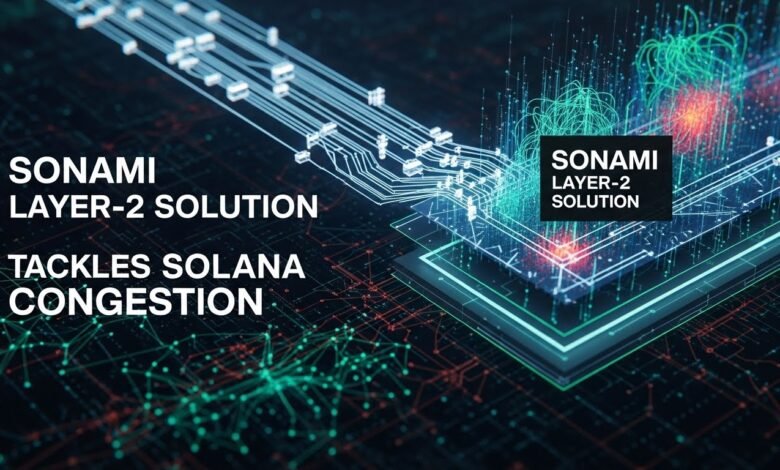
Solana has built its reputation on speed, low costs, and a developer-friendly environment that powers everything from decentralized exchanges to on-chain games. But as any high-usage network learns the hard way, popularity has a side effect: when demand spikes, users can run into slow confirmations, failed transactions, and inconsistent app experiences. “Solana congestion” isn’t just a meme on Crypto Twitter—it’s a real friction point for traders, builders, and everyday users who want blockchains to feel as seamless as web apps.
That’s the context behind Sonami’s Layer-2 solution—a new scaling approach positioned specifically to reduce congestion pressure on Solana during high-traffic moments. Reports around the launch describe Sonami as introducing a Solana-focused Layer 2 approach that leverages transaction bundling to compress multiple user interactions into more efficient settlement on Solana’s base layer.
In this article, we’ll break down what Solana congestion really means at the user level, what Sonami is claiming to bring to the table, how a Layer-2 solution can relieve bottlenecks, and what it could mean for developers building real-time applications. You’ll also get practical context: where congestion comes from, what improvements already exist, and the questions you should ask when evaluating any new Layer-2 network—especially in an ecosystem that’s already fast but occasionally overloaded.
Why Solana Congestion Happens in the First Place
Solana’s design aims for high throughput and low fees, which is exactly why the chain attracts high-frequency activity. But congestion happens when the network is flooded with transaction requests at once, pushing the system toward its processing limits. When that occurs, users may see delayed confirmations, transaction failures, wallet errors, or dApp timeouts—symptoms that feel “web2-broken” even though the chain is still functioning.
A helpful way to think about Solana congestion is as a rush-hour problem: roads can be excellent, but if too many cars enter at the same time, traffic forms. Even if the underlying tech is strong, intense bursts—like meme coin surges, NFT mints, or rapid-fire trading—can stress the network and degrade the user experience.
The Hidden Cost of Congestion: Failed UX and Lost Trust
For users, congestion is rarely a technical curiosity. It’s missed trades, failed swaps, stuck deposits, and that nagging feeling that “it works… until it doesn’t.” For developers, congestion increases support burden and creates tough tradeoffs: do you redesign user flows to be more congestion-tolerant, or assume Solana will always be smooth?
In real markets, reliability is a feature. A chain can be fast on average, but if it becomes unpredictable at peak times, sophisticated users route around it. That’s why scaling isn’t just about raw TPS; it’s about consistent finality, predictable execution, and resilient dApp behavior under load.
What Congestion Looks Like in Practical Terms
During heavy load, users often try to “fix” their experience with higher priority fees, repeated submissions, or alternate RPC endpoints. Many guides describe monitoring network health, using higher priority fees, and adjusting transaction strategies as practical ways to reduce failures during congestion.
Those tips help—but they don’t eliminate the underlying issue: peak demand concentrates activity on Layer 1 at the worst possible moment.
What Sonami Unveiled: A Solana-Focused Layer-2 Solution
According to launch coverage, Sonami positions itself as a Solana ecosystem Layer 2 initiative focused on improving performance during high-traffic periods, aiming to reduce congestion and support real-time decentralized applications. Another set of reports describes Sonami as launching a Solana-oriented Layer 2 token and network concept that uses transaction bundling to future-proof the ecosystem against demand spikes.
At the center of the announcement is a simple promise: the Sonami Layer-2 solution aggregates activity so Solana’s base layer processes fewer “individual” interactions, reducing load while preserving speed.
The Core Idea: Transaction Bundling
Bundling is attractive because it targets a real bottleneck: instead of making Layer 1 validate and propagate a massive number of separate interactions, a Layer-2 solution can compress the workload into fewer settlement events. If done well, that can improve reliability without forcing every single user action to “fight” for Layer-1 attention during peak periods.
A Tokenized Layer-2 Narrative and Ecosystem Incentives
Those are not reasons to dismiss a Layer-2 solution; they’re the right questions to ask early.
How a Layer-2 Solution Can Reduce Solana Congestion
A Layer-2 solution generally aims to move execution or batching off the base chain while keeping settlement anchored to Layer 1. In the Ethereum world, people often think of rollups; in Solana’s context, projects may adapt different models that better align with Solana’s architecture and high-speed runtime.
With Sonami’s Layer-2 solution, the key mechanism being promoted is bundling—reducing the number of separate Layer-1 transactions Solana must handle when demand spikes.
Execution Offload vs. Settlement on Solana Layer 1
The logic is straightforward: if users create 10,000 interactions, the chain experiences the worst case when it has to process 10,000 separate submissions competing for inclusion. If a Layer-2 solution can aggregate a meaningful share of those interactions into fewer settlement transactions, Layer 1 sees reduced transaction pressure, which can translate into fewer failures and more consistent confirmations.
In Sonami’s framing, bundling aims to keep Solana responsive even during periods of exceptional demand by reducing pressure on the base layer.
Why Bundling Matters for High-Frequency dApps
Some applications suffer more during congestion than others. High-frequency environments—like on-chain trading, gaming microtransactions, or rapid-fire bots—generate a huge volume of small actions. A Layer-2 solution optimized for bundling is naturally aligned with these workloads because it can consolidate activity patterns that would otherwise spam Layer 1.
What This Could Mean for Solana Developers
If the Sonami Layer-2 solution gains traction, developers could end up with more design flexibility. Instead of engineering around congestion—limiting user actions, adding retry logic, or simplifying transaction flows—builders might integrate with a Layer-2 route that reduces peak-time failures.
That said, “integrating a Layer 2” is never free. Developers typically weigh:
Compatibility with existing programs and wallets, the stability of tooling, latency tradeoffs, and the trust model (who operates key infrastructure and what happens if it fails).
Better UX During Spikes: The Main Selling Point
From a product perspective, the biggest gain is consistency. Users don’t care whether their swap is bundled; they care whether it settles quickly and predictably. If a Layer-2 solution can smooth the worst moments—when everyone shows up at once—it can make Solana apps feel more like always-on consumer products.
And that’s the real opportunity behind Sonami’s Layer-2 solution: transforming Solana congestion from a periodic crisis into a background concern.
New Architecture Choices: Sequencers, Validators, and Trust Assumptions
Any Layer-2 solution typically introduces additional moving parts.
Coverage about Sonami emphasizes bundling and performance goals more than deep implementation specifics, so developers and users should look for technical documentation, audits, and clear explanations of the operational model as the ecosystem matures.
Sonami vs. Other Ways Solana Handles Scaling
It’s important to separate two ideas: Solana improving its own base layer over time, and third-party Layer-2 solutions attempting to reduce peak load. These are not mutually exclusive. In fact, they can be complementary: base-layer improvements raise the ceiling, while Layer-2 solutions reduce peak pressure and smooth demand spikes.
Base-Layer Improvements and Stability Trajectory
Solana’s reliability has been a major focus in recent years, with commentary noting improved stability compared to earlier eras and fewer major outages in the more recent period discussed in some analyses. Even with improved uptime, congestion spikes can still happen—because congestion is often about demand bursts and transaction scheduling, not only outages.
User-Side Workarounds Are Not a Scaling Strategy
Raising priority fees, retrying transactions, switching RPCs—these are coping mechanisms. They help individuals, but they don’t reduce the overall volume hitting Layer 1. A Layer-2 solution like Sonami’s aims to reduce the load itself by changing how activity is packaged and submitted.
That distinction is why Sonami’s Layer-2 solution is framed as architectural, not merely tactical.
Potential Benefits of Sonami’s Layer-2 Solution for Users
If Sonami’s Layer-2 solution works as described, users could see improvements that matter immediately: fewer failed transactions during peak moments, more consistent confirmations, and potentially lower effective costs when network competition is intense.
Lower Failure Rates During Peak Demand
By bundling, a Layer-2 solution can reduce the total number of separate submissions Layer 1 must handle, which should reduce “drop-off” behavior where transactions fail or time out during surges.
A Smoother Experience for Trading, Mints, and Real-Time Apps
Launch coverage explicitly ties Sonami’s attempt to congestion scenarios like meme coin surges, NFT mints, and rapid trading—moments that historically generate extreme bursts of activity. If a Layer-2 solution can absorb part of that burst, users may notice fewer stalls at exactly the moments they care most.
Risks and Realistic Questions to Ask
A responsible view of any new Layer-2 solution includes the upside and the uncertainty. Early-stage networks can face challenges around decentralization, incentive alignment, technical complexity, and adoption. Even if the idea is strong, execution matters.
Security Model and Transparency
Adoption: The Make-or-Break Variable
A Layer-2 solution succeeds when developers integrate it and users experience benefits without friction. If integrating Sonami’s Layer-2 solution is simple, wallets and dApps may adopt it faster. If it requires heavy changes or introduces unfamiliar UX steps, adoption can slow—even if the technology is sound.
What to Watch Next for Sonami and Solana Congestion
Sonami’s Layer-2 solution is launching into an ecosystem that already values speed and low cost. That’s both an advantage and a challenge. It’s an advantage because users already want high-frequency experiences; it’s a challenge because expectations are high and the baseline is already fast most of the time.
The clearest “watch items” are: real-world performance during a major demand spike, developer tooling maturity, ecosystem integrations, and transparent technical reporting about how bundling behaves under stress.
Conclusion
Solana congestion is not a death sentence for Solana—it’s a scaling pain point that emerges when real users show up in large numbers.
That’s why Sonami’s Layer-2 solution is getting attention. By promoting transaction bundling that aggregates multiple interactions into optimized settlement on Solana Layer 1, Sonami aims to reduce peak-time load and smooth the network experience when it matters most. If the Sonami Layer-2 solution delivers consistent reliability gains without adding too much complexity, it could become a meaningful part of Solana’s scaling toolkit—especially for real-time, high-frequency applications that can’t afford “rush hour” slowdowns.
FAQs
Q: What problem is Sonami trying to solve on Solana?
Sonami is positioned as addressing Solana congestion and reliability issues that can appear during high-traffic periods, when users may experience delayed or failed transactions and inconsistent dApp performance.
Q: How does the Sonami Layer-2 solution work in simple terms?
Coverage describes Sonami’s Layer-2 solution as using transaction bundling, meaning it groups multiple user interactions into a single optimized transaction that ultimately settles on Solana’s Layer 1, reducing load during spikes.
Q : Will a Layer-2 solution replace Solana’s base layer?
No. A Layer-2 solution typically complements the base layer rather than replacing it, aiming to offload or batch activity while relying on Solana Layer 1 for settlement and underlying chain security assumptions.
Q: Who benefits most from Sonami’s Layer-2 solution?
Users and builders of high-frequency applications—like trading, gaming, and other real-time dApps—are the most likely to benefit if bundling reduces failures and improves consistency during demand surges.
Q: What should I verify before using any new Layer-2 solution?
You should verify the Layer-2 solution’s security model, transparency of how transactions are ordered and submitted, audit or review status (if available), and whether major wallets and dApps support it in a frictionless way—because adoption and trust assumptions matter as much as raw speed.