
State officials warn of Bitcoin ATMs stealing seniors’ money


In recent months, state officials warn of Bitcoin ATMs stealing seniors’ money as reports of heartbreaking losses continue to climb. A retired teacher receives a phone call from someone claiming to be from the “fraud department” of her bank. She is told that criminals are trying to empty her account and that the only safe way to “protect” her savings is to transfer the funds into Bitcoin ATMs under the caller’s guidance. Within hours, tens of thousands of dollars are gone forever.
Stories like this are no longer rare. Law enforcement, consumer protection agencies, and financial regulators across the country are issuing urgent alerts about Bitcoin ATM scams that target older adults. These machines, which were marketed as convenient gateways into cryptocurrency, are increasingly being weaponized by criminals who know that many seniors are unfamiliar with digital assets, blockchain, and crypto wallets.
This article explains how Bitcoin ATMs work, why they are so attractive to scammers, and what specific tactics are being used to trick seniors into feeding their life savings into these machines. You will also learn how state officials are responding, what signs to watch for, and practical steps you can take to protect yourself and your loved ones from crypto fraud targeting seniors.
What Are Bitcoin ATMs and Why Are Seniors Using Them? State officials warn of Bitcoin
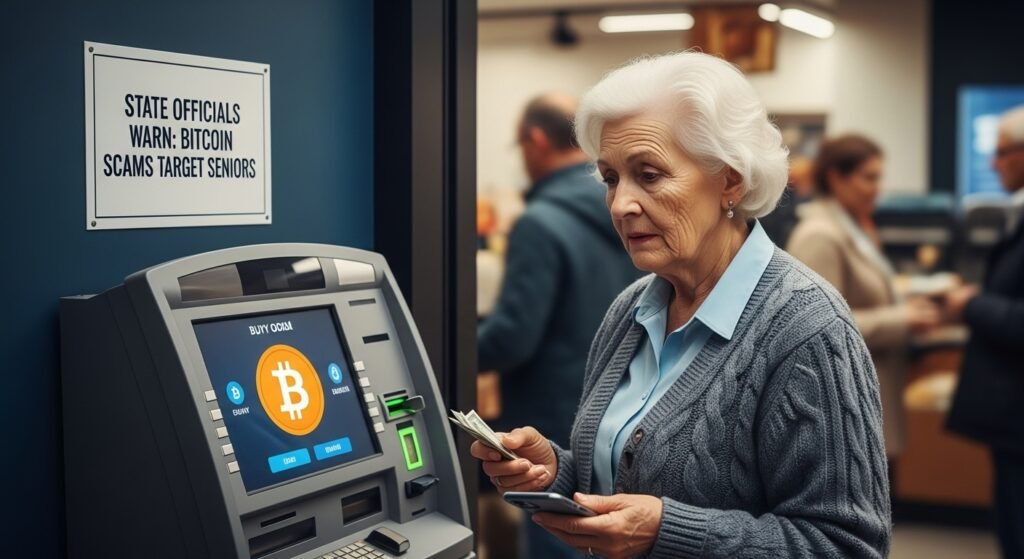
A (also called a cryptocurrency kiosk) is a machine that allows users to buy Bitcoin or other digital currencies with cash or a debit card. Instead of dispensing physical money like a traditional ATM, these machines either send cryptocurrency to a digital wallet address or generate a paper wallet with a code.
The process usually works like this. A person enters or scans a crypto wallet address, verifies their identity if required, deposits cash or initiates a card payment, and then the machine transfers the equivalent value in cryptocurrency to the supplied address. Because transactions can be processed quickly, Bitcoin ATMs are often promoted as fast and convenient ways to access digital assets.
However, this same convenience and speed can be dangerous. Once cryptocurrency is sent, it is almost impossible to reverse. Unlike a traditional bank transfer or credit card charge, there is usually no central authority that can freeze or claw back the funds. Scammers rely on this irreversible nature to turn Bitcoin ATM payments into a one-way street for stolen money.
Why Bitcoin ATMs Appeal to Older Adults State officials warn of Bitcoin
Older adults may also be more trusting when someone claims to be a bank employee, government agent, or tech support professional. When those impostors give detailed instructions on exactly which cryptocurrency kiosk to visit and what buttons to press, the entire process can feel legitimate, especially under pressure.
For seniors who are not familiar with digital currency, a Bitcoin ATM simply looks like another financial service, similar to a bill-pay kiosk or a bank machine. Scammers exploit that confusion, turning what appears to be an ordinary transaction into a high-tech form of elder financial abuse.
How Scammers Use Bitcoin ATMs to Steal Seniors’ Money
Impersonation Scams: Fake Banks and Government Agencies
One of the most common Bitcoin ATM scams begins with a phone call, text, or email from someone pretending to be an authority figure. They may claim to be from your bank, the police, the IRS, Social Security, or another government agency. Their goal is to create fear and urgency.
They might say your account has been hacked, your Social Security number is compromised, or that you owe back taxes that must be paid immediately. Then comes the twist that should be a major red flag: you are instructed to withdraw money and deposit it into Bitcoin ATMs to “secure” it or “pay” the alleged debt.
The impersonator often stays on the phone the entire time, directing the victim to a specific crypto ATM location, telling them exactly which options to choose, and giving them a QR code or wallet address to scan. The moment the senior completes the transaction, the money is converted to cryptocurrency and forwarded through multiple addresses, making it extremely difficult to recover.
Romance and Caregiver-Style Crypto Scams
Another tactic involves emotional manipulation. Criminals create fake online profiles and build relationships with elderly victims over weeks or months. They present themselves as romantic partners, close friends, or even caregivers. Once trust is established, they introduce the idea of investing in cryptocurrency together or talk about a financial emergency that needs urgent help.
The scammer then tells the senior to go to a Bitcoin ATM and purchase cryptocurrency for a supposed investment platform or to send funds for “medical bills,” “travel costs,” or “frozen accounts.” Because the victim believes they are helping someone they care about, they may ignore obvious warning signs and send increasingly larger amounts of money through Bitcoin ATMs.
These romance scams using crypto can be particularly devastating because victims not only lose money but also feel deep emotional betrayal, which can make them reluctant to report the crime.
Tech Support and Account Security Scams
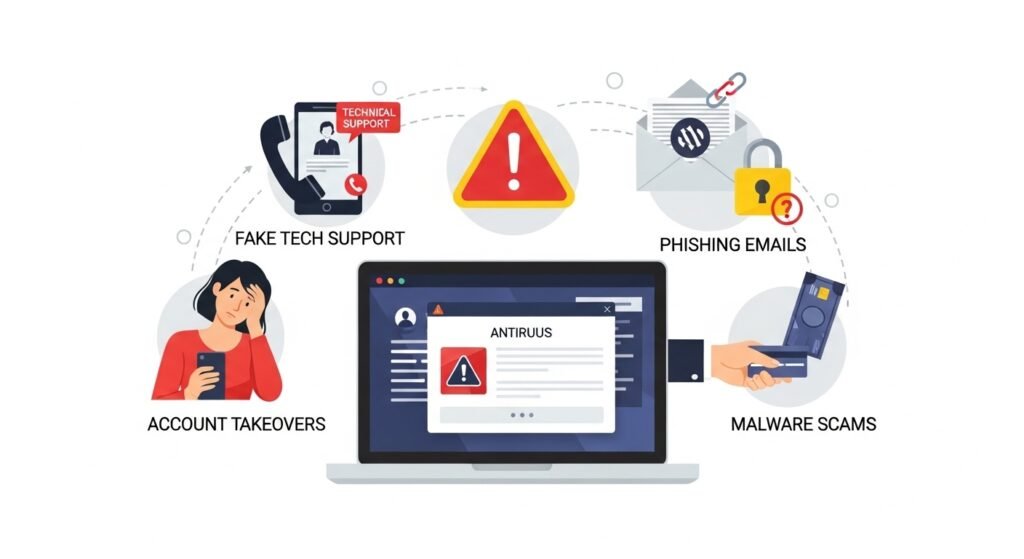
In tech support scams, criminals pose as representatives from major technology companies, internet service providers, or antivirus firms.
Once the fraudster gains remote access to the victim’s device, they can view bank balances, copy account numbers, and manipulate what the senior sees on the screen. Then they claim that the only way to “clean” the account is to move the funds into cryptocurrency via Bitcoin ATMs.
The scammer walks the victim through the steps, sometimes telling them to visit several cryptocurrency kiosks in different locations to avoid “triggering fraud alerts.”
Prize, Lottery, and Grandparent Scams
Some scams target seniors’ hopes or fears more directly. Criminals may say that the victim has won a large prize or lottery but must first pay “taxes” or “processing fees” using Bitcoin ATMs. Others use the classic “grandparent scam,” pretending to be a panicked grandchild in legal trouble who needs immediate bail money sent through a Bitcoin ATM.
In every variation, the core element is the same. The caller insists on payment via Bitcoin ATMs and often pressures the victim not to speak to anyone else about it. That combination of secrecy, urgency, and unfamiliar payment methods is precisely what state officials warn about when they talk about .
Legitimate companies and government agencies rarely demand instant payment within minutes or hours, especially through unfamiliar methods. If someone contacts you with a time-sensitive demand and insists you rush to a Bitcoin ATM, that is a strong sign of a Bitcoin ATM scam.
Scammers use urgency to stop you from thinking clearly or checking with family members. They may threaten arrest, legal action, or account closure if you delay.
Instructions to Keep the Transaction Secret
In reality, secrecy protects only the scammer. Legitimate institutions encourage customers to ask questions, talk to trusted family members, and verify unusual instructions. When someone pushes you to hide a Bitcoin ATM transaction, it is a clear signal to stop and seek help.
Being Told Exactly Which Machine to Use and How
When criminals script a scam, they often know the exact locations of nearby Bitcoin ATMs, including kiosks inside convenience stores, gas stations, or shopping centers. They may give you specific addresses and stay on the line, guiding you through each step.
This level of control and coaching is a major red flag. Genuine customer support representatives do not direct you to a Bitcoin ATM to resolve account issues.
What State Officials and Regulators Are Doing About Bitcoin ATM Scams
Public Alerts and Consumer Education Campaigns
These agencies are sharing real-life case studies, publishing guides on crypto scams, and partnering with local organizations that work with older adults. Educational campaigns often focus on simple rules, such as “no government agency will ever ask you to pay with Bitcoin,” which can be easy to remember in a stressful situation.
New Rules, Licensing, and Enforcement Actions
In some states, regulators are pushing for stricter controls on Bitcoin ATM operators, including licensing requirements, transaction limits, and stronger identity verification. The goal is to make it harder for criminals to use cryptocurrency kiosks as anonymous cash-out points.
Law enforcement agencies are also investigating cases in which Bitcoin ATM companies allegedly failed to implement basic anti-money laundering controls or ignored obvious patterns of suspicious activity. While these actions will not erase past losses, they may help reduce opportunities for future Bitcoin ATM scams and build a safer environment for potential users.
How Seniors and Families Can Stay Safe Around Bitcoin ATMs
Questions to Ask Before Using a Bitcoin ATM
Before any older adult ever interacts with a Bitcoin ATM, it can help to set a simple rule. If you did not personally decide to use cryptocurrency on your own, and someone else is telling you to do it urgently, treat it as a scam.
Ask yourself these questions. Who initiated the contact? Did you receive an unexpected call, text, or email telling you to move money or pay a bill with Bitcoin? Is the person demanding secrecy or fast action using a Bitcoin ATM? Does the payment method make sense for the situation?
No legitimate bank, police department, or government agency will ever guide you step by step through a Bitcoin ATM to solve a supposed problem. If that is happening, hang up or stop responding and call a trusted number that you look up yourself.
Steps to Take if You Already Sent Money
These criminals are professional manipulators who know exactly how to pressure and confuse people, especially seniors.
Immediately contact your bank or card issuer to explain what happened. While Bitcoin transactions are usually irreversible, your bank may still be able to flag your accounts, prevent additional withdrawals, and document the scam. Then report the incident to local law enforcement and your state consumer protection agency. The more information officials have, the better they can warn others and potentially trace patterns of crypto fraud targeting seniors.
You should also tell trusted family members or caregivers what occurred. Many seniors suffer in silence after a scam, which makes it easier for criminals to come back and strike again. Open conversations can provide support, reduce shame, and help prevent repeat victimization.
Talking With Aging Parents About Bitcoin ATMs
Conversations about scams and money can be uncomfortable, especially between adult children and aging parents. However, because state officials warn of ;Bitcoin ATMs stealing seniors’ money, it is important to discuss these risks before a crisis happens. data-start Instead of focusing on fear, frame the conversation around empowerment and awareness. Explain in simple terms what Bitcoin ATMs are, why scammers like them, and the key rule that any request for payment via cryptocurrency is likely a scam.
Encourage your parents or older relatives to call you before making any large or unusual transaction, especially if it involves a cryptocurrency kiosk.. State officials warn of Bitcoin ATMs stealing seniors’ money.
The Future of Bitcoin ATMs and Senior Safety
As states strengthen rules and enforcement around Bitcoin ATM operators, and as public awareness of crypto fraud increases, scammers may shift to new tactics or payment channels. That makes fundamental financial literacy more important than ever. Understanding that legitimate institutions do not demand payment in Bitcoin, gift cards, or other hard-to-trace methods is a powerful defense.
The good news is that awareness can make a huge difference. ATM scams and protect hard-earned retirement funds. State officials warn of Bitcoin ATMs stealing seniors’ money. Taking that moment to ask questions can be the difference between safety and devastating loss.
FAQS
Q.Why are scammers using Bitcoin ATMs instead of regular bank transfers?
Scammers prefer Bitcoin ATMs because cryptocurrency transactions are fast, borderless, and difficult to reverse. s. State officials warn of Bitcoin ATMs stealing seniors’ money.
Q. What should I do if a loved one refuses to believe they are being scammed?
Many victims of Bitcoin ATM scams honestly believe they are helping a grandchild, protecting their accounts, or securing a prize. Approach the conversation with empathy rather than blame.
Q. Can I get my money back after sending it through a Bitcoin ATM?
However, it is still important to act quickly. Immediately contact your bank, card issuer, and local law enforcement, and file a report with your state consumer protection agency. While the chances of full recovery may be low, timely reporting can sometimes help limit additional losses, support broader investigations, and prevent other seniors from falling victim to the same


