
Bitcoin Price Forecast: BTC Analysis & 2025 Predictions
Bitcoin price forecast shows BTC hovering above $87,000 amid market caution. Expert analysis, price predictions, and key factors for 2025.

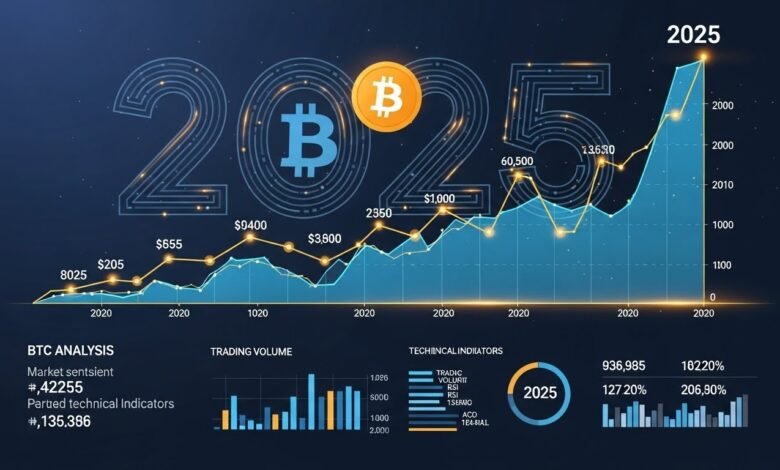
Bitcoin price forecast models indicate consolidation above the critical $87,000 threshold. As investors navigate through risk-averse market conditions during this New Year period, Bitcoin continues to demonstrate resilience despite broader economic uncertainties. The leading digital asset has maintained its position as the dominant cryptocurrency, commanding over 58% market dominance while traders carefully assess the potential trajectory for 2025. Understanding the current Bitcoin price forecast requires analyzing multiple factors including macroeconomic indicators, technical chart patterns, institutional adoption trends, and regulatory developments that collectively shape market sentiment.
Current Bitcoin Market Landscape
The cryptocurrency ecosystem has evolved dramatically since Bitcoin’s inception, transforming from a niche digital experiment into a trillion-dollar asset class that commands attention from institutional investors, governments, and retail traders worldwide. The current BTC price prediction landscape reflects a maturation phase where traditional financial metrics increasingly influence crypto valuations alongside blockchain-specific indicators.
Market participants have witnessed Bitcoin’s remarkable journey from trading below $20,000 in late 2022 to surging past $100,000 in late 2024, only to experience natural corrections that brought prices back to the $87,000 range. This volatility, while characteristic of cryptocurrency markets, has become somewhat moderated compared to previous cycles, suggesting growing market maturity and deeper liquidity pools.
Macroeconomic Factors Influencing Bitcoin Valuations
The cryptocurrency market analysis for early 2025 cannot ignore the profound impact of global macroeconomic conditions on digital asset prices. Central bank policies, particularly those implemented by the Federal Reserve, continue to play a pivotal role in determining risk appetite across financial markets. Interest rate decisions, inflation trajectories, and quantitative easing or tightening measures directly correlate with Bitcoin’s performance as investors weigh the opportunity cost of holding non-yielding assets.
The current risk-averse sentiment observed during this New Year period stems from several converging factors. Economic data releases suggesting persistent inflationary pressures have kept monetary policymakers cautious about aggressive rate cuts. This environment creates uncertainty for growth-oriented assets, including cryptocurrencies, as higher interest rates make traditional fixed-income investments more attractive relative to speculative digital assets.
Furthermore, geopolitical tensions and trade policy uncertainties have amplified safe-haven demand for traditional assets like gold and government bonds, temporarily diverting capital flows away from Bitcoin despite its increasing recognition as digital gold. The Bitcoin technical analysis suggests that these macro headwinds have created temporary resistance levels that BTC must overcome to resume its upward trajectory.
Technical Analysis and Price Pattern Recognition
Examining the technical dimensions of the current Bitcoin price forecast reveals fascinating insights into market structure and potential future movements. Bitcoin’s price action above $87,000 represents a critical juncture where bulls and bears contest for dominance, with chart patterns providing valuable clues about probable outcomes.
The daily chart shows Bitcoin forming a consolidation pattern characterized by decreasing volatility and narrowing price ranges. This compression often precedes significant directional moves, making the coming weeks particularly important for establishing the next major trend. Support levels have formed around $85,000 to $86,000, representing areas where buying interest has consistently emerged to absorb selling pressure.
Key Technical Indicators and Their Implications
Moving averages provide essential context for the BTC trading outlook with the 50-day moving average currently acting as dynamic support around $86,500. The relationship between short-term and long-term moving averages suggests that despite recent consolidation, the broader uptrend structure remains intact. The 200-day moving average, positioned significantly lower near $72,000, underscores the substantial gains achieved throughout 2024.
Relative Strength Index readings hovering in neutral territory between 45 and 55 indicate neither overbought nor oversold conditions, suggesting room for movement in either direction based on catalyst-driven momentum. The MACD indicator shows converging signal lines with diminishing histogram bars, typical of consolidation phases that precede breakout or breakdown scenarios.
Volume analysis reveals declining trading activity during this consolidation period, consistent with holiday-season patterns and risk-averse positioning. However, digital asset forecast models suggest that volume expansion accompanying a directional move would provide confirmation of trend continuation or reversal, making volume metrics crucial for validating price movements.
Institutional Adoption and Market Sentiment Dynamics
The landscape of institutional participation in Bitcoin markets has transformed dramatically, fundamentally altering the cryptocurrency market analysis framework. Major financial institutions that once dismissed Bitcoin as a speculative bubble now allocate portions of their portfolios to digital assets, recognizing their role in diversified investment strategies.
Spot Bitcoin ETF flows have become critical barometers of institutional sentiment, with billions of dollars moving into these investment vehicles throughout 2024. The approval and successful launch of spot Bitcoin ETFs by major asset managers represented a watershed moment for cryptocurrency legitimacy, bridging traditional finance with digital assets. Current flow patterns show mixed signals as some investors take profits near recent highs while others view current levels as accumulation opportunities.
Corporate Treasury Adoption and Balance Sheet Integration
Corporate adoption strategies continue influencing the Bitcoin price forecast as more companies explore Bitcoin as a treasury reserve asset. The pioneering moves by companies like MicroStrategy, Tesla, and Square have inspired other corporations to consider similar strategies, particularly in industries experiencing currency devaluation or seeking inflation hedges.
The rationale for corporate Bitcoin adoption extends beyond speculative returns to encompass strategic considerations around monetary policy protection, balance sheet diversification, and stakeholder value creation. As acceptance spreads across corporate boardrooms, the cumulative effect creates sustained demand that supports higher price floors and reduces downside volatility.
However, this New Year period has seen corporations adopt a wait-and-see approach, preferring to observe how macroeconomic conditions evolve before committing additional capital to Bitcoin purchases. This cautious positioning contributes to the current consolidation phase and risk-averse market sentiment.
Regulatory Developments Shaping Market Confidence
Regulatory clarity has emerged as one of the most significant factors influencing the BTC price prediction landscape. Governments worldwide continue developing frameworks to govern cryptocurrency activities, balancing innovation encouragement with consumer protection and financial stability concerns.
The regulatory environment in major markets like the United States, European Union, and Asia directly impacts investor confidence and institutional participation rates. Clear, sensible regulations tend to support market growth by reducing uncertainty and establishing operational guidelines, while overly restrictive or ambiguous rules can stifle innovation and drive activity to more accommodating jurisdictions.
Recent regulatory developments have trended toward greater acceptance and integration of cryptocurrencies into existing financial systems. Banking partnerships, payment processor integrations, and regulatory approval for crypto-related financial products signal growing mainstream acceptance that supports bullish Bitcoin market sentiment.
Global Regulatory Harmonization Efforts
International cooperation on cryptocurrency regulation represents a crucial development for the crypto price trends outlook. Organizations like the Financial Action Task Force work toward establishing consistent standards across jurisdictions, reducing regulatory arbitrage opportunities while creating more predictable operating environments for market participants.
The evolution from outright hostility or indifference toward thoughtful regulation marks a maturation milestone for the cryptocurrency industry. As regulatory frameworks solidify, they provide foundations for sustained institutional adoption and retail participation, supporting long-term price appreciation while potentially reducing extreme volatility episodes.
Mining Economics and Network Security Considerations
Bitcoin’s mining ecosystem plays a fundamental role in network security and influences supply-side dynamics that factor into comprehensive Bitcoin technical analysis. The mining difficulty adjustment mechanism ensures consistent block production while mining economics determine profitability and operational sustainability for mining operations globally.
Current mining profitability metrics at Bitcoin prices around $87,000 remain healthy for efficient operations utilizing modern ASIC hardware and accessing low-cost electricity. However, mining economics have tightened compared to periods when Bitcoin traded above $100,000, forcing less efficient operations to suspend activities or upgrade infrastructure.
The geographic distribution of mining power continues evolving following China’s mining ban, with significant hash rate concentrations in North America, Russia, Kazakhstan, and various other regions. This decentralization enhances network resilience while creating diverse economic incentive structures that support Bitcoin’s security model.
Hash Rate Trends and Security Implications
Bitcoin’s hash rate, measuring aggregate computational power securing the network, reached all-time highs throughout 2024 before moderating slightly during this consolidation phase. The robust hash rate despite price corrections demonstrates miner confidence in Bitcoin’s long-term value proposition and their willingness to maintain operations through temporary price volatility.
Higher hash rates correspond to increased network security, making successful attacks exponentially more difficult and expensive. This security enhancement supports institutional confidence in Bitcoin as a reliable store of value, particularly for entities managing substantial capital allocations to digital assets.
The relationship between hash rate, mining difficulty, and price creates complex feedback loops that experienced analysts incorporate into sophisticated digital asset forecast models. Understanding these dynamics provides deeper insights into Bitcoin’s fundamental value drivers beyond simple supply and demand mechanics.
On-Chain Metrics and Blockchain Analytics
Blockchain transparency enables unprecedented analytical capabilities through on-chain metrics that reveal actual network usage patterns, holder behavior, and capital flow dynamics. These metrics provide objective data points that complement traditional technical analysis in forming comprehensive Bitcoin price forecast assessments.
Whale wallet activities, exchange reserve levels, and long-term holder accumulation patterns all offer valuable signals about market positioning and sentiment. Current on-chain data shows long-term holders maintaining their positions despite recent price volatility, suggesting confidence in Bitcoin’s medium to long-term prospects.
Exchange reserve metrics indicate the amount of Bitcoin held on centralized exchanges available for immediate sale. Declining exchange reserves typically suggest accumulation behavior as investors transfer coins to cold storage for long-term holding, removing supply from liquid markets and creating upward price pressure. Recent weeks have shown relatively stable exchange reserves, consistent with the current consolidation phase.
Network Activity and Transaction Volume Analysis
Transaction volume and active address counts measure actual Bitcoin network utilization beyond speculative trading. While these metrics don’t directly correlate with short-term price movements, they indicate underlying network health and real-world adoption progress. The cryptocurrency market analysis incorporating these fundamentals provides more complete perspectives than price-focused approaches alone.
Current network activity shows seasonal patterns with slightly reduced transaction volumes during holiday periods, typical of late December and early January timeframes. As business activity normalizes in coming weeks, network utilization metrics should provide updated signals about organic demand and adoption momentum.
The Lightning Network’s growing capacity and transaction throughput represent important developments for Bitcoin’s scaling roadmap. Second-layer solutions enable faster, cheaper transactions while settling periodically on the base layer, addressing scalability concerns that once limited Bitcoin’s payment utility.
Comparative Analysis with Alternative Cryptocurrencies
Bitcoin’s position relative to alternative cryptocurrencies provides context for assessing its market leadership and potential trajectory. The crypto price trends across the broader market reveal whether capital flows into Bitcoin specifically or distributes across various digital assets, indicating risk appetite levels and speculation intensity.
Bitcoin dominance, measuring BTC’s market capitalization as a percentage of total cryptocurrency market cap, currently hovers around 58 percent. This elevated dominance level suggests that during uncertain periods, capital consolidates in Bitcoin as the most established and liquid cryptocurrency, consistent with risk-averse positioning.
Ethereum, the second-largest cryptocurrency, has underperformed Bitcoin in recent months as investors prioritize Bitcoin’s store-of-value characteristics over Ethereum’s smart contract platform features. This relative performance dynamic typically occurs during risk-off periods when speculation on newer projects declines in favor of established blue-chip digital assets.
Market Cycles and Rotation Patterns
Historical cryptocurrency market cycles demonstrate recurring patterns where Bitcoin leads both upward and downward movements, with alternative cryptocurrencies exhibiting amplified volatility in both directions. Understanding these rotation patterns informs BTC price prediction models by contextualizing Bitcoin’s movements within broader market dynamics.
The current phase appears characteristic of mid-cycle consolidation where Bitcoin establishes new support levels following rapid appreciation. If historical patterns repeat, extended Bitcoin consolidation or modest gains often precede stronger rallies in alternative cryptocurrencies as risk appetite increases and investors seek higher-return opportunities.
However, each cycle exhibits unique characteristics influenced by evolving market structure, regulatory developments, and macroeconomic conditions. The increasing institutional participation in current markets may alter traditional cycle patterns, potentially reducing extreme volatility while extending cycle durations.
Expert Predictions and Analyst Consensus
Professional analysts and cryptocurrency researchers offer diverse perspectives on the Bitcoin price forecast for 2025, ranging from conservative projections to highly bullish scenarios. Synthesizing these viewpoints provides balanced outlooks that account for multiple potential scenarios and risk factors.
Conservative analysts point to macroeconomic headwinds, potential regulatory challenges, and technical resistance levels as reasons for cautious optimism, projecting Bitcoin trading ranges between $75,000 and $95,000 throughout early 2025. These projections emphasize risk management and acknowledge the possibility of further corrections before establishing sustained upward momentum.
Moderate projections, representing analyst consensus, anticipate Bitcoin testing previous all-time highs around $108,000 to $110,000 by mid-2025, supported by continued institutional adoption, improving regulatory clarity, and favorable macroeconomic developments. These forecasts assume resolution of current uncertainty factors and resumption of the broader uptrend established throughout 2024.
Bull Case Scenarios and Catalysts
Bullish analysts project Bitcoin potentially reaching $150,000 or higher by year-end 2025, citing accelerating institutional adoption, potential approval of additional Bitcoin-related financial products, and growing recognition of Bitcoin’s monetary properties amid fiat currency concerns. These optimistic scenarios require multiple positive catalysts aligning favorably.
Key bullish catalysts include potential Federal Reserve rate cuts improving risk asset sentiment, breakthrough corporate adoption announcements, favorable regulatory developments in major markets, and continued ETF inflows demonstrating sustained institutional demand. The combination of these factors could overcome current resistance levels and propel Bitcoin toward new all-time highs.
Technical analysts noting Bitcoin’s historical four-year cycle patterns suggest 2025 could represent a peak year following the 2024 halving event, consistent with previous post-halving bull markets. While past performance doesn’t guarantee future results, these cyclical patterns provide frameworks that many investors use for positioning decisions.
Risk Factors and Potential Headwinds
Comprehensive Bitcoin market sentiment analysis must acknowledge significant risks that could undermine bullish projections and create downside scenarios. Understanding these risk factors enables investors to make informed decisions and implement appropriate risk management strategies.
Macroeconomic deterioration represents perhaps the most significant near-term risk, particularly if inflation proves more persistent than anticipated, forcing central banks to maintain restrictive monetary policies longer than markets currently expect. Extended high-interest-rate environments could pressure Bitcoin prices as investors favor yield-generating assets over non-yielding cryptocurrencies.
Regulatory crackdowns in major markets pose existential risks to cryptocurrency adoption and accessibility. While recent regulatory trends have been generally constructive, sudden policy shifts driven by financial stability concerns, illicit activity associations, or political calculations could significantly impact market confidence and participation rates.
Technical and Operational Vulnerabilities
While Bitcoin’s protocol has demonstrated remarkable resilience and security over fifteen years of operation, potential technical vulnerabilities, scaling challenges, or coordinated attacks on mining infrastructure represent tail risks that could undermine confidence. Though unlikely, the impact of such events would be severe, warranting consideration in comprehensive risk assessments.
Exchange hacks, custody failures, and counterparty risks continue plaguing the cryptocurrency ecosystem despite improving security practices. Major security breaches affecting prominent exchanges or custodians could trigger panic selling and undermine institutional confidence in cryptocurrency infrastructure safety.
Competition from central bank digital currencies and alternative cryptocurrency projects with superior technical characteristics or adoption momentum could theoretically challenge Bitcoin’s dominance. While Bitcoin enjoys substantial first-mover advantages and network effects, technological evolution requires ongoing monitoring of competitive dynamics.
Investment Strategies and Portfolio Positioning
Translating Bitcoin price forecast insights into actionable investment strategies requires matching analytical conclusions with individual risk tolerance, investment timeframes, and portfolio objectives. Different investors appropriately adopt varying approaches based on their specific circumstances and goals.
Long-term holders adopting buy-and-hold strategies focus on Bitcoin’s fundamental value proposition as digital scarcity and censorship-resistant money, largely ignoring short-term volatility. This approach requires strong conviction in Bitcoin’s long-term prospects and ability to withstand significant drawdowns without capitulating during corrections.
Active traders attempt capitalizing on Bitcoin’s volatility through technical analysis, attempting to buy support levels and sell resistance zones. This approach demands substantial time commitment, technical expertise, and emotional discipline to execute successfully while managing the risks of mistimed trades and unexpected volatility.
Dollar-Cost Averaging and Risk Management
Dollar-cost averaging strategies involve systematic, regular Bitcoin purchases regardless of price, averaging entry points over time and removing emotion from investment decisions. This approach suits investors seeking Bitcoin exposure without attempting market timing, particularly effective during volatile or uncertain market periods.
Risk management principles apply equally to cryptocurrency investments as traditional assets, requiring appropriate position sizing, diversification across asset classes, and rebalancing protocols. Bitcoin should represent a portion of diversified portfolios proportional to individual risk tolerance rather than concentrated all-or-nothing positions.
Options and derivatives markets enable sophisticated hedging strategies for Bitcoin exposure, allowing investors to protect downside risk while maintaining upside participation. However, derivatives trading involves additional complexity and risks requiring thorough understanding before implementation.
Looking Ahead Through 2025 and Beyond
The crypto price trends outlook for 2025 encompasses far more than simple price predictions, involving fundamental shifts in financial system architecture, monetary policy frameworks, and technological infrastructure. Bitcoin’s role in this evolving landscape extends beyond speculative trading to encompass serious consideration as alternative monetary technology.
Continued infrastructure development, including Lightning Network expansion, improved custody solutions, and enhanced user experience across wallets and exchanges, should facilitate broader adoption beyond current cryptocurrency-native demographics. Simplifying access and usage removes barriers preventing mainstream participation.
The intersection of artificial intelligence, blockchain technology, and decentralized finance creates fascinating possibilities for future financial system evolution. Bitcoin’s role as base-layer monetary infrastructure could prove increasingly valuable as these technologies mature and integrate.
Long-Term Vision and Fundamental Thesis
Bitcoin’s fundamental thesis centers on providing sound money characteristics in increasingly digital, interconnected global economy. The combination of absolute scarcity, decentralized governance, and censorship resistance creates unique properties unavailable in traditional monetary systems.
Whether Bitcoin ultimately achieves widespread adoption as global reserve asset, alternative store of value, or niche digital commodity remains uncertain, but the experiment continues attracting growing participation from diverse stakeholders. This participation itself creates value through network effects and increasing liquidity.
The journey from current prices around $87,000 toward potential six-figure valuations or beyond depends on countless variables including technological developments, regulatory evolution, macroeconomic conditions, and competitive dynamics. The digital asset forecast landscape will continue evolving as these factors develop throughout 2025.
Conclusion
The Bitcoin price forecast as we move through early 2025 presents both opportunities and challenges for investors navigating the cryptocurrency markets. While short-term consolidation above $87,000 reflects risk-averse New Year sentiment and macroeconomic uncertainty, the fundamental drivers supporting Bitcoin’s long-term value proposition remain robust.
Technical indicators suggest potential for significant directional moves once the current consolidation phase resolves, with support levels around $85,000 providing downside protection while resistance near $95,000 represents the next upside target. The BTC price prediction models incorporating both technical and fundamental factors point toward eventual resumption of the broader uptrend, though the timing remains uncertain.
Investors should approach Bitcoin with clear strategies aligned with their individual circumstances, maintaining disciplined risk management while positioning for potential upside as adoption continues expanding. Whether you’re a long-term holder, active trader, or newcomer exploring cryptocurrency investments, understanding the comprehensive factors influencing Bitcoin’s trajectory enables more informed decision-making.
The cryptocurrency revolution continues unfolding with Bitcoin leading the charge toward decentralized financial systems. Stay informed about market developments, monitor key indicators, and adjust your strategy as conditions evolve. The Bitcoin price forecast for 2025 suggests continued volatility alongside substantial opportunity for those who navigate wisely.
See more;Bitcoin, Ethereum, XRP Price Prediction: Bulls Regain Strength