Why Altcoins Are Not Rising: Expert Analysis Reveals 2 Key Reasons
Discover why altcoins are not rising despite market optimism. Renowned analyst breaks down two critical factors affecting altcoin performance today.


Why are they not rising despite favorable market conditions? This phenomenon has puzzled both seasoned traders and newcomers alike, especially when fundamental indicators suggest bullish momentum should be propelling alternative cryptocurrencies upward. A renowned cryptocurrency analyst has recently shed light on this perplexing situation, identifying two fundamental reasons that explain the stagnant altcoin performance we’re witnessing today.
Understanding the dynamics behind why altcoins are not rising requires a deeper examination of market mechanics, investor psychology, and the structural changes occurring within the digital asset ecosystem. The cryptocurrency landscape has evolved dramatically over the past few years, and the factors that once guaranteed altcoin rallies no longer apply with the same certainty. This comprehensive analysis will explore the expert insights that reveal the hidden barriers preventing your favorite alternative cryptocurrencies from reaching their anticipated price targets.
Current Altcoin Market Dynamics
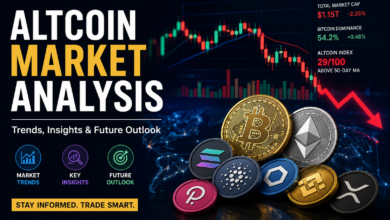
The cryptocurrency market structure has undergone a significant transformation since the explosive bull runs of previous cycles. Today’s market operates under different rules, influenced by institutional participation, regulatory scrutiny, and mature investor behavior. When examining why altcoins are not rising, we must first acknowledge that the market has moved beyond the speculative frenzy that characterized earlier years.
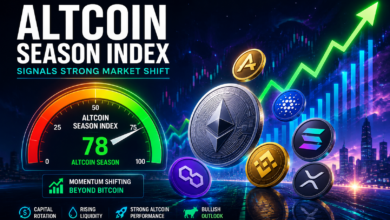
Alternative cryptocurrencies, ranging from established projects like Ethereum and Cardano to newer DeFi tokens and meme coins, are experiencing unprecedented stagnation despite Bitcoin’s relatively strong positioning. This divergence between Bitcoin performance and altcoin price movement represents a fundamental shift in how capital flows through the cryptocurrency ecosystem. Historically, Bitcoin rallies were followed by altcoin seasons where alternative digital assets would outperform the flagship cryptocurrency by substantial margins.
The current market cycle, however, tells a different story. Investors who allocated significant portions of their portfolios to altcoins, expecting traditional seasonal patterns, are finding themselves questioning their strategies. The altcoin market analysis conducted by industry experts points to structural changes rather than temporary market corrections. These changes have created new barriers that prevent the familiar pump-and-dump cycles that once characterized altcoin trading.
Market participants have noticed that even positive news, technological upgrades, and partnership announcements that would typically trigger price surges are now met with muted responses. This dampened reaction to bullish catalysts is one of the clearest indicators that something fundamental has changed in how the market values and trades alternative cryptocurrencies. The question of why altcoins are not rising cannot be answered by looking at individual projects alone but requires understanding the broader ecosystem dynamics.
The First Critical Reason: Bitcoin Dominance and Capital Concentration
The Bitcoin market dominance we’re witnessing today reflects a maturation of the cryptocurrency market where risk management has become paramount. Institutional investors, who now represent a substantial portion of cryptocurrency trading volume, maintain strict risk parameters that favor Bitcoin’s liquidity and regulatory clarity. These institutions cannot justify allocating significant percentages of their cryptocurrency holdings to smaller-cap altcoins with higher volatility profiles and uncertain regulatory futures.
Furthermore, the introduction of Bitcoin spot ETFs has created new channels for capital to enter the cryptocurrency market directly through Bitcoin without ever touching the altcoin ecosystem. Traditional finance investors can now gain cryptocurrency exposure through familiar investment vehicles, bypassing the complexities and perceived risks associated with purchasing and storing alternative digital assets. This development has fundamentally altered the capital inflow dynamics that previously benefited altcoins.
The cryptocurrency investment trends have shifted toward a “Bitcoin first, altcoins maybe” mentality among both retail and institutional participants. This psychological shift is reinforced by the narrative that Bitcoin represents digital gold while altcoins remain speculative technology bets. As long as Bitcoin continues to absorb the majority of new capital entering the cryptocurrency space, alternative cryptocurrencies will struggle to generate the momentum necessary for sustained price appreciation.
Market data supports this analysis, showing that despite billions of dollars flowing into cryptocurrency markets, the distribution of this capital heavily favors Bitcoin. The altcoin trading volume as a percentage of total cryptocurrency trading has declined, indicating reduced speculative interest and fewer participants willing to take on the additional risks associated with alternative digital assets. This capital concentration creates a self-reinforcing cycle where Bitcoin’s strength actually suppresses altcoin performance rather than catalyzing it.
The Second Critical Reason: Regulatory Uncertainty and Market Fragmentation
Market fragmentation has emerged as a direct consequence of this regulatory uncertainty. Different jurisdictions have adopted vastly different approaches to cryptocurrency regulation, creating a fragmented global market where altcoins available to investors in one country may be prohibited or restricted in another. This crypto market fragmentation reduces overall liquidity and creates inefficiencies that prevent unified price discovery and rally coordination.
The impact on decentralized finance tokens and governance tokens has been particularly severe. Many of these assets exist in regulatory gray areas, with ongoing debates about whether they constitute securities, commodities, or entirely new asset classes. Investors who might otherwise be enthusiastic about DeFi innovation are hesitant to commit significant capital when regulatory classification remains unresolved, and enforcement actions could materialize unexpectedly.
Additionally, the proliferation of blockchain networks and competing layer-one platforms has fragmented both developer attention and investor capital across numerous ecosystems. The blockchain ecosystem fragmentation means that instead of capital concentrating in a handful of leading altcoin projects, investment is spread thinly across dozens of competing platforms, each claiming to solve similar problems with marginally different approaches. This dilution of focus and resources prevents any single altcoin or small group of altcoins from generating the network effects necessary to drive substantial price appreciation.
The regulatory uncertainty also affects market makers and liquidity providers who play crucial roles in maintaining healthy trading conditions for altcoins. Many professional market makers have reduced their involvement with alternative cryptocurrencies due to compliance concerns and the risk of being associated with assets that might face regulatory action. Reduced market maker participation leads to wider bid-ask spreads, increased slippage, and overall poorer trading conditions that discourage both institutional and retail participation.
The Psychology Behind Altcoin Investment Hesitation
Understanding why altcoins are not rising requires examining the psychological factors that influence investment decisions in the current market environment. The cryptocurrency market has matured beyond the early adopter phase where technological enthusiasm alone could drive exponential price increases. Today’s investors, having experienced multiple market cycles including devastating bear markets, approach altcoin investments with considerably more skepticism and caution.
The investor psychology surrounding altcoins has fundamentally shifted from “fear of missing out” to “fear of losing capital.” Previous market cycles created numerous cautionary tales of investors who bought altcoins near cycle peaks only to watch their investments decline by ninety percent or more during subsequent bear markets. These painful experiences have created a generation of cryptocurrency investors who demand substantially more evidence of value and sustainability before committing capital to alternative digital assets.
The proliferation of failed projects, rug pulls, and outright scams within the altcoin ecosystem has further eroded investor confidence. For every successful altcoin project, dozens have failed, disappeared, or proven to be fraudulent schemes designed to extract value from unsuspecting investors. This high failure rate creates a negative selection problem where rational investors must assume that any given altcoin has a significant probability of losing most or all of its value, regardless of the project’s stated goals or technological promises.
Social media and cryptocurrency communities, which once served as powerful amplification mechanisms for altcoin hype, have become more skeptical and analytical in their approach. The crypto community sentiment has evolved from blindly promoting projects to demanding accountability, transparency, and demonstrated real-world utility. This maturation of community discourse is healthy for the long-term development of the cryptocurrency industry but creates headwinds for individual altcoin price appreciation in the short to medium term.
Technical Market Factors Contributing to Altcoin Stagnation
Beyond the two primary reasons identified by the analyst, several technical market factors help explain why altcoins are not rising despite seemingly favorable conditions. The cryptocurrency market microstructure has evolved in ways that systematically disadvantage smaller alternative cryptocurrencies compared to Bitcoin and established large-cap assets.
Algorithmic trading and quantitative strategies now dominate cryptocurrency markets, particularly on major exchanges. These sophisticated trading systems typically focus on the most liquid assets where they can execute large positions without significant market impact. For most altcoins, insufficient liquidity means that algorithmic traders avoid them, reducing overall trading activity and price discovery efficiency. The altcoin liquidity crisis creates a vicious cycle where low liquidity discourages trading, which further reduces liquidity.
The concentration of altcoin holdings among early investors and project teams creates additional selling pressure that suppresses price appreciation. Many altcoin projects have vesting schedules that continuously release tokens into circulation, creating constant dilution and selling pressure that offsets any organic buying demand. Investors analyzing tokenomics and supply dynamics increasingly recognize that many altcoins face years of supply expansion that will mathematically limit price appreciation regardless of adoption or technological success.
Correlation dynamics within cryptocurrency markets have also changed in ways that affect altcoin performance. During previous market cycles, altcoins often moved independently of Bitcoin, creating opportunities for substantial outperformance. Today’s market exhibits much higher correlation across all cryptocurrency assets, meaning that altcoins tend to move in lockstep with Bitcoin but with amplified volatility on the downside and muted gains on the upside. This cryptocurrency correlation pattern reduces the diversification benefits of holding altcoins and makes Bitcoin a more attractive risk-adjusted investment.
The Role of Macroeconomic Conditions in Altcoin Performance
The broader macroeconomic environment plays a crucial but often underappreciated role in explaining why altcoins are not rising. Cryptocurrency markets do not exist in isolation but are increasingly integrated with traditional financial markets and responsive to macroeconomic conditions that affect risk appetite globally.
The current macroeconomic environment, characterized by elevated interest rates and inflation concerns, has fundamentally changed how investors approach risk assets. When government bonds and money market funds offer attractive yields with minimal risk, the opportunity cost of holding speculative assets like altcoins increases substantially. Rational investors must now justify why they should accept the volatility and risk of altcoin investments when safer alternatives provide reasonable returns.
The crypto market macroeconomic sensitivity has increased as institutional participation has grown. Institutional investors apply modern portfolio theory and risk management frameworks that consider cryptocurrency as part of a broader asset allocation strategy. In the current macroeconomic climate, these frameworks typically allocate minimal exposure to cryptocurrency, and within that limited allocation, Bitcoin receives overwhelming preference due to its relative stability and liquidity.
Global liquidity conditions also significantly impact cryptocurrency markets. The era of quantitative easing and extremely loose monetary policy that characterized the 2020-2021 period created ideal conditions for speculative assets like altcoins to flourish. As central banks have tightened monetary policy and reduced liquidity in the financial system, speculative assets have faced sustained pressure. The global liquidity impact on crypto affects altcoins disproportionately because they represent the highest-risk segment of an already risky asset class.
Comparing Current Conditions to Previous Altcoin Seasons
To fully understand why altcoins are not rising, examining the conditions that prevailed during previous altcoin seasons provides valuable context. The explosive altcoin rallies of 2017 and 2020-2021 occurred under specific circumstances that do not currently exist, making historical comparisons potentially misleading for investors expecting pattern repetition.
The 2017 altcoin season was fueled by the Initial Coin Offering boom, where new projects could raise substantial capital through token sales with minimal regulatory oversight. This funding mechanism created enormous buying pressure for altcoins as investors needed to purchase Ethereum and Bitcoin to participate in ICOs, and new projects continuously required these assets for operations. The subsequent regulatory crackdown on ICOs eliminated this unique demand driver that is unlikely to return.
The 2020-2021 period saw altcoins rally primarily due to the DeFi summer phenomenon and subsequent NFT mania, combined with unprecedented stimulus and monetary expansion responding to global economic shutdowns. The DeFi and NFT boom created genuine innovation and speculative fervor that drove capital into alternative cryptocurrencies.
Current market conditions lack comparable catalysts. While technological development continues across blockchain ecosystems, innovations are occurring incrementally rather than in the explosive, paradigm-shifting manner that characterized previous cycles. The blockchain technology adoption curve has entered a phase where steady progress replaces exponential growth, which supports long-term value creation but does not generate the speculative frenzy necessary for rapid altcoin price appreciation.
What This Means for Cryptocurrency Investors
For investors grappling with why altcoins are not rising and wondering how to position their portfolios accordingly, the analyst’s insights carry important implications. The traditional strategy of buying altcoins during Bitcoin consolidation periods and expecting mechanical rotation of capital may no longer be reliable in the current market structure.
Successful cryptocurrency investment strategies in today’s environment require greater selectivity and fundamental analysis. Rather than broad exposure to numerous altcoins hoping to catch the next explosive mover, investors should focus on projects with demonstrated utility, strong development teams, sustainable tokenomics, and realistic paths to widespread adoption. The spray-and-pray approach that worked during previous cycles is unlikely to generate comparable returns under current market dynamics.
Risk management becomes paramount when considering altcoin investments. Given the structural headwinds and uncertainties discussed throughout this analysis, position sizing should reflect the elevated risks. Even investors bullish on specific altcoin projects should limit exposure to levels where a complete loss would not materially impact their overall financial situation. The cryptocurrency risk management principles that apply to Bitcoin should be applied even more stringently to alternative cryptocurrencies.
Conclusion
These fundamental issues represent structural changes in the cryptocurrency market rather than temporary conditions, suggesting that investors should adjust expectations and strategies accordingly.
Understanding these dynamics empowers investors to make more informed decisions rather than frustrating themselves with expectations based on outdated market patterns. The cryptocurrency market continues evolving, and altcoins will eventually have their moments of outperformance when conditions align favorably. However, those moments may look different, last shorter, and require different catalysts than historical altcoin seasons.
For investors committed to participating in the altcoin market, the current environment demands diligence, selectivity, and patience. Focus on projects solving real problems, building sustainable business models, and navigating regulatory challenges effectively. Monitor Bitcoin dominance as a key indicator of when capital might begin flowing back toward alternative cryptocurrencies, and stay informed about regulatory developments that could shift the landscape.
The insights explaining why altcoins are not rising should not discourage participation in cryptocurrency markets but rather inform smarter, more strategic approaches to altcoin investment. Stay educated, manage risk appropriately, and remember that in cryptocurrency markets, understanding why something is not happening is often just as valuable as predicting what will happen next.