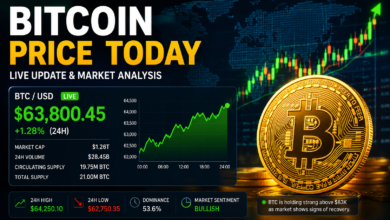


The cryptocurrency market has once again captured global attention as Bitcoin surged by nearly 20% in a relatively short period, defying skepticism and reigniting bullish sentiment. After a prolonged phase of volatility and uncertainty, investors are asking a crucial question: what exactly is driving this sudden rebound?
According to insights from Matt Hougan, Chief Investment Officer at Bitwise Asset Management, the answer lies not in retail hype or short-term speculation, but in a deeper, less visible force—institutional accumulation and strategic capital deployment.
This article explores the hidden drivers behind Bitcoin’s 20% rebound, analyzing market dynamics, institutional behavior, macroeconomic conditions, and long-term implications. By understanding these factors, investors can better navigate the evolving crypto landscape and anticipate future price movements.
The 20% Bitcoin Rebound: What Happened?
Bitcoin’s recent price surge has been one of the most talked-about developments in the digital asset space. After experiencing a challenging period marked by declining sentiment and reduced retail participation, the sudden upward movement caught many off guard.
A Sudden Shift in Market Momentum
The rebound was not purely coincidental. Market data suggests that Bitcoin had entered a deep accumulation phase, where long-term investors quietly increased their holdings while prices remained relatively suppressed.
This phenomenon aligns with historical patterns in the crypto market cycle, where periods of fear and uncertainty often precede significant upward movements. The recent rally reflects a transition from “weak hands” to “strong hands,” a concept widely observed in on-chain analytics.
The Role of Strategic Buying
The most significant revelation from Bitwise CIO is that the rebound was largely fueled by large-scale institutional buying, particularly a massive $7.2 billion Bitcoin acquisition by a major entity.
This strategic move created a supply shock, tightening available Bitcoin in the market and pushing prices upward.
The Hidden Force: Institutional Accumulation
Understanding Institutional Demand
Institutional investors—including hedge funds, asset managers, and corporations—have increasingly become dominant players in the crypto ecosystem. Unlike retail investors, institutions typically adopt long-term strategies and deploy substantial capital.
Bitwise CIO emphasizes that institutional demand is the “hidden force” behind Bitcoin’s rebound. This demand is not always visible in traditional metrics but manifests through:
- Large block trades
- ETF inflows
- Corporate treasury allocations
Supply Shock and Market Impact
When institutions accumulate Bitcoin at scale, it reduces the circulating supply available to the market. This creates a supply-demand imbalance, leading to upward price pressure.
In this case, the multi-billion-dollar buying spree effectively absorbed a significant portion of available Bitcoin, triggering the 20% rebound.
ETFs and Corporate Buying: A Game-Changer
The Rise of Bitcoin ETFs
Exchange-Traded Funds (ETFs) have revolutionized how investors access Bitcoin. These financial instruments allow institutions to gain exposure to Bitcoin without directly holding the asset.
Bitwise has highlighted that ETF demand could absorb more than 100% of new Bitcoin supply, fundamentally altering market dynamics.
Corporate Treasury Strategies
Another critical factor is the growing trend of corporations adding Bitcoin to their balance sheets. This strategy is driven by:
- Inflation hedging
- Currency debasement concerns
- Long-term value storage
As more companies adopt Bitcoin, the asset transitions from a speculative investment to a strategic financial reserve.
Macro Conditions Supporting the Rally

Global Liquidity and Interest Rates
Bitcoin does not operate in isolation. Its price is heavily influenced by macroeconomic factors such as:
- Interest rate policies
- Inflation trends
- Global liquidity
Bitwise research suggests that improving macro conditions and rising liquidity are creating a favorable environment for Bitcoin growth.
The Weakening Dollar Effect
A weaker U.S. dollar often leads investors to seek alternative stores of value. Bitcoin, often referred to as “digital gold,” benefits from this shift.
As fiat currencies face pressure from monetary expansion, Bitcoin’s fixed supply becomes increasingly attractive.
On-Chain Data: Evidence of Strong Accumulation
Whale Activity and Market Confidence
On-chain analytics reveal that large Bitcoin holders (whales) have been actively accumulating during the downturn. This behavior indicates strong confidence in Bitcoin’s long-term value.
Rather than selling during market weakness, these investors increased their exposure, signaling a potential price bottom.
Transfer of Ownership
The market has undergone a redistribution of Bitcoin holdings, where assets move from short-term traders to long-term investors.
This transition is crucial for sustainable growth, as it reduces volatility and strengthens market foundations.
Retail vs Institutional Investors: A Changing Landscape
Declining Retail Influence
Unlike previous bull runs driven by retail enthusiasm, the current rebound is largely institution-driven. Retail participation remains relatively subdued.
Institutional Dominance
Institutional players bring:
- Stability
- Liquidity
- Long-term perspective
This shift marks a new era for Bitcoin, where price movements are less influenced by hype and more by fundamental factors.
Bitcoin’s Evolving Market Structure
Breaking the Four-Year Cycle
Historically, Bitcoin followed a predictable four-year cycle tied to halving events. However, increasing institutional involvement is reshaping this pattern.
Bitwise predicts that Bitcoin may enter a prolonged expansion phase, moving beyond traditional cycles.
Increased Market Maturity
With greater participation from institutional investors, Bitcoin is evolving into a more mature asset class. This includes:
- Reduced volatility over time
- Greater correlation with macro trends
- Enhanced credibility
The Psychological Factor in Bitcoin’s Rally
Fear and Greed Dynamics
Market sentiment plays a significant role in price movements. During the downturn, fear dominated the market, leading to widespread selling.
However, as prices began to recover, confidence returned, fueling further buying activity.
Key Price Levels
Psychological thresholds, such as $100,000, act as critical resistance and support levels. Breaking these levels often triggers strong market reactions.
Long-Term Outlook: What Comes Next?
A Strong Bullish Case
Bitwise CIO remains optimistic about Bitcoin’s future, citing:
- Continued institutional adoption
- Growing ETF demand
- Favorable macroeconomic conditions
These factors suggest that the recent rebound may be the beginning of a larger upward trend.
Potential Risks
Despite the positive outlook, risks remain:
- Regulatory uncertainty
- Market volatility
- Macroeconomic shocks
Investors must remain cautious and adopt a balanced approach.
Why This Rebound Matters for Investors
A Shift in Market Narrative
The 20% rebound signals a transition from speculative trading to institution-driven growth. This shift has significant implications for investors.
Strategic Investment Opportunities
Understanding the underlying drivers allows investors to:
- Identify long-term opportunities
- Avoid short-term noise
- Make informed decisions
The Role of Regulation and Policy
Government Influence
Regulatory developments can significantly impact Bitcoin’s trajectory. Policies related to:
- Crypto ETFs
- Taxation
- Institutional adoption
will shape the market’s future.
Emerging Global Trends
Countries are increasingly recognizing Bitcoin as a legitimate asset class, paving the way for broader adoption.
Conclusion
The recent 20% rebound in Bitcoin is not a случай event driven by hype or speculation. Instead, it is the result of a powerful, underlying force—institutional accumulation.
Insights from Matt Hougan and Bitwise Asset Management reveal that large-scale buying, ETF demand, and favorable macro conditions are reshaping the Bitcoin market.
As Bitcoin continues to evolve, investors must adapt to this new reality where institutional influence, macroeconomics, and long-term fundamentals drive price movements.
The rebound may just be the beginning of a broader transformation in the crypto landscape.