
Bitcoin Loses Yearly Gains – What Happens Next?
Bitcoin has erased its 2025 gains after a sharp sell-off. Discover what caused the crash, key levels to watch and realistic scenarios for what comes next.


For most of 2025, Bitcoin looked unstoppable. It surged to a new all-time high above 120,000 dollars in early October, fuelled by optimism around a pro-crypto US administration, spot ETF demand, and growing institutional adoption. Then, in a matter of weeks, the mood flipped. A brutal sell-off drove the price down below the year’s starting level, and suddenly Bitcoin loses yearly gains became the headline across financial media.
By mid to late November 2025, Bitcoin had fallen into the 80,000–90,000 dollar range, erasing all of its year-to-date gains and tipping the market into what many now call a crypto bear market. Analysts point to a cocktail of macroeconomic uncertainty, aggressive unwinding of leverage, ETF outflows, and key technical breakdowns as the main culprits.
This episode is not just another Bitcoin price crash. When Bitcoin loses yearly gains after being up more than 30 percent only weeks earlier, it tells a deeper story about risk appetite, liquidity, and how quickly sentiment can turn in a highly financialized digital asset market.
In this article, we will walk through what happened, why Bitcoin lost its yearly gains so fast, what it means for the wider cryptocurrency market, and what realistic scenarios might lie ahead for BTC.
Bitcoin loses yearly gains: What actually happened?

From all-time high to erased returns
The latest reversal started shortly after Bitcoin set a fresh all-time high above 125,000 dollars in early October 2025. In a matter of weeks, the price slid by roughly 25–30 percent, dropping to the low 90,000s and then into the 80,000 range.
That decline was not just a pullback from extremes. At its worst, the drop pushed Bitcoin below its effective 2025 entry point, meaning anyone who simply bought and held from the start of the year was suddenly sitting on a loss rather than a gain. Several outlets noted that Bitcoin’s year-to-date performance briefly turned negative, confirming that Bitcoin loses yearly gains was not just a dramatic headline but a hard statistical reality.
Macro shocks and a sudden risk-off mood
The turning point came as macro conditions shifted. Hopes that the US Federal Reserve would soon cut interest rates began to fade, with policymakers signalling a “higher for longer” stance. Rising yields made traditional assets more attractive relative to speculative plays, and investors started to rotate out of risk assets.
At the same time, renewed trade tensions and tariff threats added another layer of uncertainty. One widely discussed episode involved tariff announcements that coincided with massive leverage liquidations across the crypto derivatives market, triggering billions of dollars in forced selling in a single day.
As risk appetite evaporated, money flowed out of crypto ETFs, speculative tech stocks, and high-beta assets generally. Bitcoin, which had benefited from a strong “pro-risk” narrative earlier in the year, suddenly found itself on the wrong side of a global risk-off pivot.
Why did Bitcoin lose its yearly gains?
Macro headwinds and interest-rate uncertainty
The first big driver is the macro backdrop. High interest rates are a headwind for all risk assets, and digital assets are no exception. When yields on cash and bonds are attractive, investors need a stronger reason to hold volatile positions in Bitcoin.
Uncertainty over the exact timing and scale of future rate cuts has made investors more cautious. Rather than betting aggressively on a new Bitcoin bull market, many large players have been locking in profits and trimming risk until policy becomes clearer. The combination of elevated inflation concerns, slower global growth, and higher real rates has created an environment where Bitcoin loses yearly gains much faster once momentum stalls.
Regulatory and political noise
2025 has been a politically charged year for crypto. On the one hand, markets cheered a more openly pro-crypto US administration and regulatory steps that legitimized spot Bitcoin ETFs. On the other hand, uncertainty remains around how strictly leverage, stablecoins, and offshore exchanges will be policed.
Recent headlines about potential new oversight, tax proposals, and enforcement actions have contributed to an atmosphere of caution. Even if the long-term direction looks friendlier than in past cycles, short-term uncertaint
What next for Bitcoin?
Bear market or deep correction?
The big question now is whether this episode marks the start of a prolonged bear market or a sharp but ultimately temporary correction within a larger uptrend.
Bears argue that breaking below key support levels, wiping out year-to-date gains, and triggering death-cross patterns signal that the 2025 Bitcoin bull run has ended. They point to macro headwinds, slower ETF inflows, and deteriorating liquidity as reasons why another leg down towards lower support zones, such as the mid-70,000s or even lower, is possible.
Bulls counter that, despite the fact that Bitcoin loses yearly gains on paper, the broader multi-year structure still looks constructive. Bitcoin remains well above prior cycle highs, and adoption trends among institutions, corporations, and even nation-states continue to move forward.
In practice, the truth may be somewhere in between. The market could be entering an extended sideways-to-down phase, where prices spend months chopping in a wide range as excess leverage is flushed out and new fundamental catalysts are needed to reignite a sustained uptrend.
Scenarios for the next 6–12 months
While no one can predict the future path of the Bitcoin price with certainty, it is helpful to think in scenarios rather than single-point forecasts.
In a bearish scenario, macro conditions worsen, risk assets stay under pressure, and ETF outflows continue. In that case, Bitcoin could grind lower, revisiting deeper support zones and extending the period where Bitcoin loses yearly gains or offers only modest returns.
Over time, improving macro signals, easing interest-rate expectations, and renewed spot demand from ETFs and institutional buyers could allow BTC to reclaim its yearly starting level and then gradually break higher.
In a bullish scenario, a clear macro catalyst such as confirmed rate cuts, regulatory clarity, or a wave of new adoption triggers a strong new leg higher. Bitcoin has a history of surprising both bulls and bears. After prior episodes where it erased yearly gains, it eventually went on to set new all-time highs—but the path there was rarely smooth.
How investors can navigate when Bitcoin loses yearly gains
Long-term holders vs short-term traders
For long-term investors who see Bitcoin as a multi-cycle store of value or “digital gold,” the fact that Bitcoin loses yearly gains in a single calendar year is not necessarily catastrophic. Historically, BTC has often spent long periods below its prior highs, only to later recover and exceed them.
However, even long-term holders need to understand that Bitcoin is a highly volatile asset. Position sizing, time horizon, and emotional resilience matter as much as conviction. Adopting a dollar-cost averaging mindset, where small, regular purchases are made regardless of short-term price moves, can help reduce the psychological impact of drawdowns.
Short-term traders face a different challenge. In a regime where volatility is elevated and trends can reverse suddenly, strategies must adapt. During phases when Bitcoin loses yearly gains and technical structure weakens, many experienced traders reduce leverage, shorten time frames, and focus on preserving capital rather than chasing every bounce.
Risk management and realistic expectations
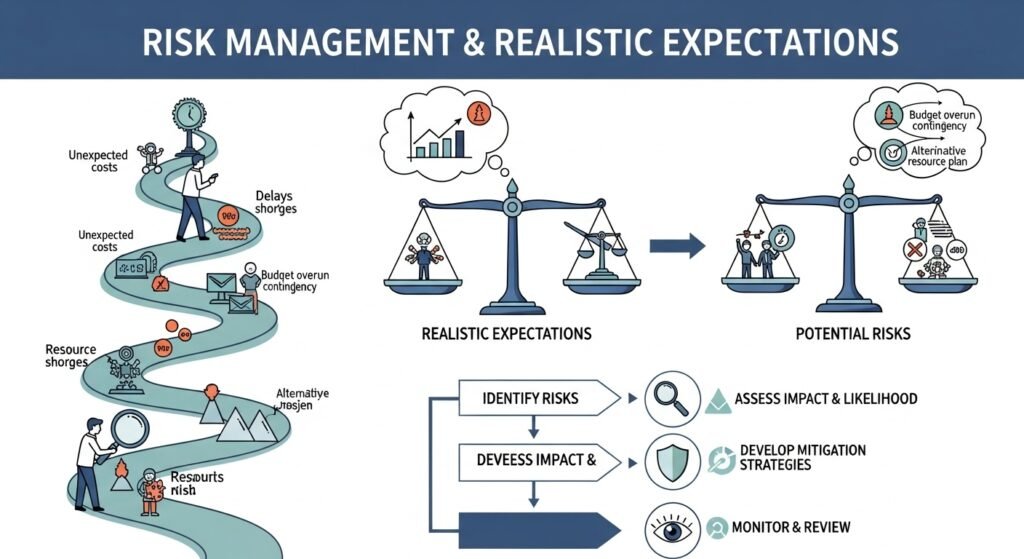
Regardless of time horizon, risk management is crucial. Crypto drawdowns of 30–60 percent are not rare—they are a feature, not a bug, of this asset class. Setting clear rules for maximum portfolio allocation to BTC and other cryptocurrencies, using stop-losses where appropriate, and avoiding excessive leverage are basic but powerful steps.
Investors should also adjust expectations. After a year where Bitcoin doubles or triples, it is easy to anchor on extreme upside scenarios. When Bitcoin loses yearly gains after a parabolic move, it is a reminder that returns are not linear. Even in bullish multi-year cycles, there can be brutal corrections that last longer and cut deeper than most people expect.
Staying informed, diversifying across asset classes, and viewing Bitcoin as one component of a broader portfolio can help reduce the emotional roller coaster that often leads to poor decision-making at exactly the wrong time.
Conclusion
The fact that Bitcoin loses yearly gains only a few weeks after hitting a new all-time high is a powerful illustration of how volatile and sentiment-driven this market remains.
Yet volatility cuts both ways. The same asset that can wipe out year-to-date performance in a month can also recover just as dramatically when conditions improve.
For investors, the key is not trying to perfectly time every high and low, but instead building a strategy that can survive periods where Bitcoin loses yearly gains without derailing long-term goals. Understanding the drivers behind the drawdown, managing risk thoughtfully, and keeping expectations grounded are the best tools for navigating whatever comes next.
FAQs
Q. Why did Bitcoin lose its yearly gains so quickly?
Bitcoin lost its yearly gains because several negative forces hit at once: macro uncertainty over interest-rate cuts, renewed trade and political tensions, aggressive unwinding of leveraged long positions, and large outflows from spot Bitcoin ETFs.
Q. Does Bitcoin losing yearly gains mean the bull market is over?
Not necessarily, but it is a clear warning sign. When Bitcoin loses yearly gains, it often indicates that the prior uptrend has at least paused, and sometimes it marks the transition into a deeper bear market.
Q. How do ETF flows affect whether Bitcoin loses yearly gains?
Spot Bitcoin ETFs make it easier for traditional investors to get exposure, but they also channel selling pressure when sentiment turns. Strong inflows earlier in 2025 helped push Bitcoin to new highs, but the subsequent shift to outflows meant those vehicles started acting as a source of supply instead of demand.
Q. What signals should traders watch after Bitcoin erases yearly gains?
Traders should watch key price levels such as prior support zones around 90,000 dollars and deeper potential demand areas in the 70,000–80,000 range, along with long-term moving averages like the 200-day and 50-week lines.
Q. Is this a good time to buy Bitcoin after it lost its yearly gains?
Whether it is a good time to buy depends on your risk tolerance, time horizon, and overall financial situation.
See more;Bitcoin Price Dips 0.9% As Bulls Defend Key Support