
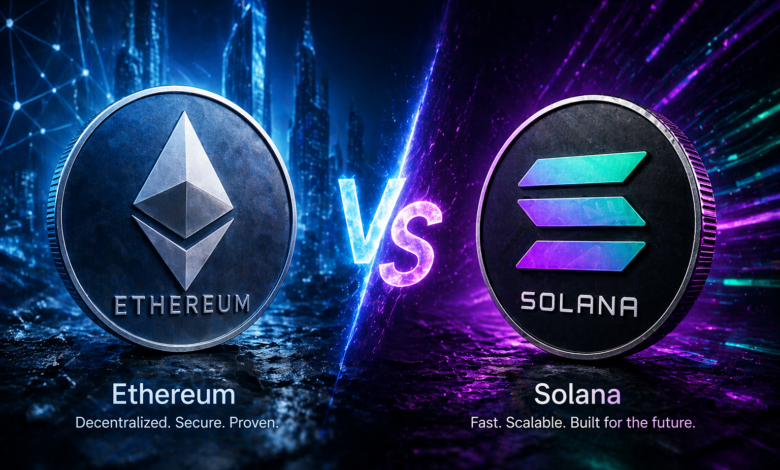
The debate around Ethereum vs Solana has intensified in 2026 as both blockchains continue to dominate the decentralized finance (DeFi) landscape. Investors, developers, and institutions are increasingly asking one crucial question: which network truly offers better DeFi liquidity?
Liquidity is the lifeblood of DeFi. Without sufficient liquidity, decentralized exchanges (DEXs), lending platforms, and yield farming protocols struggle to function efficiently. As the competition between Ethereum and Solana heats up, understanding their liquidity dynamics becomes essential for anyone involved in crypto.
This article provides a deep dive into the DeFi liquidity comparison, analyzing total value locked (TVL), trading volume, ecosystem maturity, and user activity. By the end, you’ll have a clear understanding of which blockchain stands ahead in 2026—and why.
Understanding DeFi Liquidity
What Is DeFi Liquidity?
DeFi liquidity refers to the availability of assets within decentralized protocols that enable smooth trading, lending, and borrowing. High liquidity ensures low slippage, better pricing, and efficient execution of transactions.
In simple terms, liquidity determines how easily assets can be moved within a blockchain ecosystem without causing major price fluctuations.
Why Liquidity Matters in 2026
In 2026, DeFi has matured significantly, with institutional players entering the space. This has made deep liquidity pools, stable yields, and efficient capital allocation more important than ever.
Blockchains that can sustain high liquidity levels are better positioned to attract users, developers, and capital.
Overview of Ethereum’s DeFi Ecosystem
The Pioneer Advantage
Ethereum remains the undisputed pioneer of DeFi. Since the launch of smart contracts, it has built a vast ecosystem of protocols such as decentralized exchanges, lending platforms, and derivatives markets.
Its first-mover advantage has allowed it to accumulate massive Total Value Locked (TVL), making it a dominant force in DeFi liquidity.
Depth of Liquidity Pools
Ethereum’s liquidity is spread across numerous protocols, including major DEXs and lending platforms. This diversity creates deep and resilient liquidity pools, which are less prone to sudden fluctuations.
Institutional investors often prefer Ethereum due to its established infrastructure and security.
Overview of Solana’s DeFi Ecosystem
Speed and Low Costs
Solana has gained popularity for its high-speed transactions and extremely low fees. This makes it an attractive option for retail users and high-frequency traders.
The network’s ability to process thousands of transactions per second gives it a unique advantage in certain DeFi applications.
Growing Liquidity and Adoption
In 2026, Solana’s DeFi ecosystem has expanded significantly, with increasing TVL and user activity. New protocols and innovations have contributed to a steady rise in liquidity inflows.
Solana’s growth is driven by its efficiency and user-friendly experience.
Risks and Network Stability
However, Solana has faced criticism for past network outages and concerns about decentralization. While improvements have been made, these issues still influence investor confidence.
Ethereum vs Solana: Liquidity Comparison
 Total Value Locked (TVL)
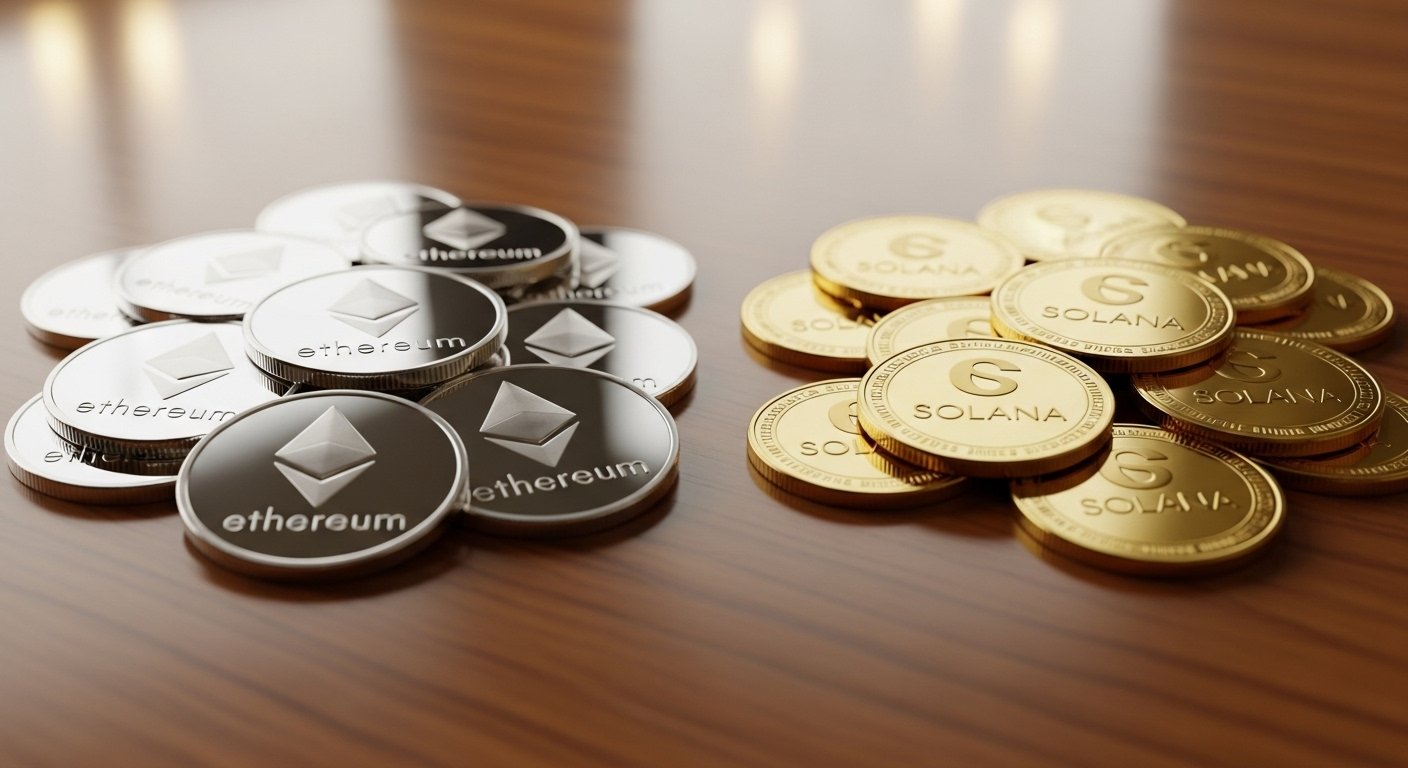
Ethereum continues to lead in Total Value Locked, holding a significant share of the global DeFi market. Its long-standing reputation and institutional adoption contribute to its dominance.
Solana, while growing तेजी, still trails behind Ethereum in overall TVL but has shown impressive year-over-year growth.
Trading Volume and Activity
Ethereum dominates in DEX trading volume, thanks to its large user base and established protocols. However, Solana has carved out a niche in high-speed, low-cost trading environments.
For smaller transactions and frequent trades, Solana often provides better efficiency.
Liquidity Efficiency
Liquidity efficiency measures how effectively capital is utilized within a network. Solana’s low fees allow for more active trading, which can improve efficiency.
Ethereum, on the other hand, offers deeper liquidity, which is crucial for large trades and institutional activity.
Role of Layer 2 Solutions on Ethereum
Scaling Ethereum’s Liquidity
Layer 2 solutions have played a crucial role in addressing Ethereum’s scalability issues. By reducing transaction costs, they enable more users to participate in DeFi.
Fragmentation vs Expansion
While Layer 2 networks expand Ethereum’s ecosystem, they also create liquidity fragmentation. This can make it harder to access unified liquidity compared to a single-chain system like Solana.
Institutional Adoption and Market Trust
Ethereum’s Stronghold
Ethereum remains the preferred choice for institutions due to its security, decentralization, and regulatory acceptance. This contributes significantly to its deep liquidity pools.
Solana’s Emerging Position
Solana is gradually gaining institutional interest, particularly in sectors requiring high-speed transactions. However, it still lacks the same level of trust as Ethereum.
Developer Ecosystem and Innovation
Ethereum’s Developer Dominance
Ethereum has the largest developer community in the blockchain space. This leads to continuous innovation and the creation of new DeFi protocols.
Solana’s Rapid Growth
Solana’s developer ecosystem is growing quickly, attracting projects focused on speed and scalability. This innovation contributes to increasing liquidity over time.
User Experience and Accessibility
Ethereum’s Complexity
Ethereum can be complex for new users, especially when dealing with gas fees and multiple Layer 2 solutions.
Solana’s Simplicity
Solana offers a smoother user experience with fast transactions and minimal fees, making it more accessible for beginners.
Future Outlook: Who Wins in 2026?
Ethereum’s Continued Dominance
Ethereum is likely to maintain its lead in DeFi liquidity due to its strong foundation, institutional support, and deep ecosystem.
Solana’s Growth Potential
Solana is expected to continue growing, potentially narrowing the gap in liquidity as adoption increases.
The Reality: Coexistence
Rather than one replacing the other, both blockchains are likely to coexist, serving different segments of the DeFi market.
Conclusion
The Ethereum vs Solana debate in 2026 ultimately comes down to priorities. Ethereum leads in deep liquidity, security, and institutional trust, making it the go-to choice for large-scale DeFi activity. Solana, on the other hand, excels in speed, low fees, and user experience, making it ideal for high-frequency and retail trading.
For now, Ethereum holds the edge in overall DeFi liquidity, but Solana’s rapid growth suggests that the competition is far from over. As the DeFi ecosystem evolves, both networks will continue to play crucial roles in shaping the future of decentralized finance.
FAQs
Q. Which blockchain has more DeFi liquidity in 2026?
Ethereum currently has more DeFi liquidity due to its higher Total Value Locked and institutional adoption.
Q. Is Solana better than Ethereum for trading?
Solana is better for fast and low-cost trading, while Ethereum is good for large transactions with deep liquidity.
Q. What is TVL in DeFi?
TVL (Total Value Locked) measures the total amount of assets locked in DeFi protocols on a blockchain.
Q. Why is Ethereum still dominant in DeFi?
Ethereum’s early adoption, security, and large developer ecosystem contribute to its dominance.
Q. Can Solana overtake Ethereum in liquidity?
While possible in the long term, Ethereum’s strong foundation makes it difficult to surpass in the near future.