
Pi Network Bitcoin Market Watch: PI & BTC Price Analysis
Pi Network's PI holds key support while Bitcoin dips below $87K. Complete market analysis, price predictions & crypto insights.

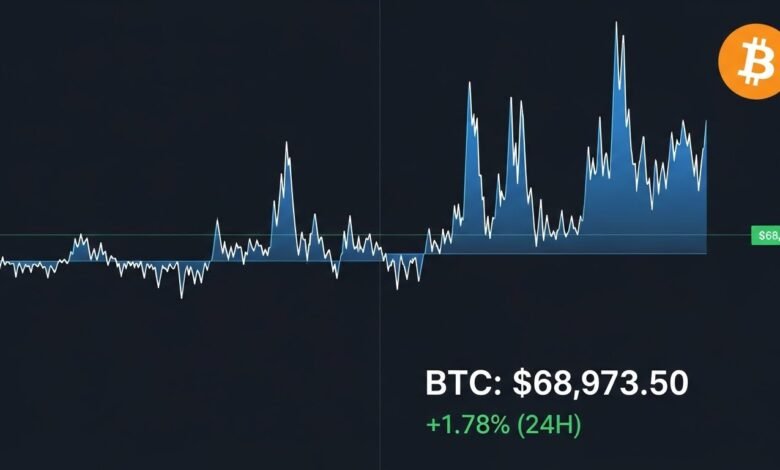
Pi Network Bitcoin Market Watch reveals contrasting narratives: while Bitcoin (BTC) experiences downward pressure, slipping below the psychologically important $87,000 threshold, Pi Network’s native token PI demonstrates remarkable resilience at key support levels. This divergence highlights the complex nature of cryptocurrency markets, where different assets respond uniquely to market conditions, investor sentiment, and technological developments. Understanding these movements becomes crucial for traders and investors seeking to navigate the turbulent waters of digital asset investment in today’s rapidly evolving financial ecosystem.
The current market conditions present both challenges and opportunities for cryptocurrency enthusiasts. As traditional safe-haven assets experience fluctuations, alternative cryptocurrencies like PI coin are showing strength that deserves closer examination. This comprehensive cryptocurrency market analysis explores the technical indicators, fundamental factors, and broader market dynamics influencing these price movements.
Pi Network’s Resilient Performance
What Makes Pi Network Different in Today’s Market
Pi Network has emerged as a distinctive player in the cryptocurrency market, differentiating itself through its mobile-first mining approach and community-driven development model. Unlike traditional proof-of-work cryptocurrencies that require substantial computational resources, Pi Network leverages a novel consensus mechanism that allows users to mine directly from their smartphones. This accessibility factor has contributed to building one of the largest cryptocurrency communities globally, with millions of active participants contributing to network security and growth.
The current price stability of PI coin at key support levels reflects more than mere technical chart patterns. It represents sustained community confidence and the network’s evolving utility within the broader blockchain technology ecosystem. As Pi Network progresses through its mainnet transition phases, investors are closely monitoring how the project’s fundamental developments translate into price action. The ability to maintain support during broader market weakness suggests underlying strength that technical traders find particularly intriguing.
Market observers note that Pi Network’s unique position as a relatively newer cryptocurrency provides both advantages and challenges. The project’s phased rollout approach has created anticipation within the community, while simultaneously generating questions about long-term valuation models. Current crypto support levels are being tested against the backdrop of decreasing liquidity in some trading pairs, yet the token continues to find buyers at critical price points, indicating accumulation by patient investors who believe in the project’s long-term vision.
Technical Analysis: Pi Network’s Key Support Zones
From a technical perspective, PI coin price action reveals several important support and resistance zones that traders are monitoring closely. The primary support level has held firm despite multiple tests, creating a foundation that technical analysts interpret as a potential springboard for future upward movement. Volume profiles indicate that significant accumulation occurred at these levels, suggesting informed market participants view current prices as attractive entry points for long-term positions.
The relative strength index (RSI) for Pi Network shows readings that avoid extreme oversold or overbought conditions, indicating balanced market sentiment rather than panic selling or irrational exuberance. Moving average convergence divergence (MACD) indicators present a picture of consolidation, with potential for bullish crossovers that could signal momentum shifts. These technical indicators, when combined with fundamental developments within the Pi ecosystem, provide traders with a multifaceted view of potential price trajectories.
Chart patterns emerging on various timeframes suggest that Pi Network is forming a base structure that historically precedes significant price movements. Whether this consolidation results in upward breakouts or further testing of support levels depends heavily on broader cryptocurrency market trends and Bitcoin’s ability to establish stability. The correlation between major cryptocurrencies and emerging altcoins remains strong, though Pi Network has occasionally demonstrated independent price action that deviates from market-wide movements.
Bitcoin’s Price Pressure: Analyzing the $87K Breakdown
The Significance of Bitcoin Dropping Below $87,000
Bitcoin’s price drop below the $87,000 threshold carries substantial psychological and technical implications for the entire cryptocurrency market. As the dominant digital asset by market capitalization, Bitcoin often sets the tone for broader crypto market trends, influencing investor sentiment across thousands of alternative cryptocurrencies. The breach of this level triggers stop-loss orders and potentially increases selling pressure as algorithmic trading systems respond to technical breakdowns.
The $87,000 level had previously served as both support and resistance during recent price discovery phases, making its breakdown particularly noteworthy for technical analysts conducting cryptocurrency market analysis. This price point represented a consolidation zone where substantial trading volume accumulated, indicating significant market interest. When such levels fail to hold, it often leads to accelerated downward movement as traders exit positions and wait for clearer directional signals before re-entering the market.
Understanding the catalysts behind Bitcoin’s current weakness requires examining both macroeconomic factors and cryptocurrency-specific developments. Broader financial market conditions, including interest rate expectations, regulatory developments, and institutional investment flows, all contribute to Bitcoin’s price dynamics. Additionally, on-chain metrics such as exchange inflows, mining profitability, and large holder accumulation patterns provide insights into whether current weakness represents temporary profit-taking or more fundamental shifts in market structure.
Market Forces Driving Bitcoin’s Current Trajectory
Several converging factors contribute to the downward pressure on BTC price prediction models. Macroeconomic uncertainty continues to influence risk asset performance, with cryptocurrency markets remaining sensitive to traditional financial market movements. Changes in monetary policy expectations, geopolitical tensions, and economic growth projections all filter through to digital asset valuations, creating headwinds for Bitcoin’s price performance.
The regulatory landscape presents another layer of complexity affecting Bitcoin valuation. As governments worldwide develop frameworks for cryptocurrency oversight, market participants adjust their positions based on anticipated regulatory impacts. Recent regulatory discussions in major economies have introduced uncertainty that manifests as increased volatility and cautious investor sentiment. These regulatory considerations influence not just retail participation but also institutional allocation decisions that significantly impact market liquidity and price discovery.
Technical selling pressure amplifies fundamental concerns as algorithmic trading systems and quantitative funds adjust positions based on price action and momentum indicators. When Bitcoin breaks key support levels, these systems often trigger cascading sell orders that exacerbate downward movements. Understanding these mechanical aspects of modern digital asset trading helps explain why certain price levels generate disproportionate reactions compared to the underlying fundamental news flow.
Comparative Market Analysis: PI Versus BTC Performance
Diverging Paths in a Connected Ecosystem
The contrasting performance between Pi Network and Bitcoin during the current market phase illustrates the complex dynamics within cryptocurrency markets. While these assets operate within the same broader ecosystem and share certain correlations, their individual price trajectories reflect different investor bases, use cases, and developmental stages. Pi Network’s ability to maintain support while Bitcoin experiences weakness suggests that market participants differentiate between established cryptocurrencies and emerging projects with distinct value propositions.
This divergence presents interesting implications for portfolio diversification strategies within cryptocurrency investment approaches. Traditional correlation assumptions may not hold during periods of market stress, creating opportunities for sophisticated investors to balance exposure across different cryptocurrency categories. The altcoin resilience demonstrated by Pi Network could indicate sector rotation as traders seek opportunities in assets less directly correlated with Bitcoin’s immediate price action.
Market microstructure differences between these assets also contribute to their diverging performance. Bitcoin’s deep liquidity and presence across numerous exchanges worldwide mean its price reflects global market sentiment and sophisticated trading strategies. Pi Network’s more limited trading venues and evolving liquidity profile create different price dynamics, where community sentiment and project-specific developments may carry greater relative weight in determining price action compared to broader market forces that dominate Bitcoin trading.
What Traders Can Learn from Current Market Conditions
The current Pi Network Bitcoin Market Watch scenario provides valuable lessons for cryptocurrency traders at all experience levels. First, it demonstrates that correlation between cryptocurrencies is not constant and can break down during specific market conditions. This understanding should inform risk management strategies and position sizing decisions, as diversification benefits may vary significantly depending on market phases and the specific assets selected.
Second, the importance of fundamental analysis alongside technical charting becomes apparent when examining why certain assets maintain support while others break down. Pi Network’s community strength, development progress, and unique positioning contribute to its price resilience in ways that pure chart analysis might not fully capture. Similarly, understanding Bitcoin’s role as a macro risk asset helps explain its sensitivity to broader financial market conditions that might not immediately impact newer, more insulated cryptocurrency projects.
Finally, liquidity considerations emerge as crucial factors in determining price behavior during stressed market conditions. Assets with deeper liquidity pools and more diverse market participant bases tend to experience more gradual price adjustments, while those with concentrated holdings or limited trading venues may exhibit sharper movements in either direction. Successful traders incorporate these liquidity assessments into their analysis, recognizing that technical levels may hold differently depending on the depth of market support at various price points.
Fundamental Factors Influencing Current Crypto Markets
Macroeconomic Environment and Digital Assets
The broader economic context significantly influences cryptocurrency market trends, creating the backdrop against which both Pi Network and Bitcoin price movements occur. Current inflation dynamics, central bank policy trajectories, and economic growth projections all filter through to cryptocurrency valuations as investors assess risk-reward profiles across various asset classes. Digital assets have increasingly demonstrated correlation with traditional risk assets, particularly technology stocks, during periods of macroeconomic uncertainty.
Interest rate expectations particularly impact cryptocurrency valuations as they influence the opportunity cost of holding non-yielding assets like Bitcoin. When real interest rates rise, the relative attractiveness of holding cryptocurrencies versus interest-bearing instruments shifts, potentially triggering capital reallocation. This dynamic affects Bitcoin more directly given its established position in institutional portfolios, while emerging projects like Pi Network may exhibit more insulation from these immediate macroeconomic pressures due to different investor bases and holding patterns.
Global liquidity conditions represent another fundamental factor shaping cryptocurrency markets. As central banks worldwide adjust monetary policy stances, the resulting changes in money supply and credit availability impact risk asset demand, including digital currencies. Periods of quantitative tightening typically create headwinds for cryptocurrency prices, while accommodative policies historically correlate with stronger digital asset performance. Current monetary policy transitions create uncertainty that manifests as increased volatility across crypto market sectors.
Technological Developments and Network Fundamentals
Beyond macroeconomic factors, cryptocurrency-specific technological developments drive fundamental value assessments. For Pi Network, progress toward full mainnet functionality, expansion of ecosystem applications, and growth in active user engagement all contribute to fundamental valuation frameworks. The network’s unique approach to consensus mechanisms and mobile accessibility creates differentiation that supporters believe will drive long-term adoption, though critics question scalability and economic model sustainability.
Bitcoin’s technological developments focus on different priorities, including Lightning Network expansion, Taproot implementation benefits, and institutional custody infrastructure improvements. These enhancements aim to improve transaction efficiency, privacy features, and institutional accessibility, addressing criticisms that have historically limited broader adoption. The network’s fundamental security continues to strengthen as hash rate reaches new peaks, demonstrating miner confidence in long-term network viability despite short-term price fluctuations.
Broader blockchain technology adoption trends also influence individual cryptocurrency valuations as market participants assess which networks and tokens will capture value from increasing digitalization of financial services. Competition among smart contract platforms, layer-two scaling solutions, and interoperability protocols creates a dynamic ecosystem where technological superiority, developer activity, and user adoption all factor into investment theses supporting various cryptocurrencies.
Trading Strategies for Current Market Conditions
Risk Management in Volatile Cryptocurrency Markets
Navigating the current cryptocurrency market analysis environment requires disciplined risk management approaches that acknowledge both opportunities and dangers inherent in volatile digital asset trading. Position sizing becomes paramount when markets exhibit the type of uncertainty reflected in Bitcoin’s breakdown and Pi Network’s consolidation. Experienced traders typically reduce position sizes during high-uncertainty periods, preserving capital for clearer directional opportunities while maintaining market exposure to benefit from potential reversal scenarios.
Stop-loss placement strategies must account for cryptocurrency volatility characteristics that differ substantially from traditional asset classes. Tight stops may result in premature exits during normal price oscillations, while overly wide stops expose traders to excessive drawdown risk. The optimal approach involves analyzing volatility metrics, support and resistance levels, and personal risk tolerance to establish stop-loss positions that balance protection against premature exit risk.
Diversification across different cryptocurrency categories provides another risk management dimension worth considering during current conditions. Balancing exposure between established cryptocurrencies like Bitcoin, emerging projects like Pi Network, and potentially stablecoins or other defensive positions creates portfolio resilience against various market scenarios. This approach recognizes that different cryptocurrencies respond differently to market catalysts, creating potential for reduced portfolio volatility while maintaining upside exposure.
Identifying Opportunity in Market Dislocation
Market dislocations like the current Pi Network Bitcoin Market Watch scenario often create mispricing opportunities for patient investors willing to conduct thorough analysis. When broad market weakness creates indiscriminate selling pressure, fundamentally sound projects may become undervalued relative to their long-term potential. Identifying these opportunities requires distinguishing between temporary price weakness driven by market sentiment versus fundamental deterioration that justifies lower valuations.
Dollar-cost averaging strategies gain particular relevance during uncertain market periods, allowing investors to build positions gradually while avoiding the risk of poorly timed lump-sum investments. This approach proves especially valuable for long-term cryptocurrency investment strategies focused on emerging networks like Pi Network, where price discovery remains ongoing, and significant volatility should be expected as the project matures and develops its ecosystem.
Contrarian positioning during periods of maximum pessimism has historically generated substantial returns for patient cryptocurrency investors, though timing such strategies requires careful analysis of both technical and fundamental factors. The current market conditions create potential for such contrarian opportunities, particularly if Bitcoin establishes firm support and altcoin projects like Pi Network continue demonstrating community strength and developmental progress despite broader market weakness.
Future Outlook: What to Watch in the Coming Weeks
Key Indicators for Pi Network’s Next Moves
Monitoring Pi Network’s progression requires attention to both on-chain metrics and development milestones that could catalyze price movements. Community growth statistics, including new enclave enrollments and KYC verification progress, provide insights into network expansion that underpins long-term value creation. Additionally, ecosystem development measured by new applications, merchant adoption, and utility expansion all contribute to fundamental valuation frameworks supporting the PI coin price.
Technical price levels warrant continued observation as Pi Network navigates current support zones. A decisive break below key support would likely trigger additional selling pressure and potentially shift market structure toward more bearish configurations. Conversely, successful defense of these levels combined with volume accumulation patterns could establish foundations for eventual upward breakouts as broader market conditions stabilize and risk appetite returns to cryptocurrency markets.
Regulatory developments specific to emerging cryptocurrency projects will significantly influence Pi Network’s trajectory. As regulatory frameworks evolve globally, clear guidance on token classification, trading requirements, and compliance expectations will reduce uncertainty that currently constrains some institutional interest in newer cryptocurrency projects. Positive regulatory developments could unlock additional liquidity and investor participation that support higher valuation levels.
Bitcoin’s Path Forward and Market Implications
Bitcoin’s ability to reclaim the $87,000 level or establish firm support at lower levels will significantly influence broader crypto market trends in the coming weeks. Technical analysts are watching for signs of accumulation at current levels, which would suggest larger market participants view recent weakness as a buying opportunity rather than the beginning of a more substantial decline. Volume profiles, on-chain metrics like exchange outflows, and derivatives market positioning all provide clues about whether current prices attract accumulation or face additional distribution pressure.
Macroeconomic catalysts, including central bank policy announcements, inflation data releases, and geopolitical developments, will continue influencing Bitcoin price action through their impact on risk asset demand broadly. Cryptocurrency markets have demonstrated increasing sensitivity to these traditional financial market drivers, making economic calendar awareness essential for traders seeking to anticipate volatility and directional shifts in digital asset prices.
Institutional adoption metrics remain critica,l longer-term factors supporting Bitcoin valuation frameworks. New corporate treasury allocations, ETF inflow data, and institutional custody growth all indicate sustained mainstream interest in Bitcoin despite short-term price volatility. These structural adoption trends provide fundamental support for higher long-term valuations even as shorter-term technical and sentiment factors drive periodic corrections and consolidation phases.
Regulatory Landscape and Market Impact
Global Cryptocurrency Regulation Evolution
The regulatory environment surrounding digital asset trading continues evolving rapidly across jurisdictions worldwide, creating both opportunities and challenges for cryptocurrency markets. Recent regulatory discussions in major economies have introduced new frameworks aimed at balancing innovation encouragement with investor protection and financial stability concerns. These regulatory developments influence market sentiment significantly, as clarity reduces uncertainty while overly restrictive approaches may constrain market growth and institutional participation.
Different jurisdictions are adopting varied approaches to cryptocurrency regulation, creating a patchwork global environment that market participants must navigate. Some regions embrace digital assets with clear, supportive frameworks designed to attract blockchain innovation and cryptocurrency businesses. Others implement more cautious approaches emphasizing consumer protection and financial crime prevention, potentially limiting certain activities while providing regulatory certainty for compliant market participants.
The regulatory treatment of emerging projects like Pi Network versus established cryptocurrencies like Bitcoin may differ substantially, reflecting different risk profiles, centralization characteristics, and use cases. Understanding these regulatory nuances becomes increasingly important for investors as compliance requirements influence which cryptocurrencies can access various markets, trading venues, and institutional capital sources. Regulatory developments will continue shaping competitive dynamics within cryptocurrency markets as clearer frameworks emerge.
Compliance Considerations for Cryptocurrency Investors
Individual investors engaging in cryptocurrency investment must remain aware of evolving tax obligations, reporting requirements, and compliance expectations in their jurisdictions. Tax treatment of cryptocurrency transactions varies significantly across countries, with some treating digital assets as property subject to capital gains taxation while others implement different frameworks. Staying informed about these requirements and maintaining accurate transaction records becomes essential for avoiding compliance issues.
The increasing sophistication of regulatory oversight includes enhanced monitoring of cryptocurrency exchanges, wallet services, and decentralized finance protocols. These developments aim to prevent illicit activities while bringing crypto market infrastructure into alignment with traditional financial services regulations. For legitimate investors, these changes generally enhance market integrity and reduce risks associated with fraud, manipulation, and operational failures that have historically plagued some corners of cryptocurrency markets.
Looking forward, regulatory clarity should generally benefit cryptocurrency markets by reducing uncertainty and enabling broader institutional participation. While some specific regulations may create near-term challenges for certain activities or business models, clearer rules typically support long-term market development by establishing boundaries within which innovation can occur with reduced legal ambiguity. Investors should view regulatory evolution as a natural maturation process rather than primarily a threat to cryptocurrency markets.
Investment Considerations and Risk Assessment
Evaluating Pi Network as an Investment Opportunity
Assessing Pi Network from an investment perspective requires balancing potential opportunities against risks inherent in emerging cryptocurrency projects. The network’s massive community, unique mobile-first approach, and progressive decentralization roadmap create interesting value propositions that differentiate it from thousands of competing blockchain projects. However, the project’s relative newness, ongoing development stages, and uncertain regulatory treatment introduce risks that investors must carefully weigh.
Fundamental analysis of PI coin involves examining factors traditional financial analysis might not typically address, including community engagement metrics, developer activity, ecosystem partnership development, and technical architecture scalability. These blockchain-specific factors complement traditional considerations like market capitalization, trading volume, and liquidity metrics in forming comprehensive investment theses. The interdisciplinary nature of cryptocurrency analysis requires investors to develop expertise across technology, economics, and market dynamics.
Position sizing for speculative emerging cryptocurrency investments should reflect their higher risk profiles compared to established digital assets or traditional investments. Financial advisors typically recommend limiting exposure to highly speculative investments to amounts investors can afford to lose entirely, recognizing that while upside potential may be substantial, the risk of total capital loss remains significant for early-stage cryptocurrency projects still proving their long-term viability and market fit.
Bitcoin’s Role in Diversified Portfolios
Bitcoin’s increasing acceptance as a portfolio diversification tool reflects its maturing market characteristics and growing institutional recognition. While cryptocurrency remains a relatively small allocation in most professional portfolios, its uncorrelated returns profile during certain market conditions creates diversification benefits that portfolio managers increasingly acknowledge. The optimal allocation size depends on individual risk tolerance, investment horizon, and broader portfolio composition.
Long-term Bitcoin investment theses emphasize its scarcity characteristics, network security, brand recognition, and positioning as digital gold competing with traditional store-of-value assets. These fundamental attributes support valuation frameworks that extend beyond short-term price action, providing context for evaluating whether current price levels represent attractive entry points or require additional patience before accumulation. The tension between Bitcoin’s digital native characteristics and its correlation with traditional risk assets during stressed market conditions creates complexity in portfolio construction decisions.
Risk-adjusted return considerations for cryptocurrency investment require careful analysis of volatility characteristics that significantly exceed traditional asset classes. While historical Bitcoin returns have been attractive on an absolute basis, the path-dependent nature of those returns and severe drawdowns during bear markets emphasize the importance of appropriate position sizing and long-term investment horizons for investors seeking to benefit from cryptocurrency exposure while managing portfolio-level risk appropriately.
Technical Indicators and Market Sentiment Analysis
Reading the Market Psychology
Understanding market sentiment provides crucial context for interpreting price action in both Pi Network and Bitcoin markets. Sentiment indicators, including social media activity, search trend data, and options market positioning, all offer insights into whether current weakness reflects panic selling or measured profit-taking by informed participants. Extreme sentiment readings often signal potential reversal points as markets become oversold or overbought relative to fundamental conditions.
The fear and greed index, specifically designed for cryptocurrency markets, synthesizes various sentiment and volatility metrics into single readings that help contextualize current market psychology. During periods of extreme fear, contrarian investors often find attractive entry opportunities as pessimism reaches levels historically associated with market bottoms. Conversely, extreme greed readings warn of potentially overextended conditions where caution becomes prudent despite strong recent performance.
Social media sentiment analysis provides another window into community psychology affecting crypto market trends. The tone, volume, and reach of cryptocurrency discussions across platforms like Twitter, Reddit, and specialized forums offer qualitative insights that complement quantitative technical analysis. Dramatic shifts in community sentiment often precede or accompany significant price movements, making these indicators valuable components of comprehensive market analysis frameworks.
Advanced Technical Analysis Approaches
Sophisticated traders employ multiple analytical frameworks simultaneously when conducting cryptocurrency market analysis, combining traditional charting techniques with blockchain-specific metrics unavailable in conventional markets. On-chain analysis examining transaction volumes, active addresses, exchange flows, and large holder accumulation patterns provides unique insights into supply and demand dynamics beyond what price charts alone reveal.
Derivatives market analysis, including options open interest, put-call ratios, and futures funding rates offers additional perspective on market positioning and expectations. These indicators help identify whether market participants are positioning for continued weakness or potential reversals, with extreme readings often signaling inflection points where prevailing trends exhaust themselves and new directions emerge.
Intermarket analysis examining correlations between Bitcoin, traditional markets, and other risk assets helps contextualize cryptocurrency price movements within broader financial market dynamics. Understanding these relationships aids in anticipating how external catalysts might impact digital asset prices and identifying regime changes where historical correlation patterns break down and create unique opportunities or risks requiring adjusted trading strategies.
Conclusion
The current Pi Network Bitcoin Market Watch landscape presents a complex but potentially rewarding environment for informed cryptocurrency investors and traders. While Bitcoin’s dip below $87,000 creates near-term uncertainty, and Pi Network tests crucial support levels, these conditions also generate opportunities for patient market participants who conduct thorough analysis and maintain disciplined risk management approaches.
The diverging performance between established cryptocurrencies like Bitcoin and emerging projects like Pi Network illustrates the importance of diversified approaches to cryptocurrency investment that account for different risk-reward profiles across the digital asset spectrum. Understanding technical support and resistance levels, monitoring fundamental developments, and maintaining awareness of broader macroeconomic and regulatory contexts all contribute to the successful navigation of volatile crypto market trends.
For investors and traders seeking to capitalize on current market conditions, the path forward requires balancing conviction in long-term cryptocurrency adoption trends with tactical awareness of near-term technical and sentiment factors driving price action. Whether focusing on Bitcoin’s established market position or exploring opportunities in projects like Pi Network, success depends on combining analytical rigor with emotional discipline and appropriate position sizing.
See more: Bitcoin as the New Corporate Constellation: Strategic Shift