


The cryptocurrency industry has long been associated with digital risks such as hacking, phishing, and smart contract exploits. However, a far more personal and alarming threat is now gaining attention: physical coercion attacks known as “crypto wrench attacks.” These incidents involve criminals forcing victims—often crypto investors or exchange employees—to transfer funds under threat of violence. The growing severity and frequency of these attacks have pushed operational security costs for major platforms significantly higher.
Recent reports indicate that Crypto wrench attacks push Coinbase security bill to $8.7M, reflecting the escalating financial burden exchanges face to protect employees, infrastructure, and users. Unlike traditional cyberattacks, these threats bypass encryption entirely by targeting individuals directly. As a result, firms like Coinbase are investing heavily in physical security upgrades, crisis response teams, insurance coverage, and global risk monitoring systems.
This surge in costs signals a broader shift in the crypto industry’s threat landscape. Security is no longer just about firewalls and cold storage—it now includes bodyguards, secure transportation, and real-time threat intelligence. The situation underscores how digital finance has evolved into a hybrid battlefield where both online and real-world risks converge.
Rising Threat of Physical Crypto Coercion
The crypto ecosystem was initially designed to remove intermediaries and central points of failure. However, this decentralization has also created new vulnerabilities. One of the most concerning developments is the rise of physical coercion attacks, often referred to as wrench attacks.
In these scenarios, attackers do not attempt to hack wallets or break cryptographic systems. Instead, they target individuals who control access to digital assets. Victims are threatened, kidnapped, or intimidated until they comply with transferring funds. This makes even highly secure systems vulnerable if the human element is compromised.
The fact that Crypto wrench attacks push Coinbase security bill to $8.7M highlights how seriously major exchanges now take these threats. Coinbase and similar platforms must now treat physical security as a core operational priority, not an optional safeguard.
The rise of these attacks has been linked to increased crypto adoption and visibility. As more wealth becomes concentrated in digital wallets, criminals see individuals as high-value targets. This shift has forced exchanges to rethink how they protect employees, executives, and sometimes even users.
What Are “Wrench Attacks” in Crypto Security Context
The term “wrench attack” originates from a darkly humorous illustration: instead of using sophisticated hacking tools, attackers could simply use a wrench—or any physical force—to compel victims into revealing private keys or transferring funds.
In the context of crypto, a wrench attack refers to any form of physical coercion used to gain access to digital assets. This may include home invasions, kidnappings, blackmail, or surveillance-based targeting of crypto holders.
Unlike digital attacks, wrench attacks bypass all encryption, multi-signature protections, and cold storage mechanisms. The weakest link becomes the human being rather than the technology itself. This shift has forced exchanges like Coinbase to invest in advanced personal security protocols, including employee relocation assistance, security escorts, and emergency response systems.
The increasing visibility of these threats is one of the key reasons Crypto wrench attacks push Coinbase security bill to $8.7M. The company must now allocate resources not only to cyber defense but also to physical risk mitigation strategies across multiple countries.
Coinbase Security Response and Rising Costs
Coinbase has historically been recognized for its strong cybersecurity infrastructure, including offline storage of assets and advanced encryption systems. However, the emergence of physical threats has required an entirely new layer of protection.
The fact that Crypto wrench attacks push Coinbase security bill to $8.7M reflects expanded spending across several areas. These include executive protection programs, global intelligence monitoring, security partnerships, and crisis response teams capable of reacting to kidnapping or extortion scenarios.
Coinbase has also invested in training programs designed to help employees recognize and respond to social engineering and physical threats. In addition, there has been a significant increase in coordination with law enforcement agencies worldwide to track organized criminal networks targeting crypto holders.
The company’s security strategy now blends cybersecurity with traditional protective services. This hybrid approach is expensive but necessary, given the evolving threat landscape.
How the $8.7M Security Bill Accumulated
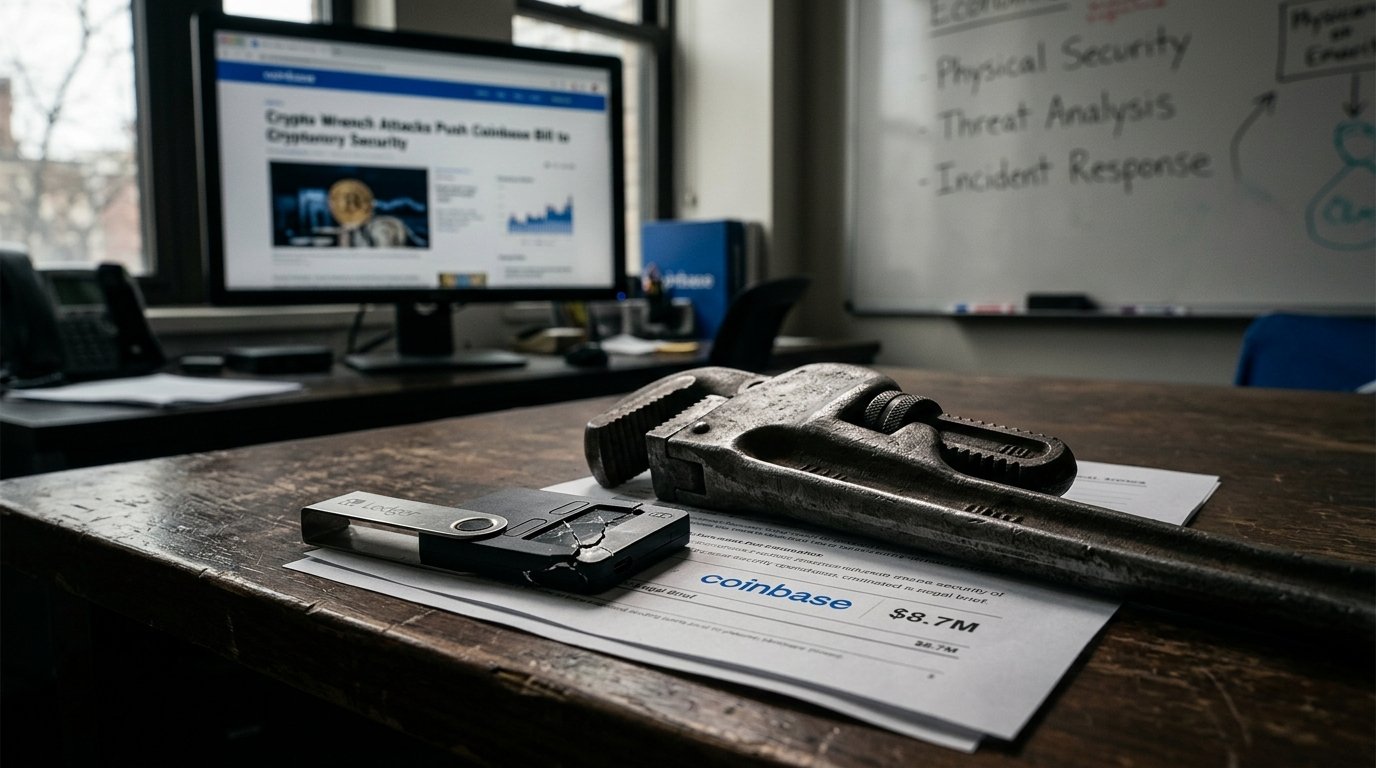
The $8.7 million security expenditure is not the result of a single incident but rather a cumulative response to growing threats over time. A large portion of this budget is dedicated to proactive prevention rather than reactive recovery.
A significant share goes toward physical protection services, including secure transportation for high-risk personnel and residential security upgrades. Another portion is allocated to threat intelligence systems that monitor potential targeting of employees or executives across social media and dark web platforms.
Insurance premiums have also increased sharply. As wrench attacks become more common, insurers reassess risk models, leading to higher costs for coverage. This contributes to the rising financial burden highlighted by the fact that Crypto wrench attacks push Coinbase security bill to $8.7M.
Additionally, legal compliance and coordination with international authorities require dedicated teams and infrastructure. These hidden operational costs often go unnoticed but form a substantial part of the overall security budget.
Industry Impact on Exchanges and Custodians
The implications of physical crypto threats extend far beyond Coinbase. Other exchanges, custodians, and fintech firms are also experiencing increased pressure to enhance security measures.
When Crypto wrench attacks push Coinbase security bill to $8.7M, it sends a clear signal to the entire industry that security must evolve beyond digital defenses. Smaller exchanges, in particular, face challenges because they may lack the financial resources to implement similar protection systems.
This has led to a growing divide in the industry. Large platforms are able to absorb security costs and invest in comprehensive protection, while smaller firms must rely on third-party services or limited safeguards.
As a result, consolidation in the crypto industry may accelerate. Security becomes a competitive advantage, with users preferring platforms that offer stronger protection against both cyber and physical threats.
User Safety, Custody, and Insurance Models
The rise in physical threats has also changed how users think about custody and asset storage. Many investors are now reconsidering self-custody solutions due to the risks associated with being personally targeted.
Custodial services like Coinbase provide a layer of protection by abstracting direct control over private keys. However, as Crypto wrench attacks push Coinbase security bill to $8.7M, even custodial platforms are under pressure to strengthen safeguards further.
Insurance models are also evolving. Crypto insurance policies are becoming more sophisticated, covering not only digital theft but also physical coercion events. However, premiums remain high due to the unpredictability of wrench attacks.
Users are increasingly encouraged to adopt layered security practices, including multi-factor authentication, withdrawal limits, and delayed transaction approvals. While these measures cannot eliminate physical threats, they help reduce potential damage.
Law Enforcement and Regulatory Challenges
One of the biggest challenges in addressing wrench attacks is jurisdictional complexity. These crimes often involve cross-border networks, making investigation and prosecution difficult.
Even as Crypto wrench attacks push Coinbase security bill to $8.7M, law enforcement agencies are still adapting to the unique nature of crypto-related physical crime. Unlike traditional financial theft, digital asset recovery and victim protection require specialized knowledge.
Regulators are also beginning to take notice. Some jurisdictions are exploring guidelines for exchange security standards that include physical protection requirements. However, global coordination remains limited.
The decentralized nature of cryptocurrency further complicates enforcement. Criminals can operate in one country, target victims in another, and move funds across multiple blockchains within minutes.
Future of Crypto Security: From Digital to Physical Threat Defense
The future of crypto security will likely be defined by hybrid defense systems that integrate both digital and physical protection layers. Exchanges can no longer rely solely on cryptographic security.
The fact that Crypto wrench attacks push Coinbase security bill to $8.7M demonstrates a broader industry transformation. Security budgets will increasingly include personal protection, artificial intelligence monitoring, behavioral analytics, and emergency response infrastructure.
We may also see greater adoption of decentralized identity systems that reduce exposure of personal data. At the same time, companies may implement stricter internal access controls and geographic risk segmentation.
As threats evolve, the industry will continue balancing usability with safety. While stronger protections reduce risk, they may also introduce friction for users. The challenge will be maintaining accessibility while ensuring security at every level.
Conclusion
The rise of physical coercion in the crypto industry marks a significant turning point in how digital assets are protected. The fact that Crypto wrench attacks push Coinbase security bill to $8.7M illustrates the growing financial and operational burden placed on major exchanges.
What was once a purely digital security challenge has now expanded into the real world, requiring comprehensive protection strategies that include both cyber and physical defense systems. As crypto adoption continues to grow, so too will the sophistication of threats targeting individuals and institutions.
Ultimately, the industry’s response to wrench attacks will shape the future of digital finance security, determining how safely users can store and manage their assets in an increasingly complex threat environment.