Decentralized Escrow: Empowering Secure and Fair Transactions
Decentralized escrow replaces the trusted middleman in a transaction with code

Decentralized escrow replaces the trusted middleman in a transaction with code: a smart contract holds the buyer’s funds and releases them only when agreed conditions are met. That removes the need to trust a single company, cuts fees, and works across borders at any hour. It also introduces new risks, from coding bugs to disputes that software cannot judge. This guide explains how decentralized escrow works, where it beats traditional escrow, and how to use it safely.
What is decentralized escrow?
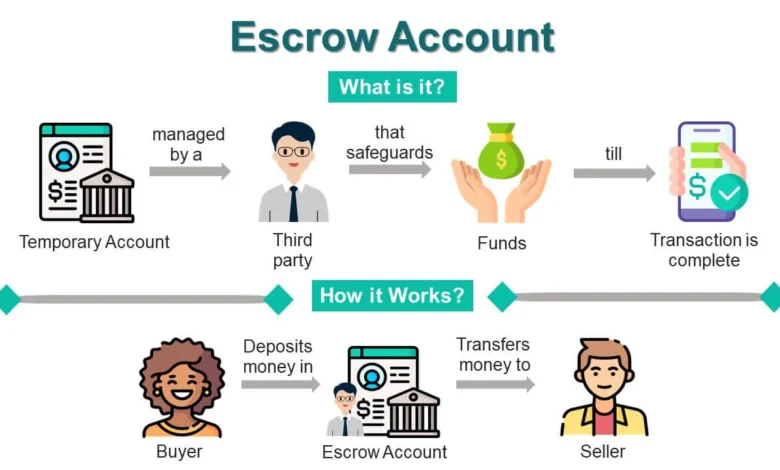
Escrow is an arrangement in which a neutral party holds money or assets while two sides complete a deal. A home sale is the classic example: the buyer’s funds sit with an escrow agent until the title transfers. The problem is that the neutral party is a company or person you must trust to stay honest, solvent and responsive.
Decentralized escrow keeps the idea and changes who enforces it. Instead of an agent, a smart contract on a blockchain holds the funds. The contract’s rules are public and automatic: it releases payment to the seller when the agreed condition is met, returns it to the buyer if the deal fails, and, in most designs, hands tough disputes to a set of independent arbitrators.
This matters most where trust is thin. Online freelancers, international sellers, digital-goods markets and crypto traders often deal with strangers across borders, where banks and traditional escrow providers are slow, expensive or unavailable. A neutral, always-on piece of code fills that gap.
How decentralized escrow works, step by step
Exact designs vary by platform, but most follow the same sequence.
- Agree on terms. Buyer and seller settle the price, deliverable, deadline and what counts as proof of delivery.
- Create the contract. One party, or the platform, deploys an escrow smart contract that records the parties’ wallet addresses, the amount and the release conditions.
- Fund the escrow. The buyer sends the payment, often in a stablecoin, to the contract. The seller can see on the blockchain that the money is locked.
- Deliver the work or goods. With funds secured, the seller ships the product or completes the service.
- Confirm and release. The buyer approves, and the contract pays the seller automatically. Some designs release on a timer if the buyer stays silent past the deadline.
- Resolve disputes if needed. If the parties disagree, an arbitrator, a panel or a community vote reviews the evidence and directs the contract to pay the seller, refund the buyer or split the funds.
The key difference from traditional escrow is step 3: the money is not in anyone’s account. Neither side can move it alone, and the platform operator usually cannot either.
Centralized vs decentralized escrow
| Feature | Traditional (centralized) escrow | Decentralized escrow |
|---|---|---|
| Who holds the funds | A bank, company or agent | A smart contract on a blockchain |
| Trust required | In the provider’s honesty and solvency | In the code and the arbitration process |
| Transparency | Terms and balances are private to the provider | Rules and balances are publicly verifiable |
| Availability | Business hours, local jurisdiction | 24/7, across borders |
| Typical fees | Often a percentage of the deal plus admin charges | Usually lower, plus network (gas) fees |
| Dispute handling | Human agent or legal system | Arbitrators, DAO votes or oracles |
| Reversibility of mistakes | Providers can often correct errors | Blockchain transactions are generally final |
| Legal recourse | Established consumer and contract law | Often unclear, varies by country |
Neither model is simply better. Traditional escrow offers legal protection and human flexibility, while decentralized escrow offers neutrality, speed and transparency. The right choice depends on deal size, counterparties and how comfortable you are with the technology.
Core building blocks
Five components appear, in different mixes, in nearly every decentralized escrow system.
- Smart contracts. Self-executing programs that lock funds and enforce the rules. Their logic is visible on-chain, so anyone can inspect it before depositing.
- Multi-signature wallets. A multisig requires two of three approvals, for example buyer, seller and arbitrator, before funds move. If buyer and seller agree, they release funds themselves; the arbitrator only steps in during a dispute.
- Oracles. Blockchains cannot see the outside world. An oracle feeds in real-world facts, such as a delivery confirmation or a price, so a contract can act on them. Oracles are powerful and also a point of failure, since bad data produces a bad payout.
- Arbitration layers. Some platforms use named arbitrators chosen by the parties, others a pool of staked jurors or a decentralized autonomous organization (DAO) vote. Good designs give arbitrators something to lose if they rule dishonestly.
- Time locks. Deadlines built into the contract, such as an automatic refund if the seller never delivers, or auto-release if the buyer never responds. They stop funds from being frozen forever.
Where decentralized escrow is used
- Freelance and remote work. A client funds the contract up front, proving the money exists, and the freelancer is paid on milestones. Both sides are protected from ghosting and non-payment.
- Peer-to-peer crypto trades. Escrow holds the crypto while the counterparty sends fiat by bank transfer, reducing the chance of being scammed by a stranger.
- Digital goods and NFTs. Contracts can swap an asset for payment atomically, so either both transfers happen or neither does.
- Cross-border commerce. Small exporters and importers can transact without waiting days for letters of credit or paying heavy wire and intermediary fees.
- Real-world assets. Property, vehicles and equipment deals can pair on-chain payment with off-chain title transfer, though this usually still needs legal paperwork alongside the code.
- Crowdfunding and grants. Funds are released only as project milestones are verified, instead of all at once.
- Online marketplaces. Platforms can offer buyer protection without holding customer money on their own books.
Benefits for buyers and sellers
Less counterparty risk. Both sides see the funds locked before work begins. Buyers know the seller cannot take the money and vanish, and sellers know the buyer cannot refuse to pay after delivery.
No single point of failure. The funds are not in a company’s bank account, so the provider’s bankruptcy, hack or freeze should not reach them. The contract’s balance is separate from the platform’s finances.
Transparency. Anyone can read the contract and its balance. Rules cannot be quietly changed after you have deposited, unless the design explicitly allows upgrades, which is worth checking.
Lower costs. Removing a human intermediary can cut fees to a small percentage plus network costs. For small or frequent deals, this can be the difference between a viable transaction and an uneconomic one.
Global access. Anyone with a wallet can participate, regardless of local banking infrastructure, and the contract works at any hour.
Programmable fairness. Milestone payments, partial refunds, automatic deadlines and split releases can be written into the contract, so complex deals follow rules everyone agreed to up front.
Risks and limitations
Decentralized escrow shifts risk rather than removing it. Know these before you deposit.
- Smart contract bugs. A coding flaw can lock or drain funds. Audits reduce the risk but do not eliminate it, and a contract that is unaudited or brand new deserves extra caution.
- Irreversibility. If you send funds to the wrong address or the wrong contract, there is usually no support desk to reverse it.
- Subjective disputes. Code can check whether a payment arrived. It cannot judge whether a logo design is good or a shipment was damaged. Those cases depend on arbitrators and evidence, which brings back human judgment and its flaws.
- Oracle and arbitrator manipulation. If the data source or the jurors can be bribed or tricked, the escrow is only as honest as they are.
- Admin keys and upgrades. Some contracts let the developers change the rules or pause withdrawals. That is a hidden form of central control; check who holds those keys.
- Legal uncertainty. Courts and regulators treat on-chain escrow differently across countries. For large or regulated deals, you may still need a conventional contract.
- Price volatility. If the escrow holds a volatile token, the value can change sharply between funding and release. Stablecoins reduce this but carry their own issuer risk.
- Usability. Wallets, gas fees and seed phrases are still hard for newcomers, and mistakes are costly.
A safety checklist before you use decentralized escrow
- Check for an audit. Look for a published security review from a recognized firm, and read what issues it found and whether they were fixed.
- Read the dispute rules. Know who arbitrates, how they are chosen, how long it takes and what it costs.
- Confirm who can change the contract. Prefer immutable contracts or ones with time-locked, transparent upgrade paths.
- Test with a small amount first. Run a low-value transaction to learn the flow before committing a large sum.
- Verify addresses twice. Copy the contract address from the official site and compare it on a block explorer. Beware of fake sites and lookalike contracts.
- Write the deal terms down. Keep the agreement, delivery proof and chat records in a form an arbitrator can review.
- Use a hardware wallet for large amounts, and never share your recovery phrase with anyone, including supposed support staff.
- Match the tool to the deal. For high-value or legally complex transactions, consider combining on-chain escrow with a written contract or a traditional escrow service.
Frequently asked questions
What is decentralized escrow in simple terms? A smart contract that holds payment and releases it only when the buyer and seller meet the agreed conditions, without a bank or company in the middle.
Is decentralized escrow safe? It can be safer than trusting an unknown counterparty, but it is not risk-free. Contract bugs, irreversible mistakes and weak dispute systems are real concerns, so audits and small test deals matter.
Who resolves disputes? That depends on the platform: a pre-agreed arbitrator, a panel of staked jurors, or a DAO vote. Check this before you commit funds.
Does decentralized escrow need cryptocurrency? Most systems use crypto or stablecoins because they are held by smart contracts on a blockchain. Some projects bridge to bank payments, but the escrow logic itself is on-chain.
What does decentralized escrow cost? Fees are typically lower than traditional escrow and combine a small platform fee, if any, with blockchain network fees. Exact costs vary by chain and platform.
Can decentralized escrow replace lawyers and banks? For straightforward digital deals it can replace the intermediary. For complex, regulated or high-value transactions, it is better seen as a complement to legal agreements than a substitute.