
Denis Beau Challenges Lagarde on Stablecoins

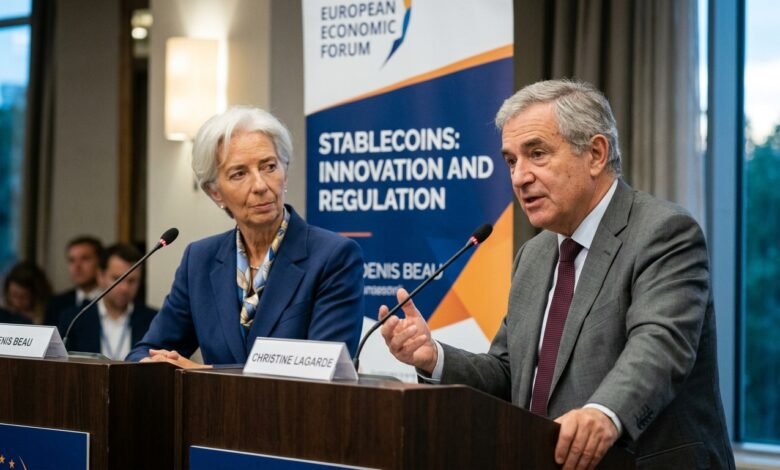
The European cryptocurrency debate has entered a new phase after Denis Beau publicly diverged from Christine Lagarde on the issue of stablecoins. The disagreement highlights growing tensions within Europe’s financial leadership as policymakers attempt to balance innovation, regulation, and monetary stability in the rapidly evolving digital asset industry. While the European Central Bank has consistently maintained a cautious stance toward cryptocurrencies and privately issued digital currencies, Beau’s comments suggest that not all European officials share the same level of skepticism.
Stablecoins have become one of the most significant sectors within the crypto market because they bridge the gap between traditional finance and blockchain technology. Pegged to fiat currencies such as the euro or U.S. dollar, stablecoins provide users with reduced volatility while enabling fast and efficient digital transactions. However, regulators worldwide remain divided over how these assets should be managed, supervised, and integrated into the financial system.
Christine Lagarde has repeatedly warned about the risks associated with cryptocurrencies and stablecoins, emphasizing concerns over financial stability, monetary sovereignty, and consumer protection. Denis Beau’s more nuanced position introduces a fresh perspective into the European discussion, signaling that some policymakers see potential benefits in stablecoin innovation when properly regulated.
This growing divide comes at a critical moment for the European Union as it advances digital finance initiatives, including the Markets in Crypto-Assets Regulation (MiCA) and plans for a digital euro. The debate between Beau and Lagarde could shape how Europe approaches stablecoin adoption, blockchain innovation, and competition with global financial powers in the years ahead.
Who Is Denis Beau?
Denis Beau serves as First Deputy Governor of the Banque de France, making him one of Europe’s most influential financial officials. Over recent years, Beau has become increasingly involved in discussions surrounding digital finance, blockchain infrastructure, and central bank innovation. Unlike some policymakers who focus primarily on restricting crypto-related risks, Beau has frequently emphasized the importance of balancing oversight with technological progress.
His recent remarks on stablecoins stand out because they contrast with the more conservative approach often associated with Christine Lagarde and the European Central Bank. Beau appears to recognize that stablecoins could play a constructive role within modern payment systems if they operate under clear regulatory frameworks.
This perspective reflects a broader shift occurring among some European regulators who no longer view digital assets solely as speculative instruments. Instead, they increasingly acknowledge the efficiency gains, cross-border payment improvements, and financial innovation enabled by blockchain technology.
Beau’s position also aligns with France’s growing interest in becoming a major hub for digital asset innovation within Europe. French regulators have generally shown greater openness toward blockchain experimentation compared to some other European jurisdictions, particularly when strict compliance standards are maintained.
Christine Lagarde’s Cautious Approach to Stablecoins
Christine Lagarde, President of the European Central Bank, has consistently taken a more cautious stance on cryptocurrencies and stablecoins. She has repeatedly stressed the importance of protecting the traditional financial system from potential disruptions caused by unregulated digital assets.
Lagarde’s concerns center on several key issues. One major worry involves monetary sovereignty. If privately issued stablecoins become widely adopted, central banks could lose influence over payment systems and money circulation. This could weaken the effectiveness of monetary policy and reduce government control over financial stability.
Another concern involves consumer protection. The collapse of several crypto firms and algorithmic stablecoins in recent years reinforced fears that poorly regulated digital assets can expose investors to severe losses. Lagarde has argued that strict oversight is necessary to prevent systemic risks from spreading into the broader economy.
The ECB’s cautious tone is also connected to its digital euro project. European policymakers want to ensure that any future digital payment infrastructure remains anchored within the central banking system rather than being dominated by private crypto companies. Stablecoins are therefore often viewed as potential competitors to central bank digital currencies.
Lagarde’s position reflects a broader global trend among central bankers who prioritize financial stability over rapid technological disruption. However, critics argue that excessive caution could slow innovation and reduce Europe’s competitiveness in the global fintech race.
Why Stablecoins Matter in Global Finance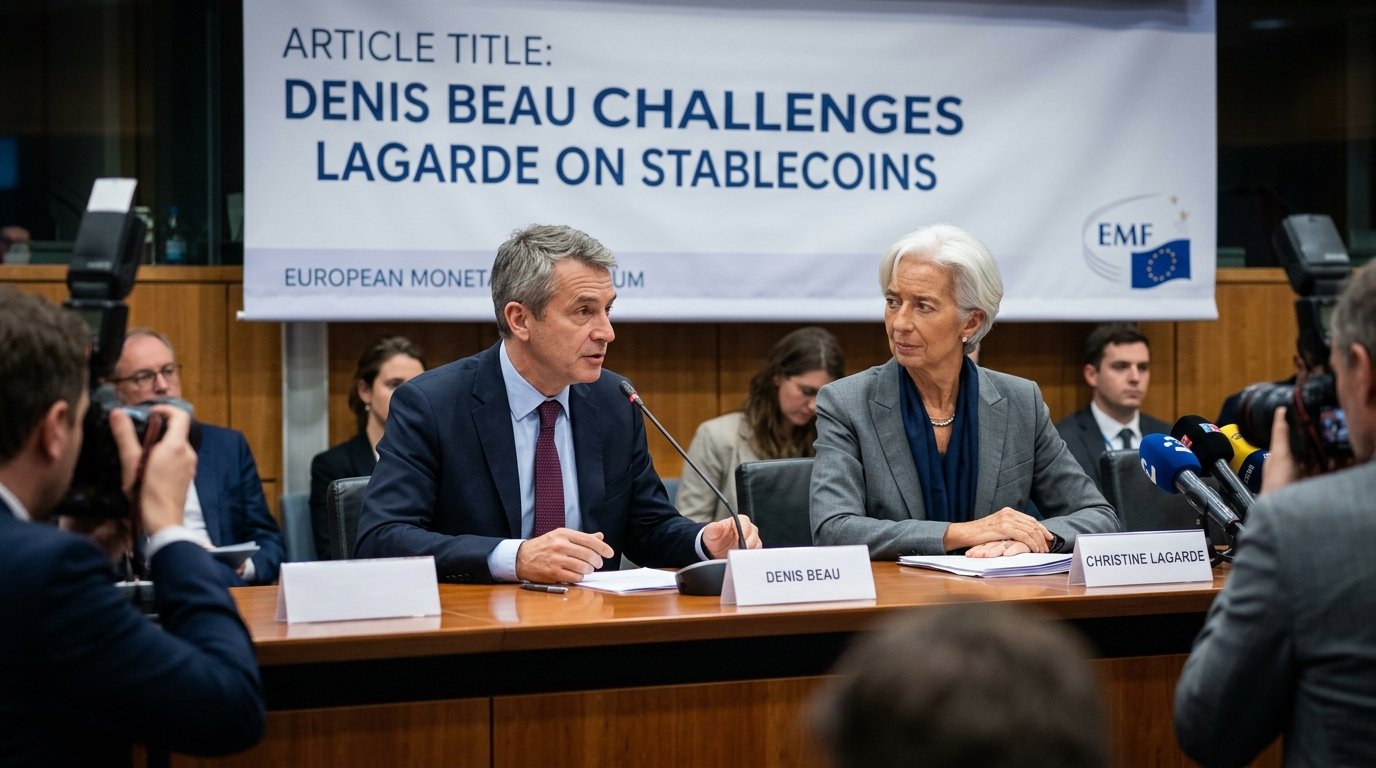
The debate between Denis Beau and Christine Lagarde is significant because stablecoins are becoming increasingly important within global finance. Unlike highly volatile cryptocurrencies such as Bitcoin, stablecoins are designed to maintain a consistent value by being pegged to traditional currencies or reserve assets.
This stability makes them useful for payments, remittances, decentralized finance applications, and cross-border transactions. Businesses and consumers can use stablecoins to transfer value quickly without relying entirely on traditional banking systems.
Stablecoins also play a central role in the broader cryptocurrency ecosystem. They provide liquidity for crypto trading platforms and enable investors to move funds efficiently between digital assets. As blockchain adoption expands, stablecoins are increasingly viewed as foundational infrastructure for digital finance.
Global financial institutions are paying close attention to this sector. Major payment companies, fintech firms, and even governments are exploring stablecoin integration because of the technology’s efficiency advantages. Faster settlement times, lower transaction costs, and increased financial accessibility are among the key benefits driving interest.
The rapid growth of stablecoins has therefore forced regulators to confront difficult questions about oversight, monetary control, and financial innovation. Europe’s internal debate reflects these broader international tensions.
The Impact of MiCA Regulation
Europe has already taken major steps toward regulating digital assets through the Markets in Crypto-Assets Regulation (MiCA) framework. MiCA represents one of the world’s most comprehensive crypto regulatory systems and includes detailed provisions for stablecoin issuers.
The framework aims to create legal clarity while minimizing financial risks. Stablecoin providers operating in Europe must meet strict transparency, reserve management, and operational requirements. Regulators hope these measures will protect consumers while allowing legitimate innovation to continue.
Denis Beau’s comments suggest that stablecoins can coexist with strong regulation rather than being viewed solely as threats. This aligns with MiCA’s broader philosophy of integrating crypto innovation into the financial system through supervision instead of outright prohibition.
Lagarde’s concerns, however, indicate that some European policymakers still worry about the long-term implications of privately issued digital currencies even under regulated conditions. Questions remain about whether stablecoins could eventually challenge central bank authority or alter the structure of traditional finance.
MiCA may therefore serve as a testing ground for how Europe balances innovation with control. If the framework succeeds, it could position Europe as a leader in responsible digital asset regulation. If problems emerge, critics may use them to justify stricter restrictions in the future.
Stablecoins vs the Digital Euro
One of the most important dimensions of the Beau-Lagarde disagreement involves the future relationship between stablecoins and the proposed digital euro. The ECB has spent years researching a central bank digital currency designed to modernize Europe’s payment infrastructure.
The digital euro would function as a government-backed digital currency issued directly by the central bank. Supporters argue that it could enhance payment efficiency while preserving monetary sovereignty in an increasingly digital economy.
Stablecoins present both competition and opportunity within this context. On one hand, they demonstrate strong demand for digital payment solutions. On the other hand, widespread stablecoin adoption could reduce reliance on central bank money.
Lagarde appears concerned that privately issued digital currencies might weaken the strategic importance of the digital euro. Beau’s more balanced stance suggests that regulated stablecoins and central bank digital currencies may coexist within a diversified financial ecosystem.
This debate mirrors broader global discussions about the future of money itself. Governments worldwide are exploring how digital currencies, blockchain networks, and decentralized finance could reshape economic systems over the coming decades.
Europe’s Competitive Position in Crypto Innovation
The disagreement between Beau and Lagarde also reflects concerns about Europe’s position in the global technology race. The United States, Asia, and the Middle East are all competing to become leaders in blockchain innovation and digital finance infrastructure.
Some European policymakers worry that excessive regulation could push crypto businesses and fintech startups toward more favorable jurisdictions. If Europe becomes too restrictive, it risks losing talent, investment, and technological influence.
France has emerged as one of Europe’s more crypto-friendly markets, attracting blockchain companies and supporting digital asset experimentation under regulated conditions. Denis Beau’s comments may therefore signal a broader strategic effort to encourage innovation while maintaining oversight.
At the same time, European authorities remain determined to avoid the instability and scandals that have affected parts of the crypto industry globally. Finding the right balance between innovation and regulation remains one of the central challenges facing policymakers.
The outcome of this debate could shape Europe’s financial competitiveness for years to come. A supportive but carefully regulated environment may attract investment and strengthen Europe’s role in digital finance. Excessive caution, however, could slow adoption and limit economic opportunities.
Investor Reaction to the Stablecoin Debate
The cryptocurrency market closely watches comments from major regulators because policy decisions can significantly influence adoption and investor confidence. Denis Beau’s remarks have been interpreted by some market participants as a positive sign that parts of Europe’s financial leadership are becoming more open to stablecoin innovation.
Investors generally prefer regulatory clarity over uncertainty. Even strict rules can support market growth if businesses understand the legal framework within which they can operate. Beau’s willingness to discuss stablecoins in a more constructive manner may therefore encourage optimism among crypto companies operating in Europe.
At the same time, Lagarde’s continued caution reminds investors that regulatory scrutiny remains intense. European authorities are unlikely to allow unchecked expansion of privately issued digital currencies without extensive safeguards.
The market reaction highlights the growing influence of policymaker communication within the crypto sector. Statements from central bankers and regulators increasingly shape investor expectations regarding future adoption trends, compliance requirements, and institutional participation.
Conclusion
The growing divide between Denis Beau and Christine Lagarde over stablecoins represents more than a simple policy disagreement. It reflects a broader struggle over how Europe should approach financial innovation in the digital age. While Lagarde emphasizes caution, monetary sovereignty, and systemic stability, Beau appears more open to the idea that regulated stablecoins can contribute positively to modern financial infrastructure.
This debate comes at a pivotal moment as Europe advances the MiCA framework and explores the future of the digital euro. Stablecoins are no longer a niche crypto experiment; they are becoming increasingly integrated into global finance, payments, and blockchain ecosystems.
Europe now faces the challenge of encouraging innovation without compromising financial stability. The decisions made by policymakers in the coming years could determine whether the region becomes a leader in digital finance or falls behind more adaptive global competitors.
As stablecoin adoption continues expanding worldwide, the Beau-Lagarde disagreement may prove to be an important milestone in shaping Europe’s long-term crypto strategy and the future of digital money itself.