
NVIDIA Model Optimizer Brings FP8 Quantization to CLIP Models
NVIDIA Model Optimizer Brings FP8 Quantization to CLIP Models

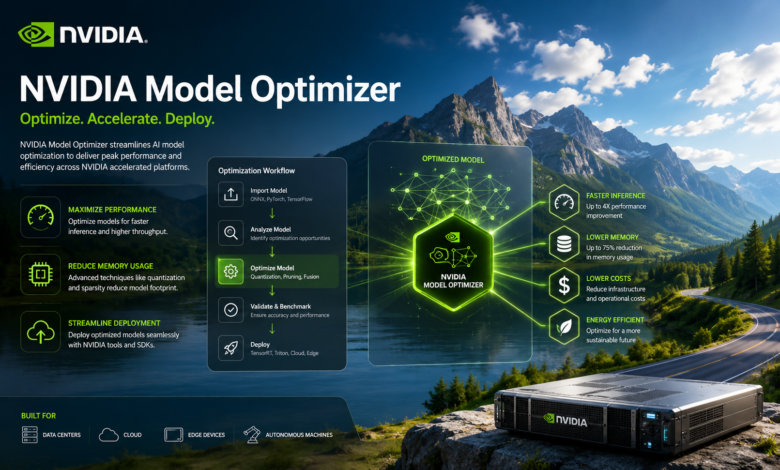
Artificial intelligence is evolving at a rapid pace, and optimization technologies are becoming just as important as model innovation itself. As organizations deploy increasingly large multimodal AI systems, the demand for faster inference, lower memory consumption, and scalable deployment has never been greater. To address these challenges, NVIDIA Model Optimizer has introduced FP8 quantization for CLIP models, marking a major advancement in efficient AI inference.
The integration of FP8 quantization into CLIP models opens the door to significant performance improvements across AI applications including computer vision, image-text retrieval, recommendation systems, generative AI, robotics, and autonomous systems. This optimization enables enterprises and developers to reduce computational overhead while maintaining high accuracy levels.
As the AI industry shifts toward real-time multimodal systems, optimized inference pipelines are becoming essential. The latest innovation from NVIDIA demonstrates how hardware-aware optimization can dramatically improve deployment efficiency for large transformer-based architectures.
In this article, we will explore how NVIDIA Model Optimizer works, what FP8 quantization means, why it matters for CLIP models, and how this advancement could shape the future of AI infrastructure and deployment.
What Is NVIDIA Model Optimizer?
NVIDIA Model Optimizer is a toolkit designed to improve the performance and efficiency of AI models during inference. It enables developers to optimize neural networks for deployment on NVIDIA GPUs and accelerated computing platforms.
The optimizer focuses on several critical areas:
- Model compression
- Quantization
- Tensor optimization
- Inference acceleration
- Reduced memory utilization
- Faster deployment pipelines
By leveraging advanced optimization strategies, the toolkit helps organizations maximize hardware utilization while reducing operational costs.
One of the most important additions to the optimizer is support for FP8 quantization, particularly for transformer-based multimodal architectures like CLIP models.
CLIP Models
CLIP models (Contrastive Language-Image Pretraining) are multimodal AI systems that connect images and text in a shared embedding space. Originally introduced by OpenAI, CLIP models can understand visual content using natural language descriptions.
These models are widely used in:
- Image classification
- Visual search engines
- Text-to-image generation
- Recommendation systems
- AI-powered content moderation
- Video understanding
- Robotics perception
Unlike traditional computer vision systems, CLIP models learn from large-scale image-text pairs, enabling them to generalize across many tasks without task-specific training. Because CLIP architectures rely heavily on transformer networks, they often require substantial computational resources. This makes optimization techniques like FP8 quantization highly valuable.
Why Quantization Matters
Quantization helps AI models:
- Run faster
- Consume less GPU memory
- Reduce power consumption
- Lower infrastructure costs
- Increase throughput
- Improve scalability
In modern AI deployment, efficiency is critical. Large multimodal models can be expensive to operate, especially in production environments handling millions of requests daily. By using FP8 quantization, organizations can achieve better performance without major accuracy degradation.
How FP8 Quantization Improves CLIP Models
The addition of FP8 quantization to CLIP models provides several major advantages.
Faster Inference Performance
One of the biggest benefits is improved inference speed. Since FP8 calculations require fewer computational resources, GPUs can process more operations simultaneously.
This is particularly important for:
- Real-time vision systems
- AI search platforms
- Autonomous systems
- Interactive generative AI applications
Lower latency leads to a better user experience and more responsive AI applications.
Reduced GPU Memory Usage
Large transformer-based AI systems consume enormous amounts of VRAM. FP8 quantization significantly lowers memory requirements, enabling larger models to run on fewer GPUs.
Benefits include:
- Lower cloud computing costs
- Better hardware utilization
- Easier scaling
- Reduced deployment complexity
This optimization can help enterprises deploy sophisticated multimodal AI systems without massive infrastructure investments.
Increased AI Throughput
Another major advantage is higher throughput. FP8 enables GPUs to process more requests simultaneously, improving operational efficiency.
For AI-powered businesses, higher throughput means:
- More users served
- Lower inference cost per request
- Improved ROI
- Enhanced scalability
This makes NVIDIA Model Optimizer particularly attractive for enterprise AI deployment.
Why NVIDIA Is Focusing on AI Optimization
The AI industry is entering a phase where optimization is just as important as training larger models. While model sizes continue growing, infrastructure costs are also increasing.
NVIDIA recognizes that future AI success depends on:
- Efficient deployment
- Cost-effective inference
- Energy-efficient computing
- Hardware-aware optimization
- Scalable AI infrastructure
By integrating FP8 quantization into CLIP models, NVIDIA is helping developers maximize performance while minimizing operational costs.
This aligns with broader industry trends toward sustainable AI infrastructure.
The Role of Tensor Cores in FP8 Quantization
NVIDIA GPUs include specialized hardware called Tensor Cores. These cores accelerate matrix operations commonly used in deep learning.
Modern Tensor Cores are designed to support:
- FP16
- BF16
- INT8
- FP8 workloads
This hardware-level support is critical for achieving maximum benefits from FP8 quantization. The synergy between NVIDIA hardware and software optimization creates a highly efficient AI ecosystem.
Benefits for Generative AI Applications
Generative AI systems increasingly rely on multimodal architectures similar to CLIP models. FP8 optimization can improve performance across several domains.
Robotics and Autonomous Systems
Real-time perception systems require low latency and high efficiency. FP8 helps enable responsive decision-making.
Enterprise Impact of NVIDIA Model Optimizer
Businesses deploying AI at scale face growing infrastructure costs. Optimized inference pipelines can substantially reduce operational expenses.
Lower Cloud Costs
Cloud GPU instances are expensive. Reducing memory and computational requirements directly lowers cloud spending.
Improved Sustainability
Efficient AI models consume less energy, supporting sustainability goals.
Better Scalability
Optimized models can handle more requests with fewer resources.
Faster Deployment Cycles
Developers can move models into production more quickly using optimized pipelines. For enterprises, these improvements can translate into significant competitive advantages.
How FP8 Quantization Supports Edge AI
Edge AI applications require compact, efficient models capable of running on constrained hardware.
Examples include:
- Smart cameras
- Autonomous drones
- Industrial robots
- Medical devices
- Retail AI systems
By reducing computational overhead, FP8 quantization enables powerful multimodal AI capabilities on edge devices.This could accelerate adoption of AI-powered embedded systems across industries.
Accuracy Preservation
Reducing precision can introduce numerical instability. Maintaining model accuracy requires sophisticated optimization techniques.
Model Compatibility
Not all architectures respond equally well to FP8 conversion.
Calibration Complexity
Quantized models require careful calibration to avoid performance degradation. NVIDIA addresses these issues through advanced optimization workflows within the Model Optimizer toolkit.
The Future of AI Inference Optimization
AI inference optimization is becoming one of the most important areas in artificial intelligence infrastructure.
Several trends are shaping the future:
- Smaller efficient models
- Quantized neural networks
- Hardware-software co-design
- Energy-efficient AI
- Real-time multimodal systems
As models continue growing larger, efficient deployment technologies like FP8 quantization will become essential. NVIDIA’s innovation positions the company at the center of next-generation AI infrastructure.
NVIDIA’s Competitive Advantage in AI Infrastructure
NVIDIA dominates the AI hardware market due to its integrated ecosystem:
- CUDA software stack
- TensorRT inference acceleration
- Tensor Cores
- AI optimization frameworks
- GPU architecture leadership
The addition of FP8 quantization support for CLIP models further strengthens NVIDIA’s position in AI deployment infrastructure. Competitors are also exploring low-precision AI computing, but NVIDIA currently maintains a strong ecosystem advantage.
How Developers Can Benefit From NVIDIA Model Optimizer
Developers working with multimodal AI systems can gain several practical advantages.
Faster Experimentation
Optimized models allow quicker testing and iteration.
Reduced Deployment Barriers
Lower hardware requirements make deployment more accessible.
Better User Experience
Improved inference speed enhances application responsiveness.
Lower Operational Costs
Efficient models reduce infrastructure expenses.
As AI applications scale globally, these benefits become increasingly valuable.
AI Industry Implications
The introduction of FP8 quantization for CLIP models reflects broader changes in the AI industry. The focus is shifting from simply building larger models to deploying smarter and more efficient systems.
This trend could influence:
- Cloud AI platforms
- Enterprise AI adoption
- AI hardware design
- Edge computing
- Consumer AI applications
Optimization technologies may ultimately determine which AI systems become commercially viable at scale.
The launch of FP8 quantization support for CLIP models through NVIDIA Model Optimizer represents a major advancement in AI inference optimization. As multimodal AI applications continue expanding, efficient deployment becomes increasingly important.
By reducing memory usage, increasing throughput, lowering latency, and improving scalability, FP8 optimization offers substantial benefits for enterprises, developers, and AI infrastructure providers.
NVIDIA’s approach demonstrates the growing importance of hardware-aware AI optimization in the future of artificial intelligence. Rather than focusing solely on larger models, the industry is now prioritizing efficient, scalable, and sustainable AI systems.
As generative AI, computer vision, robotics, and multimodal applications continue evolving, technologies like FP8 quantization are likely to become standard components of next-generation AI deployment pipelines. The future of AI may not simply depend on building bigger models — it may depend on running them smarter.
FAQs
Q. What is NVIDIA Model Optimizer?
NVIDIA Model Optimizer is a toolkit designed to improve AI model performance through optimization techniques like quantization, compression, and inference acceleration.
Q. What are CLIP models used for?
CLIP models are multimodal AI systems used for image recognition, visual search, text-image understanding, recommendation engines, and generative AI applications.
Q. What is FP8 quantization?
FP8 quantization is an 8-bit floating-point precision format that reduces memory usage and computational overhead while improving AI inference speed.
Q. Why is FP8 important for AI deployment?
FP8 enables faster inference, lower cloud costs, reduced energy consumption, and improved scalability for large AI systems.
Q. How does NVIDIA benefit from AI optimization technologies?
By offering integrated hardware and software optimization solutions, NVIDIA strengthens its leadership position in AI infrastructure and accelerated computing.