Bitcoin (BTC) Investment Outlook 2026: ETF Demand, Risks, and Long-Term Value
How ETF inflows, a fixed supply, and real market risks shape Bitcoin’s long-term value

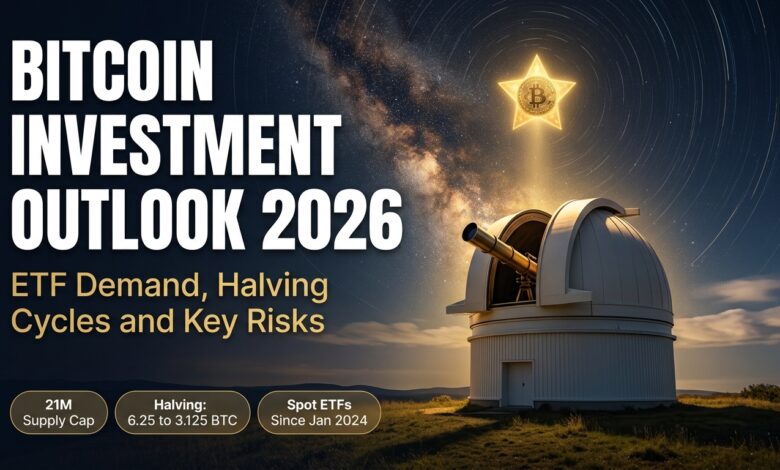
This Bitcoin investment outlook 2026 examines whether the world’s largest cryptocurrency still deserves a place in a long-term portfolio. Bitcoin has moved from a niche experiment to a recognized asset that large funds, public companies, and even governments now discuss openly. Spot Bitcoin ETFs opened the door for traditional investors, and their flows have become a key signal for market demand. At the same time, Bitcoin remains volatile, and sharp drawdowns still surprise new buyers. Regulation, interest rates, and global liquidity also influence price far more than most beginners expect. This article explains what drives Bitcoin today, how ETF demand works, what the supply model means for value, and which risks deserve your attention. You will also find a balanced view of long-term potential and clear answers to common questions. Read every section carefully before you commit any money.
What Is Bitcoin (BTC) and Why Does It Matter?
Bitcoin is a decentralized digital currency that runs on a public network without a central bank or company in control. An anonymous creator known as Satoshi Nakamoto described the system in a 2008 white paper, and the network went live in January 2009. Thousands of independent computers, called nodes, verify every transaction and enforce the same rules. Miners add new blocks to the chain by spending real computing power, which makes tampering extremely expensive. The protocol limits total supply to 21 million coins, and no government or developer can change that cap without near-universal agreement. This fixed supply drives the popular “digital gold” story, because investors compare Bitcoin’s scarcity to precious metals. People use Bitcoin as a store of value, a payment tool, and a way to move money across borders. You can read the original design in the Bitcoin white paper to understand the core idea in the creator’s own words. For more market guides, explore the latest articles on cryptol7.com.
Bitcoin ETF Demand: The Biggest Driver of Institutional Interest
Spot Bitcoin ETFs changed the market when U.S. regulators approved them in January 2024. These funds hold real Bitcoin and trade on regular stock exchanges, so investors can gain exposure through a normal brokerage account. Retirement accounts, wealth managers, and advisors can now include Bitcoin without handling wallets or private keys. That convenience unlocked a huge pool of capital that previously stayed on the sidelines. Large asset managers such as BlackRock and Fidelity launched products, and they gave the sector instant credibility. Daily inflow and outflow data now guide many traders, because sustained inflows suggest rising demand while outflows signal caution. ETF holdings also remove coins from active circulation, which tightens available supply when demand grows. Still, ETF demand can reverse quickly when sentiment turns negative. Investors should watch flow trends over weeks and months rather than single days. A strong Bitcoin investment outlook 2026 depends heavily on whether this institutional channel keeps growing.

How ETF Flows Affect Bitcoin’s Price
ETF flows influence price because they create steady buying or selling pressure from large, regulated vehicles. When investors pour money into these funds, the issuers must buy real Bitcoin to back new shares. That purchasing absorbs supply from the market and often supports upward price moves. When investors redeem shares, the issuers sell Bitcoin, and that selling can push prices lower. Analysts track custody balances and net flows to measure which side currently dominates. Flows often follow price momentum, so they can amplify both rallies and corrections. Retail traders sometimes misread a single strong day as a long-term trend, and that mistake can lead to poor entries. Macro events, such as interest rate decisions, can also trigger big flow changes across all risk assets. A smart investor combines flow data with other indicators instead of relying on one number. You can compare market data on CoinMarketCap’s Bitcoin page to see current supply, volume, and price information.
The Halving Cycle and Bitcoin’s Fixed Supply
The halving is a built-in event that cuts the reward miners receive for adding new blocks. It happens roughly every four years, or every 210,000 blocks. The April 2024 halving reduced the block reward from 6.25 BTC to 3.125 BTC, which slowed new supply entering the market. Earlier halvings in 2012, 2016, and 2020 came before major bull markets, so many investors treat the cycle as a key pattern. However, past results do not guarantee future outcomes, and each cycle has different market conditions. ETF demand, global liquidity, and regulation now play a bigger role than they did a decade ago. Some analysts believe the old four-year rhythm may weaken as institutions dominate the market. Others argue that scarcity will still shape long-term value because supply keeps shrinking in relative terms. Either way, the next halving, expected around 2028, will keep this debate alive. Investors should treat the halving as one factor among many, not as a guaranteed signal.
Key Factors That Shape Bitcoin’s Long-Term Value
Several forces influence Bitcoin’s value over time, and smart investors track all of them. Adoption comes first, since more users, businesses, and funds create more demand for a limited asset. Macroeconomic conditions matter next, because falling interest rates and growing money supply often favor assets with a fixed cap. Bitcoin also reacts to inflation fears, currency weakness, and banking stress, which push some savers toward alternatives. Network security adds another layer, as record hash rate shows that miners keep investing heavily in the system. Corporate treasuries that hold Bitcoin signal confidence, though they also create concentration risk if they sell during a downturn. Regulatory clarity helps the market, because clear rules reduce uncertainty for large investors. Technology upgrades, such as layer-2 networks like the Lightning Network, improve payments speed and lower costs. These developments expand use cases beyond simple holding. A balanced Bitcoin investment outlook 2026 weighs these factors against the risks instead of focusing on only the positive side.
Bitcoin as Digital Gold and Portfolio Diversifier
Many investors compare Bitcoin to gold because both assets have limited supply and no central issuer. Bitcoin offers advantages such as easy transfer, simple division into small units, and transparent supply data. Gold still offers a much longer history and lower volatility, so it remains the more conservative store of value. Bitcoin’s price swings can exceed those of stocks and bonds by a wide margin. Some portfolio studies suggest that a small allocation can improve returns relative to risk, but those results depend on the time period studied. Bitcoin also moves with tech stocks during stress events, which weakens the pure safe-haven argument. Advisors often suggest sizing a position small enough that a deep drawdown will not harm your financial plans. Rebalancing on a schedule helps investors avoid emotional decisions. No allocation fits everyone, since age, income, and risk tolerance differ. Treat any suggested percentage as a starting point for research, not as a rule.
Key Risks to Consider Before You Invest
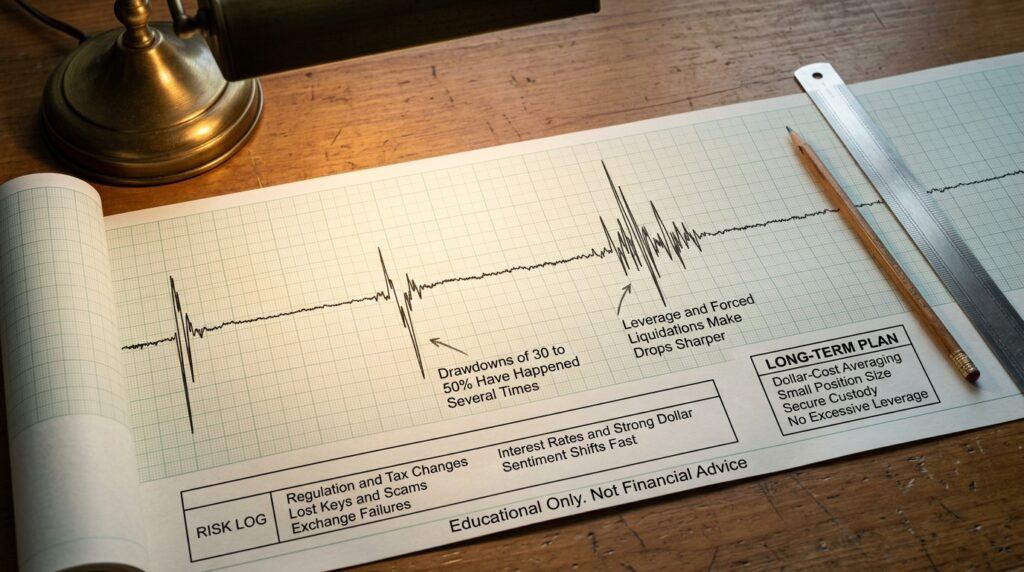
Bitcoin carries real risks, and every investor should understand them before buying. Volatility ranks first, since price drops of 30 to 50 percent have occurred several times in Bitcoin’s history. Leverage and forced liquidations can make those drops even sharper in the short term. Regulatory changes could limit exchanges, restrict ETFs, or increase taxes on gains. Security risk also matters, because users who lose private keys or fall for scams cannot recover funds. Exchange failures have wiped out customer balances in the past, so custody choices carry weight. Concentration risk appears when a few large holders, funds, or companies control a big share of supply. Energy use draws criticism, and political pressure on mining could affect miners in certain regions. Quantum computing is a distant but often discussed technical risk, and developers continue to study defenses. Finally, sentiment can change quickly, and fear can drive prices down faster than fundamentals would suggest. Never invest money you cannot afford to lose.
Regulatory and Macro Risks
Regulation shapes how easily people can buy, hold, and tax Bitcoin. Different countries apply different rules, and those rules can change after elections or major market events. Stricter tax treatment would reduce after-tax returns for active traders. Bans on mining or trading in certain regions have hurt local markets before. Macro conditions add another layer, since higher interest rates make non-yielding assets less attractive to some investors. A strong U.S. dollar and tight liquidity often pressure risk assets, including Bitcoin. Geopolitical shocks can push prices in either direction, depending on how investors view safety. Banks and payment firms also change their policies toward crypto, which affects on-ramps. Investors should follow official announcements and check local laws before making decisions. This Bitcoin investment outlook 2026 cannot replace professional tax or legal advice, so consult a qualified advisor for your situation. Staying informed helps you avoid avoidable mistakes.
Long-Term Value: Is Bitcoin a Good Investment in 2026?
Bitcoin has survived multiple crashes, regulatory attacks, and technical doubts, and it keeps attracting new capital. Its fixed supply, global liquidity, and growing institutional access give it a unique position among financial assets. Long-term holders have historically earned strong returns, although they also endured painful drawdowns along the way. Bulls expect continued ETF inflows, wider corporate adoption, and a rising role as a global reserve-style asset. Bears point to high volatility, regulatory risk, and the possibility that new technologies or rival assets could weaken demand. Neither side can predict the future with certainty. A practical approach uses dollar-cost averaging, which spreads purchases over time and reduces the pressure of picking a perfect entry. Investors should also keep their coins in secure custody and avoid excessive leverage. Bitcoin works best as one part of a diversified plan, not as an all-in bet. This article gives information only, not financial advice, so research current data before you act.
FAQs About Bitcoin Investment in 2026
Is Bitcoin a good investment in 2026?
Bitcoin offers strong long-term potential through its limited supply and growing institutional demand. It also carries high volatility, so each investor should match any purchase to personal risk tolerance.
How do Bitcoin ETFs affect the market?
ETFs let investors buy Bitcoin exposure through regular brokerage accounts. Strong inflows create buying pressure, while heavy outflows can add selling pressure.
What is the Bitcoin halving?
The halving cuts the miner reward in half about every four years. This event slows the rate of new Bitcoin supply entering the market.
What are the biggest risks of investing in Bitcoin?
The main risks include price volatility, regulatory change, security mistakes, exchange failures, and macroeconomic pressure. Careful position sizing and secure storage reduce these risks.
How much Bitcoin should I buy?
No single amount fits everyone. Many advisors suggest a small share of a diversified portfolio, based on your goals, income, and ability to handle losses.
Conclusion
Bitcoin remains the leading digital asset, and ETF demand has opened a powerful new channel for investors. The fixed supply, halving cycle, and growing adoption support the long-term case. Volatility, regulation, and macro pressure still demand discipline and careful planning. This Bitcoin investment outlook 2026 shows that BTC suits patient investors who size positions wisely and store assets securely. Do your own research, diversify your holdings, and rely on trusted sources for current data. For more crypto analysis and guides, visit cryptol7.com.